Description
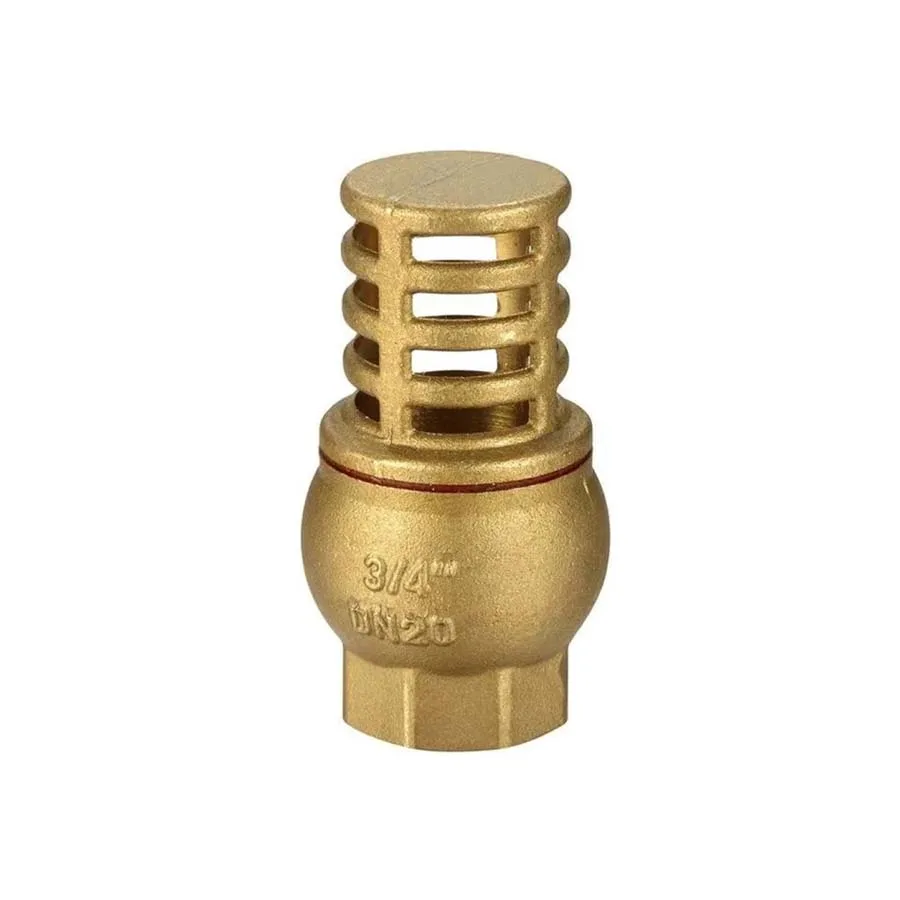
A foot valve is a non-return valve with an integral strainer, fitted at the foot of a centrifugal pump's suction pipe to keep the pump primed and to stop debris entering the impeller. The published specification for the type is IS 4038:1986, Foot valves for water works purposes, which covers screwed-end valves from 25 to 150 mm and flanged-end valves from 50 to 450 mm, in both swing and lift patterns.
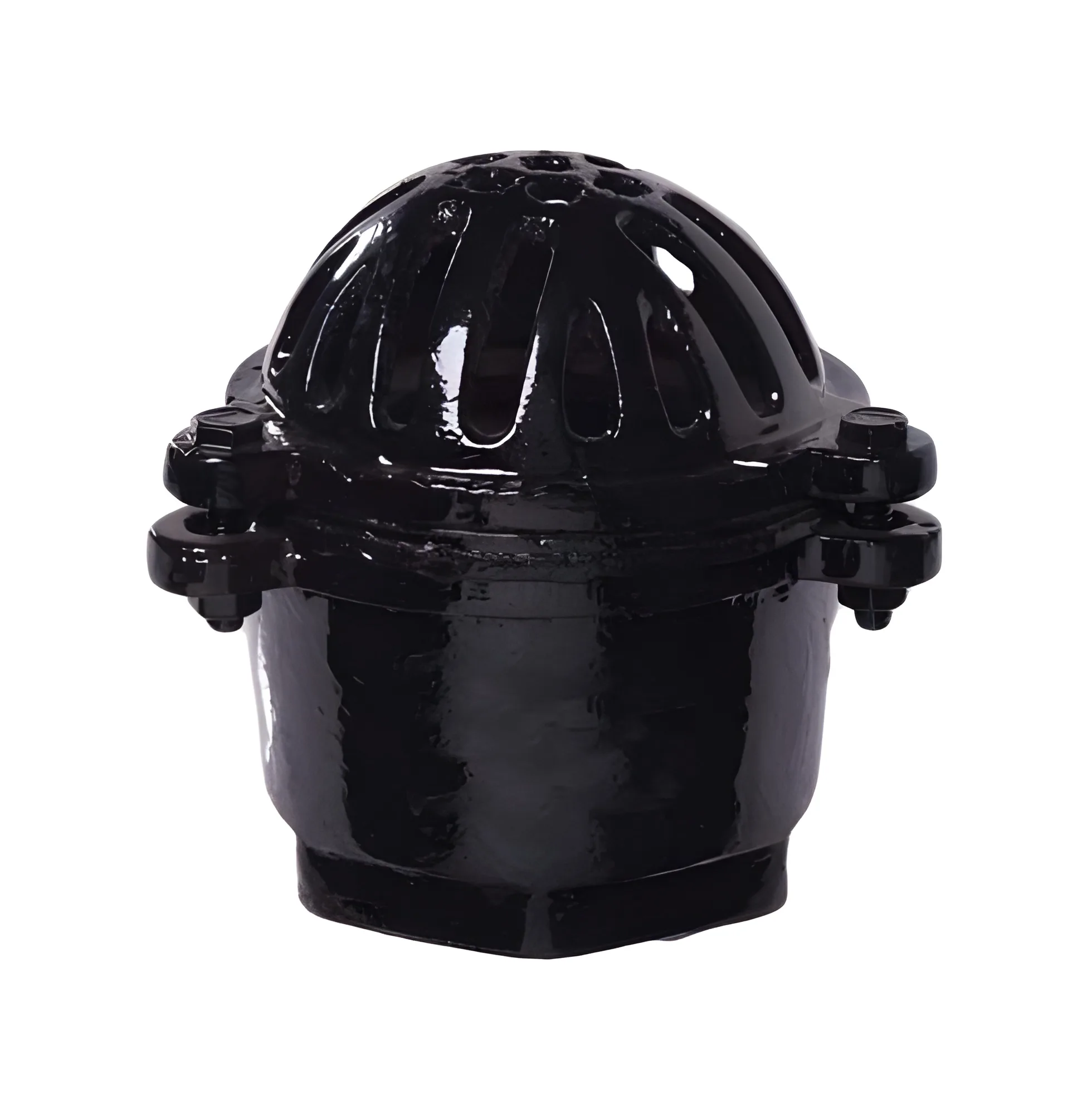
The valve photographed is the heavy cast pattern: a domed, slotted strainer cover bolted to the body, and a plain end with wrench flats, finished in a black protective coating. Under IS 4038 a swing-type valve up to 150 mm has a single disc and larger sizes preferably two semi-circular discs, while the lift type is recommended only up to 100 mm. The standard's disc facings are vegetable-tanned leather, leaded tin bronze, or natural or synthetic rubber reinforced with cotton canvas, and the strainer is grey cast iron or galvanised steel.
These are low-pressure pump-suction components, not pressure-retaining valves. IS 4038 requires a seat test at 0,2 MPa (2 bar) and a housing test at 0,6 MPa (6 bar), each held for two minutes with no leakage or permanent distortion, and it specifies flanges machined flat, without a raised joint face. A foot valve is not a substitute for a rated check valve on a pump discharge, and the strainer free area must be large enough that the valve does not throttle the suction and cause the pump to cavitate.
When ordering, state the nominal size; the end connection - screwed or flanged, with the thread form or the flange standard and drilling; the body material and disc facing required; the liquid and its temperature; and the strainer slot size. Confirm the body material with the supplier: this catalogue line is described as carbon steel, whereas IS 4038 specifies grey cast iron FG 200 for the housing of a foot valve of this pattern, and the two are not the same material.