Description
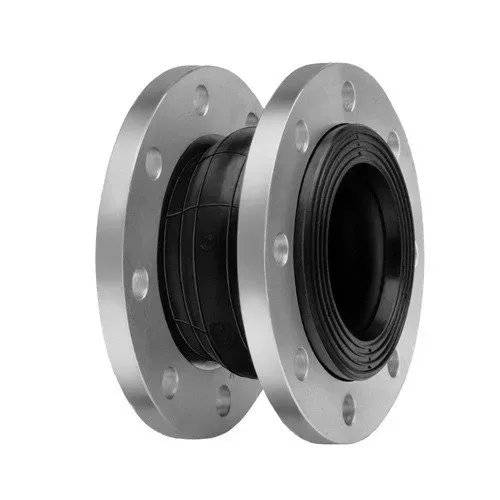
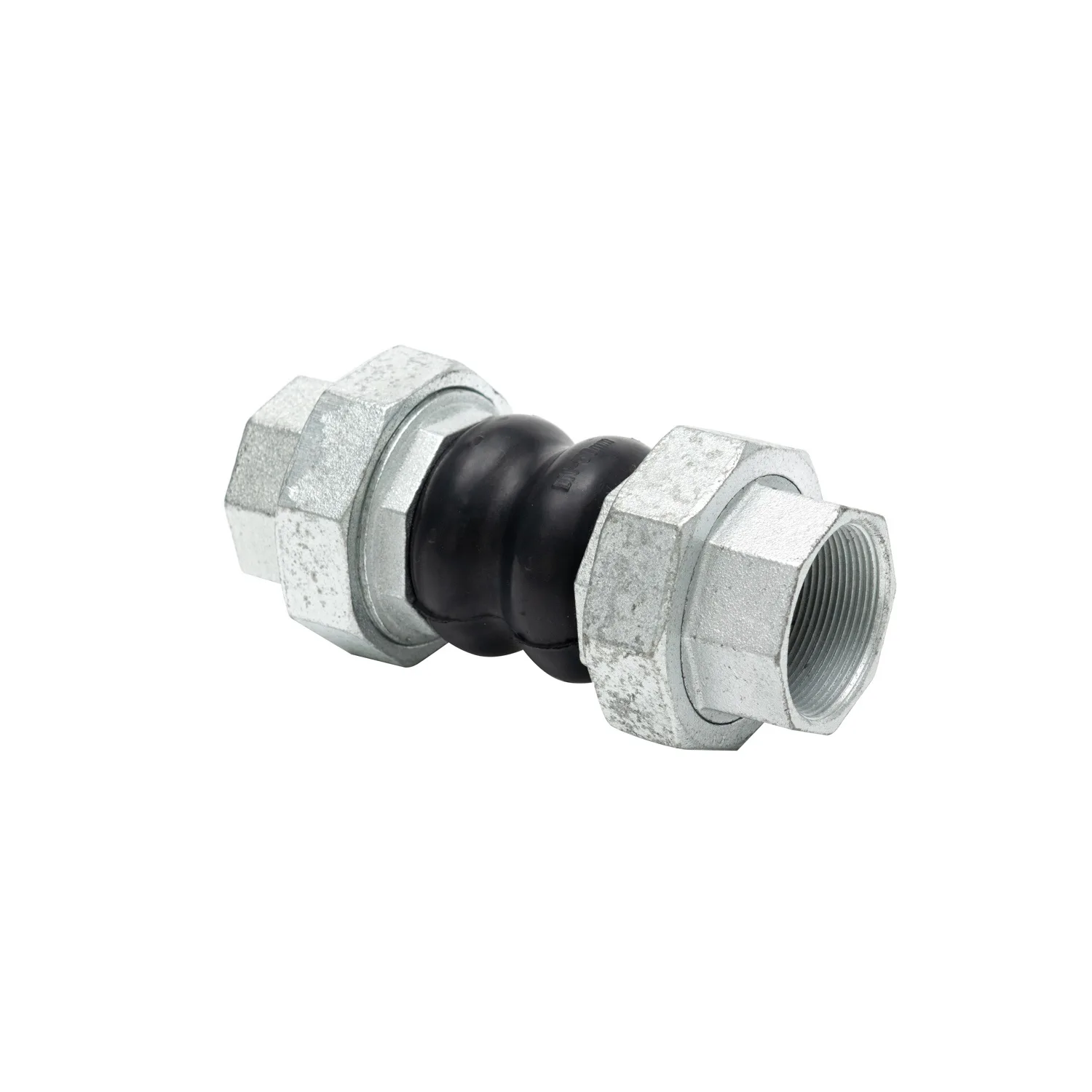
A rubber expansion joint is a moulded elastomeric bellows, reinforced with fabric plies, clamped between two metal flanges. The arch flexes to absorb axial movement, lateral offset and angular deflection, and because rubber transmits far less structural noise than steel it is the usual choice for isolating pump vibration from building pipework.
ASTM F1123, the published specification for arch-type non-metallic expansion joints, requires an elastomeric tube reinforced with multiple plies of woven cloth or tyre cord - nylon, polyester, fibreglass or aramid, and not cotton - under a cover of 100 % Hypalon (CSM) or chloroprene (CR) at Shore A 50 to 75 durometer. It sets the maximum allowable working pressure at not more than one quarter of the measured burst pressure, and requires each production joint to be hydrostatically tested at one and a half times that working pressure at the rated maximum operating temperature.
The elastomer decides the service. EPDM suits water, hot water and glycol; nitrile (NBR) suits mineral oil and fuel. EPDM swells badly in mineral oil and must never be substituted for nitrile on an oil line, however good its temperature range looks.
When ordering, state the nominal bore; the flange drilling - EN 1092-1 PN10/16, ASME B16.5 Class 150 or ASME B16.1 Class 125, which are different systems and will not bolt together; the working pressure and whether full vacuum has to be held; the fluid and its temperature; and the axial, lateral and angular movements required. A rubber joint is pressure-limited far below the pipe it sits in, must be installed within the manufacturer's stated movement limits, and needs control rods where the line is not anchored either side of it.