Description
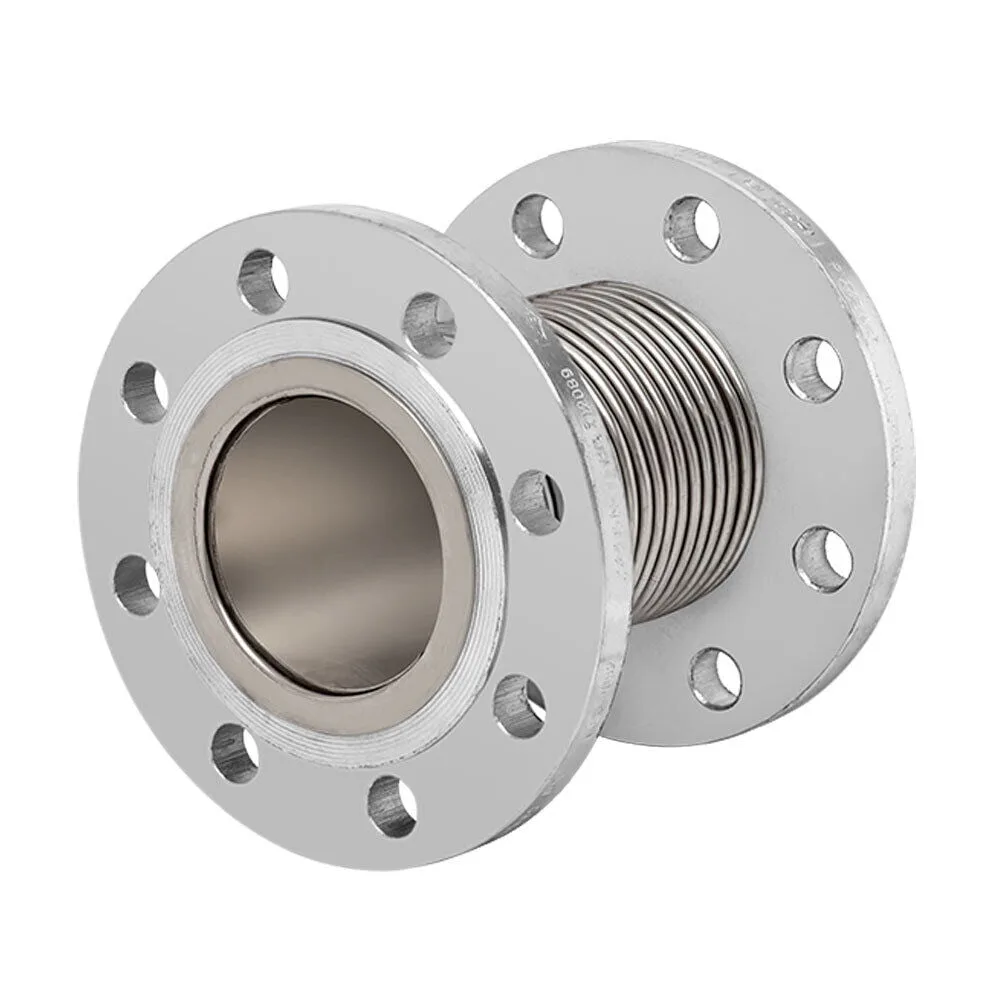
A metal bellows expansion joint is a corrugated stainless steel bellows welded between two pipe ends - here, two flanges. The convolutions deflect elastically, so the joint takes up the axial growth and contraction of a heated line, small lateral offsets between anchored equipment, and the vibration a pump transmits into rigid pipework, instead of passing those loads into the flanges and supports.
EN 14917:2021 specifies the design, manufacture and installation of metal bellows expansion joints of circular cross-section for pressure applications with a maximum allowable pressure greater than 0,5 bar, and classifies them as axial, angular, lateral, universal or pressure-balanced. Each class absorbs a different combination of movement: an axial joint takes compression and extension along the pipe axis only, and is damaged if it is asked to carry the lateral offset that a tied or universal arrangement should be taking. The unit photographed carries an internal flow liner, which shields the convolutions from the stream and reduces flow-induced vibration.
Typical duties are pump suction and discharge connections, chilled and hot water headers, compressor and boiler pipework, and any run where thermal movement or vibration would otherwise be carried by the pipe supports.
When ordering, state the nominal bore; the flange standard and rating - EN 1092-1 PN or ASME B16.5 / EN 1759-1 Class, which are separate systems with different bolt circles and are not interchangeable; the design pressure and temperature; the movements to be absorbed and the number of cycles expected; the bellows material; and whether tie or control rods, an internal liner or an external cover are required. Pressure and movement capacity both depend on bore, bellows material and the number of plies, so take them from the manufacturer's rating for the size actually supplied.