Description
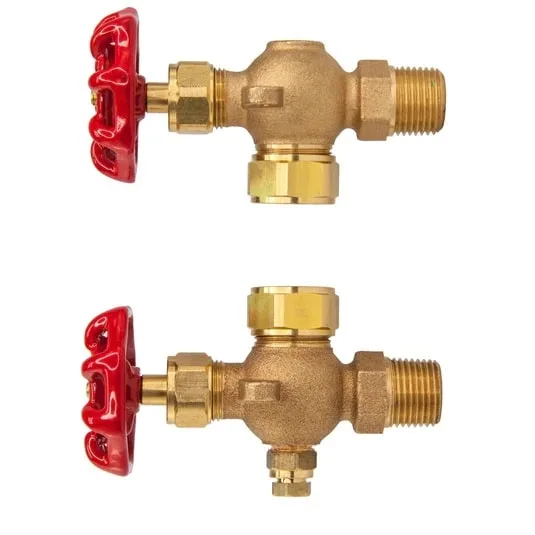
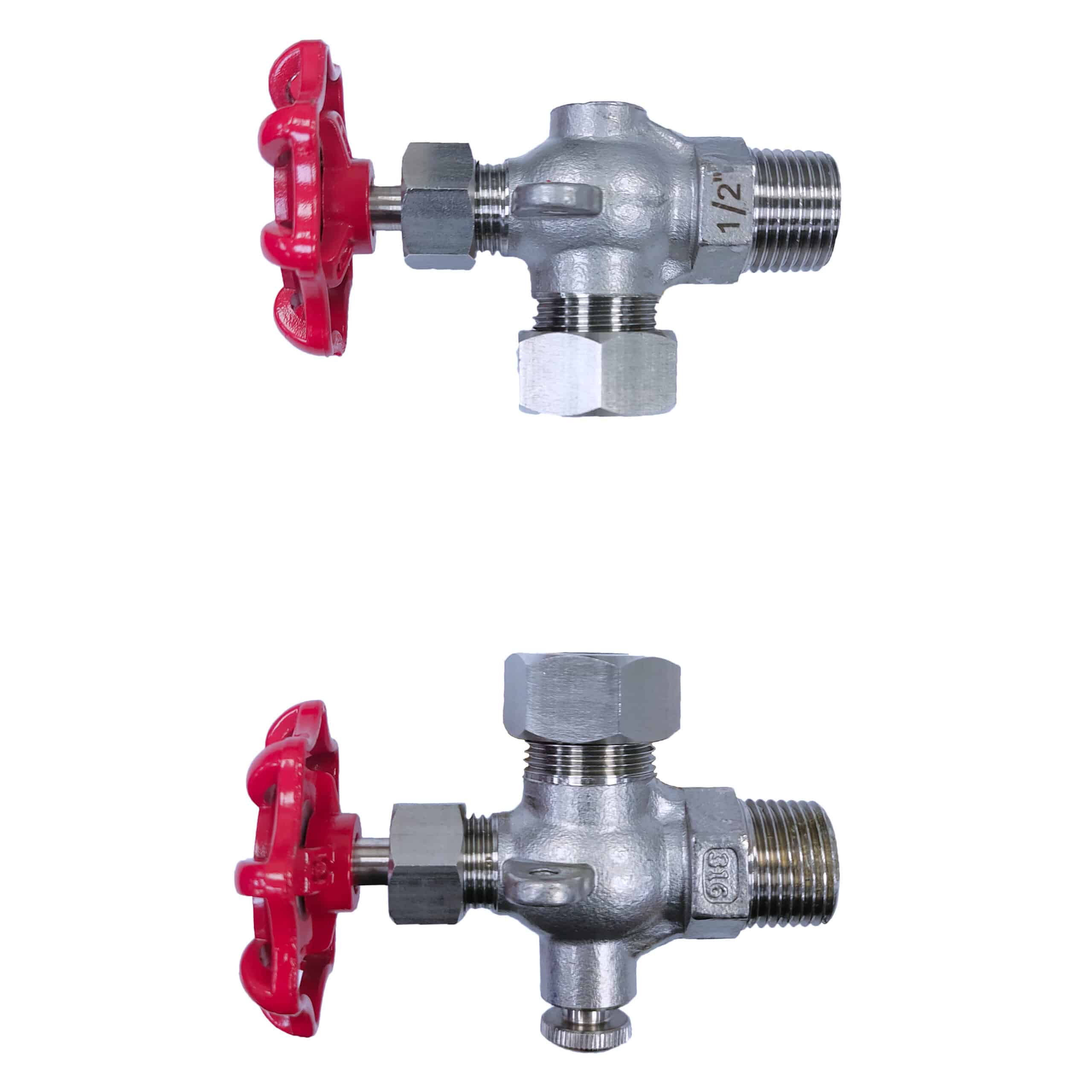
A gauge valve is the isolating valve that stands between the process connection and the pressure gauge. Closing it lets the gauge be removed, tested or replaced with the line still in service, and it protects the gauge movement from pressure surges when the line is brought up. The valves photographed are angle pattern: the process connection is a male taper thread on the side of the body and the instrument connection is a union nut at ninety degrees to it, so the gauge can be swung off without disturbing the pipework.
The body is a bronze casting with a gland nut and a cast handwheel. Bronze is the traditional choice for this duty on tankers and on marine and fuel-handling systems because it tolerates salt-laden atmospheres and water-wetted service better than plain carbon steel, and because the material is not subject to the chloride stress-corrosion cracking that affects austenitic stainless in hot marine service.
Two variants appear in the product photograph: a plain angle valve, and one with an additional small bleed connection in the underside of the body. The bleed is what lets the gauge be vented to atmosphere and confirmed to read zero before it is unscrewed, which is the safe sequence on a pressurised line.
When ordering, state the size, the thread form of the process connection (BSP taper, BSP parallel or NPT - they are not interchangeable), the union-nut connection the gauge will use, whether a bleed is required, and the maximum working pressure and temperature of the line. Al Taiyeb has no published pressure or temperature rating for this valve; ask for the supplier's figures before specifying it against a duty.