Description
This is the stainless steel version of the angle gauge valve: the isolating valve between the process connection and the pressure gauge. Closing it allows the gauge to be removed, tested or replaced without draining the line, and it lets the gauge be brought up to pressure gradually rather than shocked.
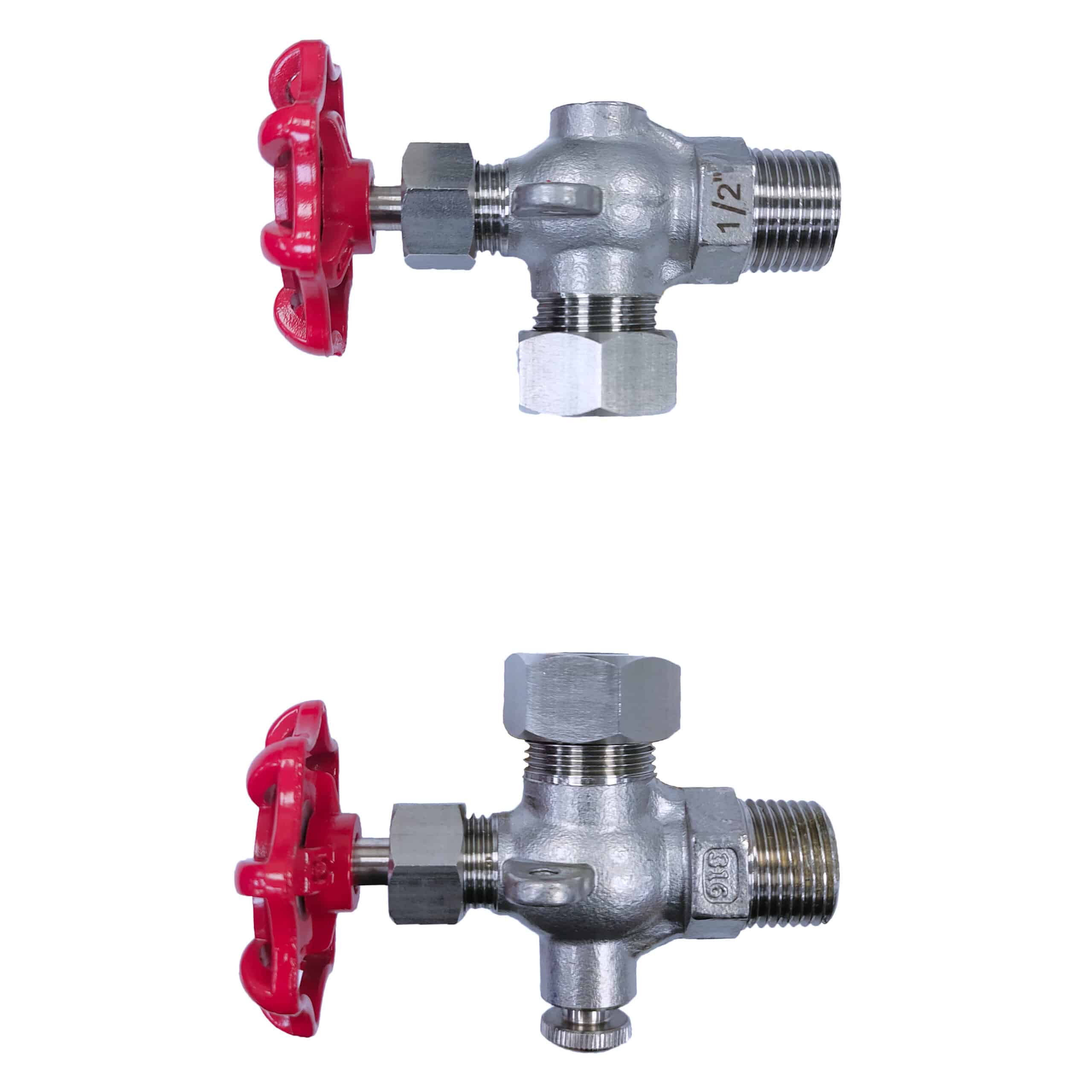
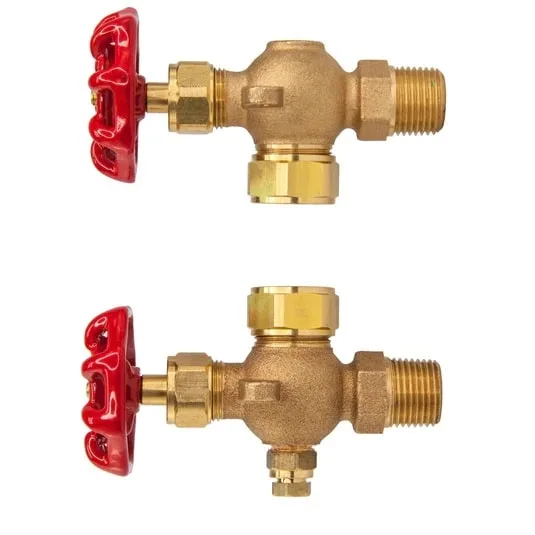
The body is an investment casting with a gland nut and a cast handwheel. The two bodies photographed carry the cast marks "1/2" and "316" respectively, giving the size of the one and the material grade of the other; 316 is the molybdenum-bearing austenitic grade, chosen over 304 where chlorides, seawater or acidic condensate are present. The process connection is a male taper thread on the side of the body, the instrument connection is a union nut at ninety degrees, and one of the two units shown carries a small knurled bleed screw in the underside of the body.
The bleed matters in practice. On a pressurised line the sequence is to close the valve, vent the gauge through the bleed, confirm the pointer has returned to zero, and only then break the union. Without a bleed, the gauge holds trapped pressure and comes off under load.
When ordering, state the size, the thread form of the process connection (BSP taper, BSP parallel or NPT - they will not interchange), the gauge connection, whether a bleed is required, and the maximum working pressure and temperature. Al Taiyeb has no published pressure or temperature rating for this valve; ask the supplier for the figures before specifying it against a duty.