Description
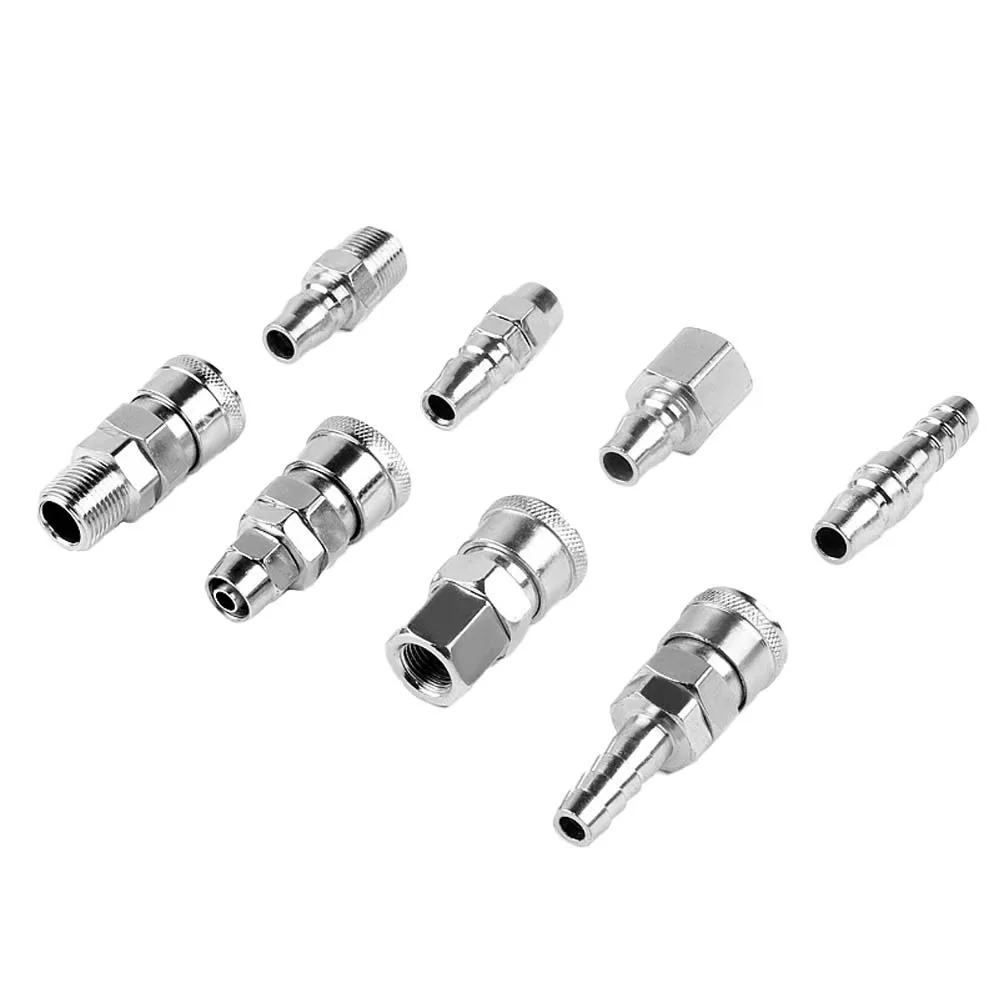
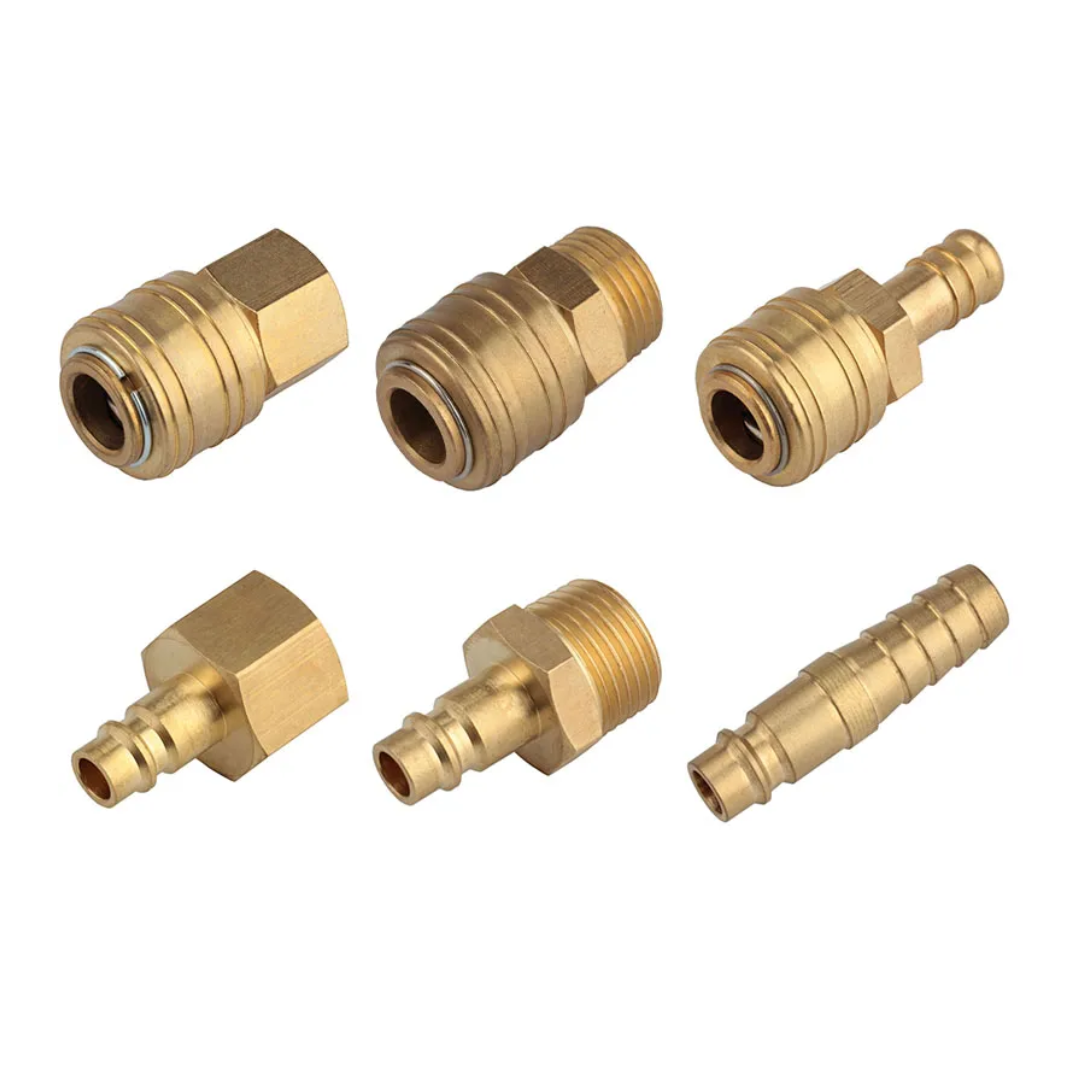
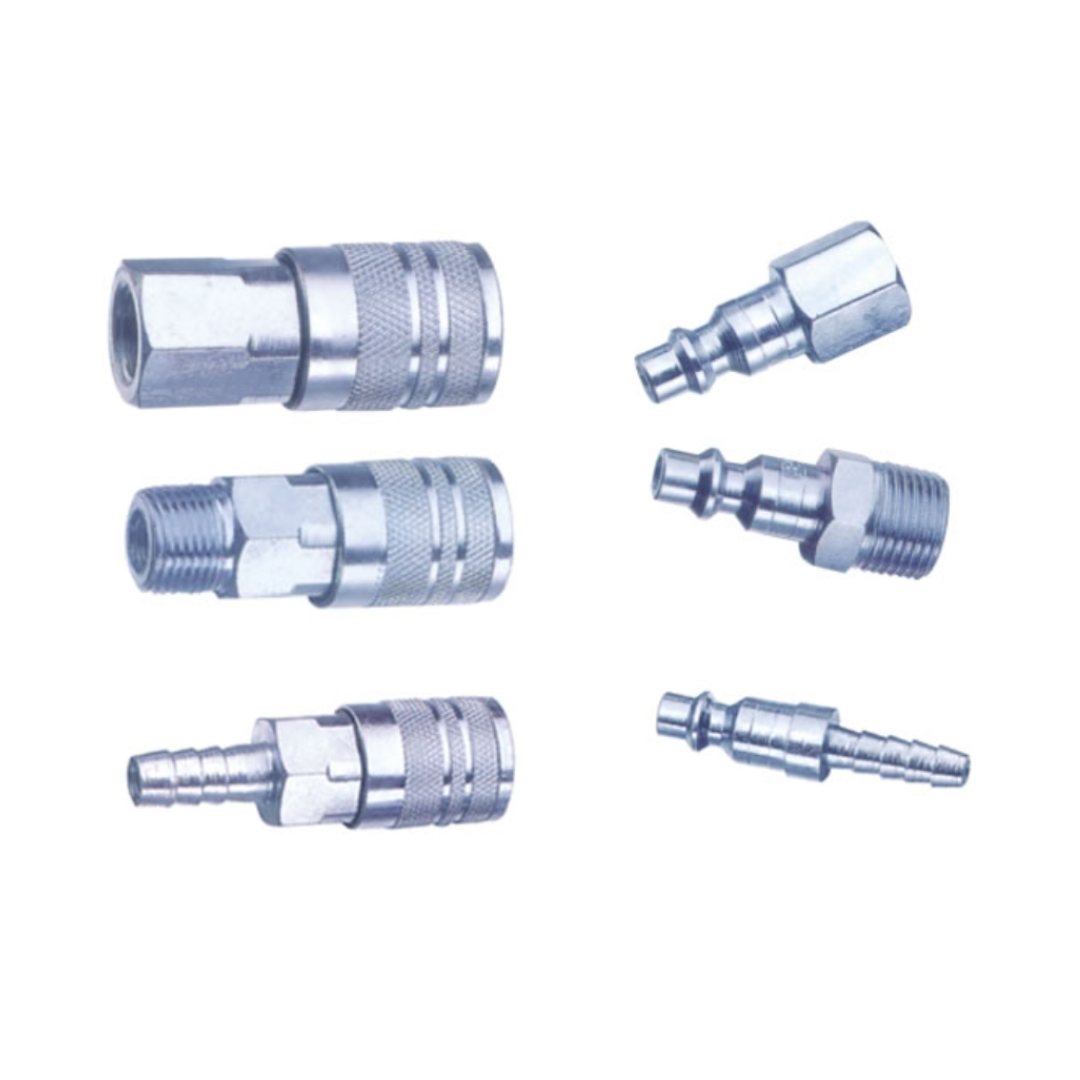
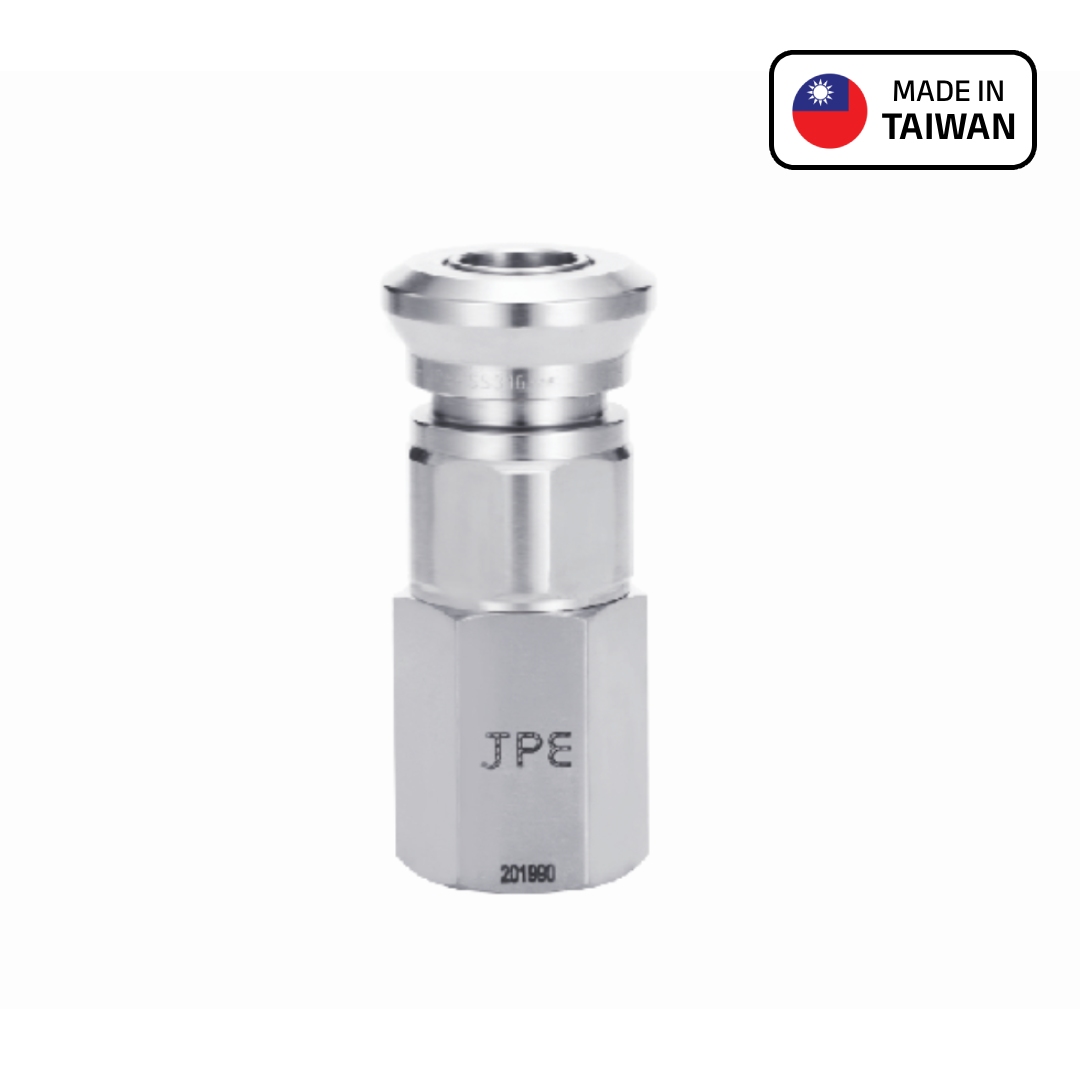
A pneumatic quick coupling joins and separates an air line without tools. It is always a pair: a socket, which carries the shut-off valve and the locking balls, and a plug, which is pushed in until the balls drop into its groove. The range photographed covers both halves in male pipe thread, female pipe thread and hose-tail forms.
ISO 6150:2018 specifies "the dimensions and tolerances so as to ensure the interchangeability of pneumatic quick-action coupling plugs" and sorts couplings into three series by maximum working pressure: Series A at 1 MPa (10 bar), Series B at 1,6 MPa (16 bar) and Series C at 2,5 MPa (25 bar). Each series has its own plug dimension table, and the standard states that "the construction and dimensions of sockets are left to the manufacturer's option". Only the plug is dimensionally fixed, which is why a socket from one maker will accept a plug from another of the same series but the two sockets need not resemble each other.
Air coupling profiles are nationally fragmented and no two families intermate. A 1/4 in plug and a 1/4 in socket agree on the thread, not on the nose geometry that decides whether the coupling will lock and seal. Match the profile already in service on site before ordering, and keep one profile per air ring main; mixing them produces plugs that enter, do not latch, and blow out under pressure.
When ordering, state the profile or series, the body size, the end form (male or female pipe thread, or hose tail), the thread form and size, and the body material. Fit a whip-check restraint across the joint on hose-to-hose connections, since a plain coupling gives no pressure relief on disconnection and a released air hose whips.