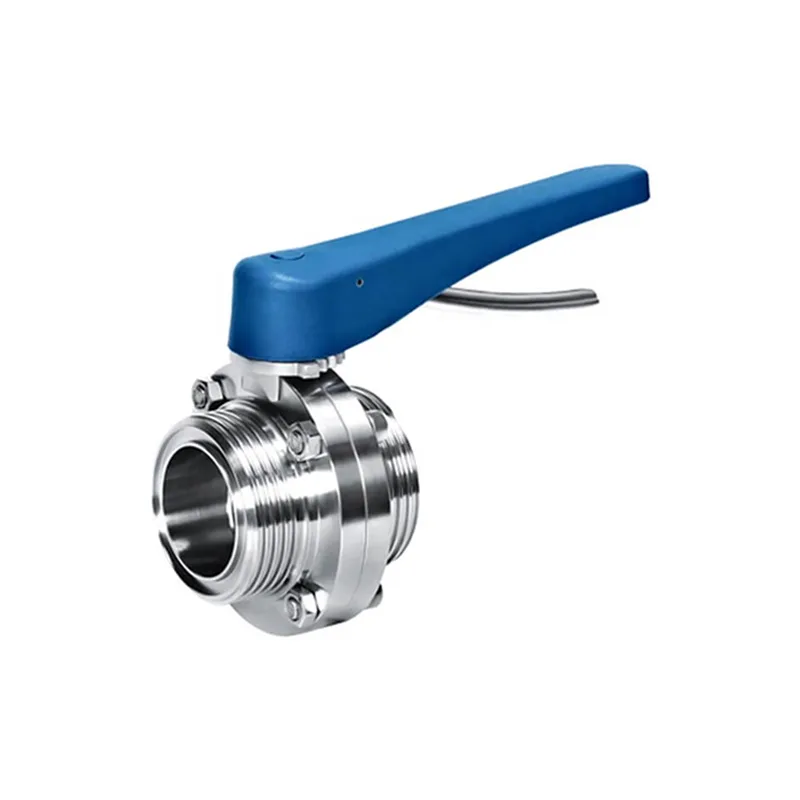
Description
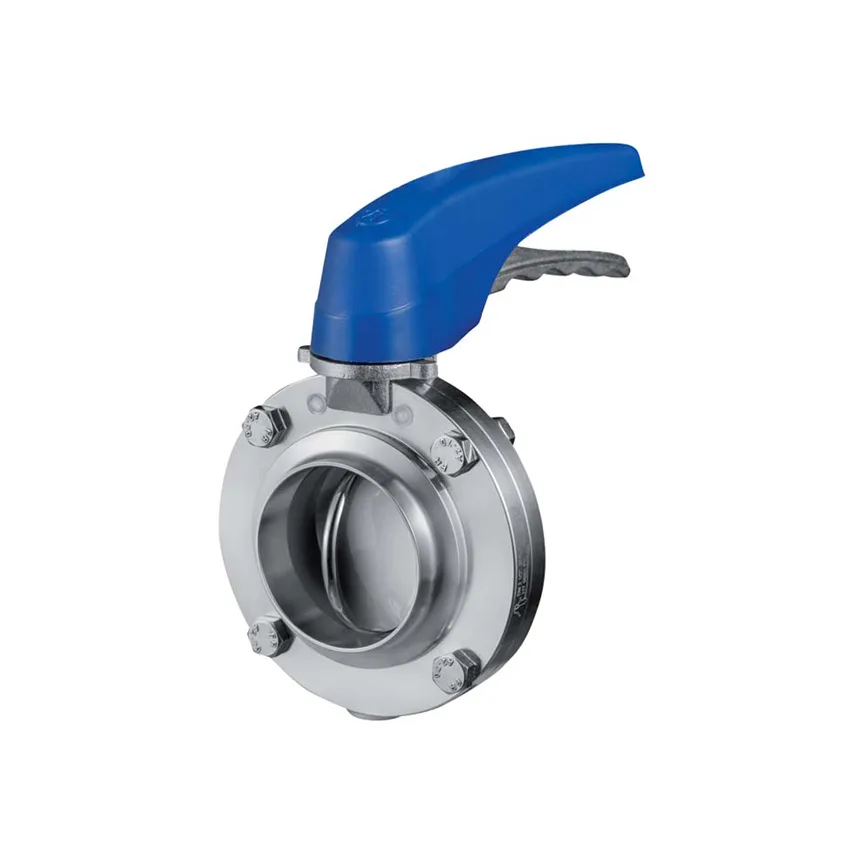
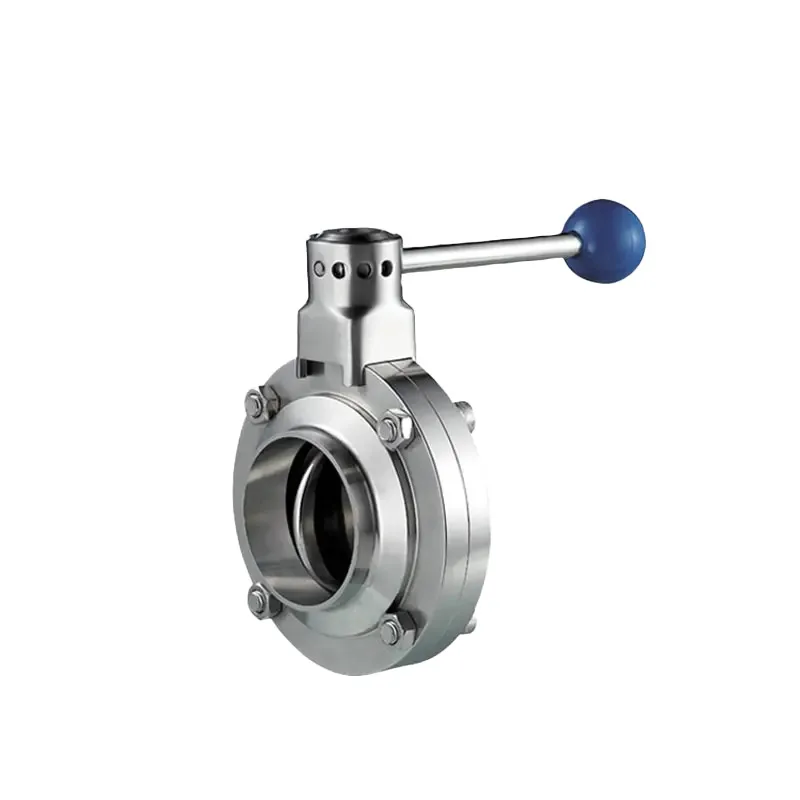
A butterfly valve closes by rotating a disc a quarter turn about an axis across the bore. The disc seals into an elastomer seat carried in the body, so the seat is both the seal and the wearing part. The valve is short in face-to-face length, light, and holds its position on a notched handle, which is why it is the general-purpose shut-off valve on hygienic pipework.
This version is dimensioned for the SMS system and the item photographed has butt-weld ends, so it is welded into the line rather than screwed. The SMS system is defined by the tube it sits on, and tube dimensions do not cross between systems, so the tube standard has to be settled before a size is meaningful.
Wetted parts are austenitic stainless steel; hygienic practice is a forged AISI 316L (1.4404) disc and body halves with AISI 304 (1.4301) for the handle and non-wetted parts, and a product-contact finish of Ra 0.8 µm or better. The seat is selected for the product and the cleaning regime: EPDM is the dairy and CIP default but has no resistance to oils and fats; NBR suits fats and oils to about 95 °C but is attacked by ozone and ultraviolet; silicone works from below −50 °C to about 180 °C but not in hot water, steam, undiluted lye or acid; FKM reaches about 180 °C but should be kept away from hot water, steam, lye, acid and alcohol.
State the nominal size and the tube standard, the end form, the seat material, the handle type — multi-position, two-position or lockable — and whether a pneumatic or electric actuator is to be fitted. No pressure rating is published here because none is fixed by the SMS standard for a welded-end valve; ask for the maker's rating against the size ordered.