Description
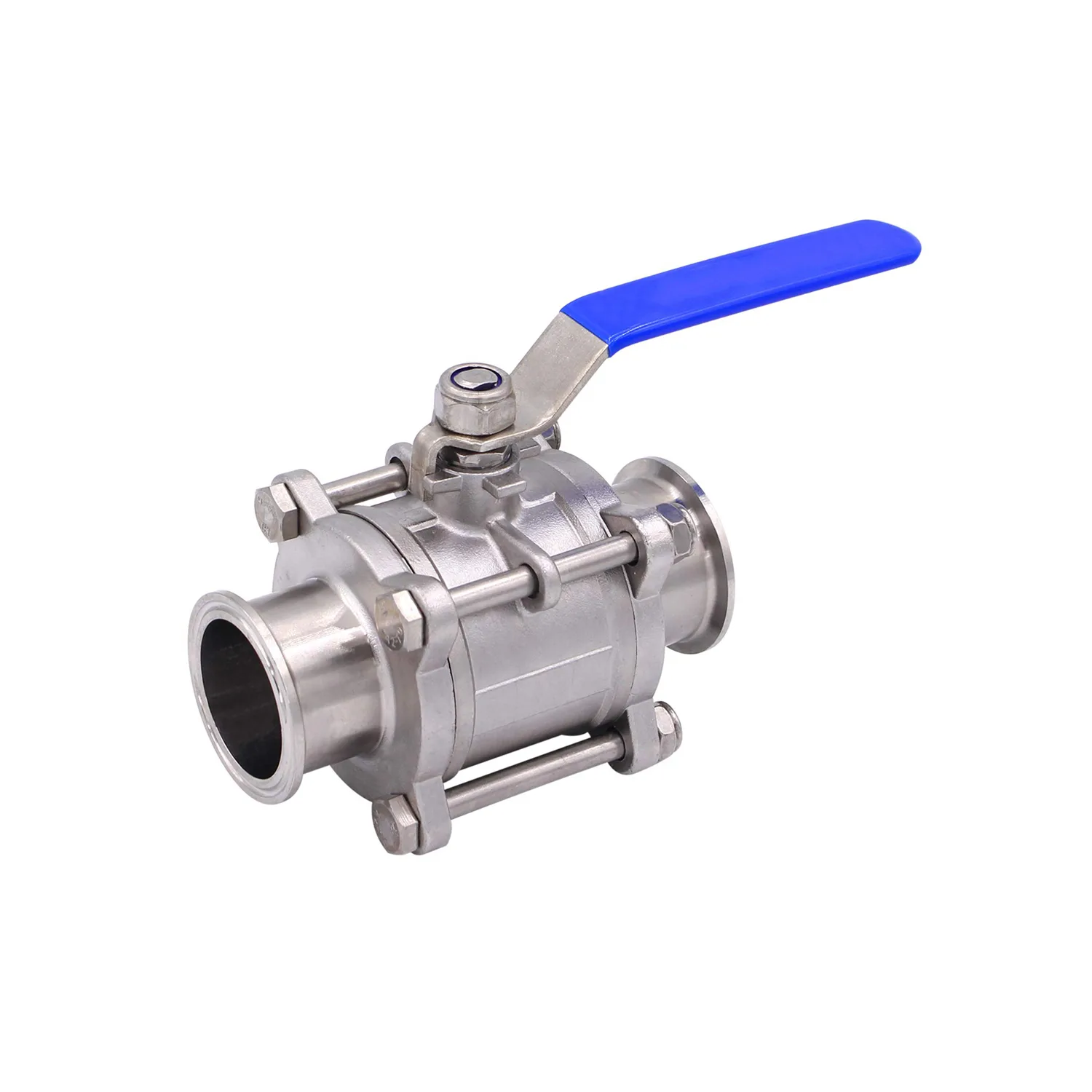
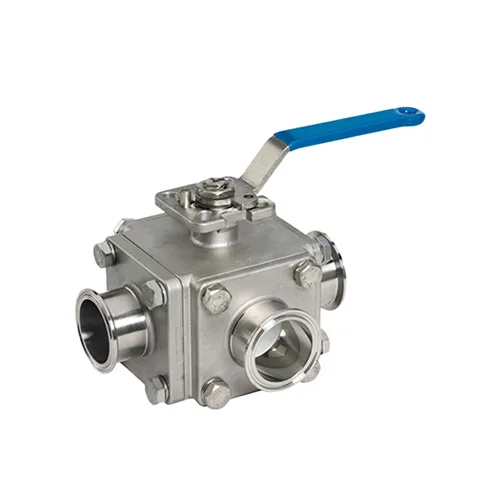
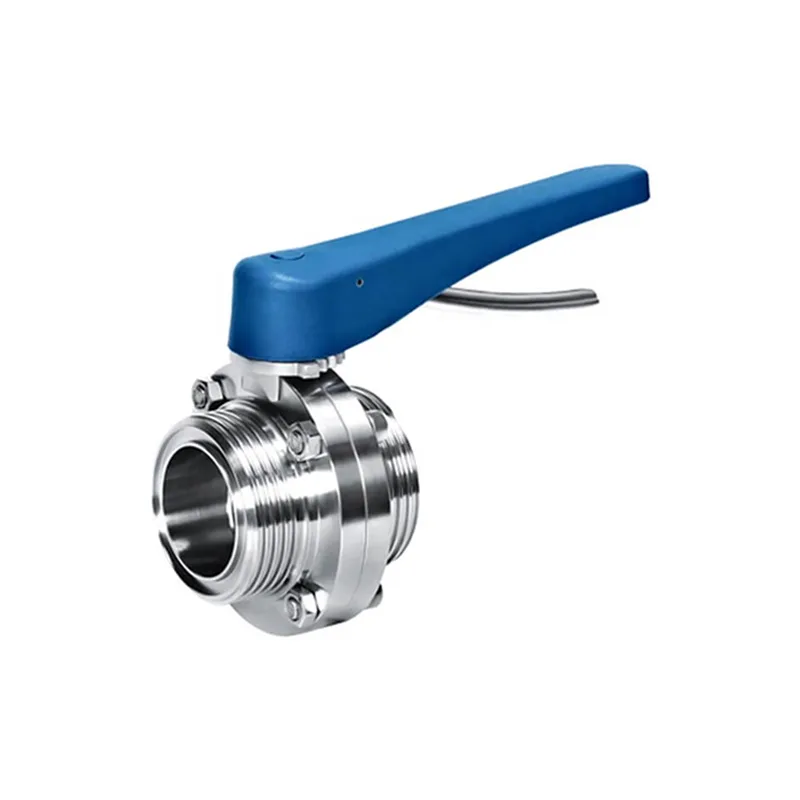
The valve shuts on a spherical ball carried between two seats. A quarter turn of the lever takes the bore from fully open to fully closed, and in the open position the bore matches the tube, so the line drains and can be cleaned in place without a step or a dead leg at the valve.
Both ends are clamp ferrules. The clamp connection is described by DIN 32676 in Series A, B and C and by the withdrawn ISO 2852, which fixes the flange angle at 20°, the gasket groove at 23° and the flange thickness at 2.85 mm. The clamp ring and the gasket are sized on the flange diameter and not on the bore, so ferrules for 25 mm, 33.7 mm and 38 mm tube all take the same 50.5 mm clamp and the same gasket. Permissible pressure for the connection falls with size, from 25 bar on tube up to 42.4 mm outside diameter to 10 bar at 219.1 mm.
ISO 2852 requires the wetted material to be an austenitic stainless steel selected from ISO 2604-1 and a finely finished product-contact surface below Ra 1.0 µm. Hygienic practice is AISI 316L (1.4404) for wetted parts with AISI 304 (1.4301) for the clamp ring and handle, finished to Ra 0.8 µm or better. Seats are normally PTFE, and it is the seat rather than the body that sets the temperature limit.
When ordering, state the size together with the clamp series, because the series are not interchangeable — Series A DN50 is 53 mm tube on a 64 mm flange while Series B DN50 is 60.3 mm tube on a 77.5 mm flange. State also the body grade, the seat and gasket materials and the internal surface finish. Choose the gasket for the product: EPDM is the dairy and CIP default but has no resistance to oils and fats, NBR suits fats and oils to about 95 °C, silicone covers wide temperature swings but not hot water or steam, and FKM or PTFE are for chemically aggressive duties.