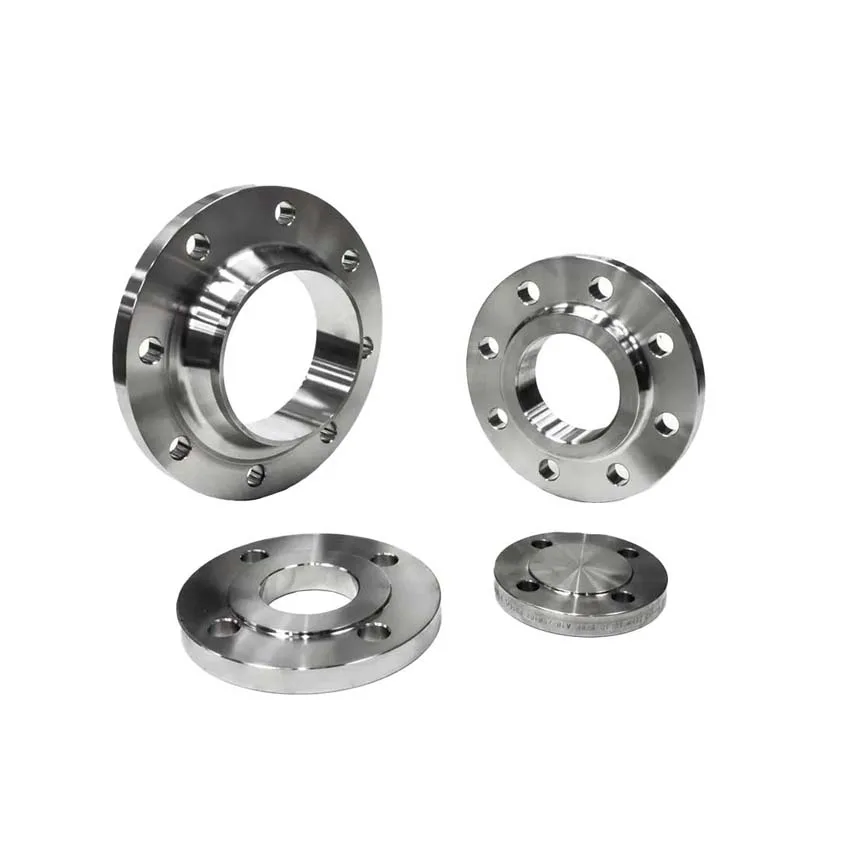
Carbon steel pipe flanges are supplied to EN 1092-1, where the PN number is the pressure in bar at 20 degrees C, or to ASME B16.5, where the Class number is dimensionless. Both are carried under this line. They are separate systems and are not interchangeable: the bolt circles, hole counts and bolt threads differ, and there is no ASME class equal to PN16 and no PN equal to Class 150.
Class 150 is not 150 psi. For group 1.1 carbon steel - A105, A216 WCB, A515/A516 Gr.70 - ASME B16.5 rates a Class 150 flange at 19,6 bar (285 psi) between -29 and 38 degrees C, falling to 13,8 bar at 200 C, 10,2 bar at 300 C and 2,8 bar at 500 C. Class 300 is 51,1 bar at ambient and Class 600 is 102,1 bar. Under EN 1092-1, a PN16 flange in group 3E0 material - the elevated-temperature unalloyed steels P235GH, P245GH, P250GH and P265GH - up to 50 mm thick is 16,0 bar at room temperature, 13,3 bar at 200 C and 9,5 bar at 400 C.
Two interchange facts matter in the stores. From NPS 1/2 to NPS 3 a Class 300 and a Class 600 flange share the same outside diameter and bolt circle and will bolt together; the joint is then only good for the lower class. Under EN 1092-1, PN10 and PN16 share dimensions from DN15 to DN150, which is why stock is described as PN10/16, but the bolt count steps from four to eight at DN65 in PN10/16 and not until DN125 in PN6 - a DN65 PN6 flange will not mate with a DN65 PN16 flange.
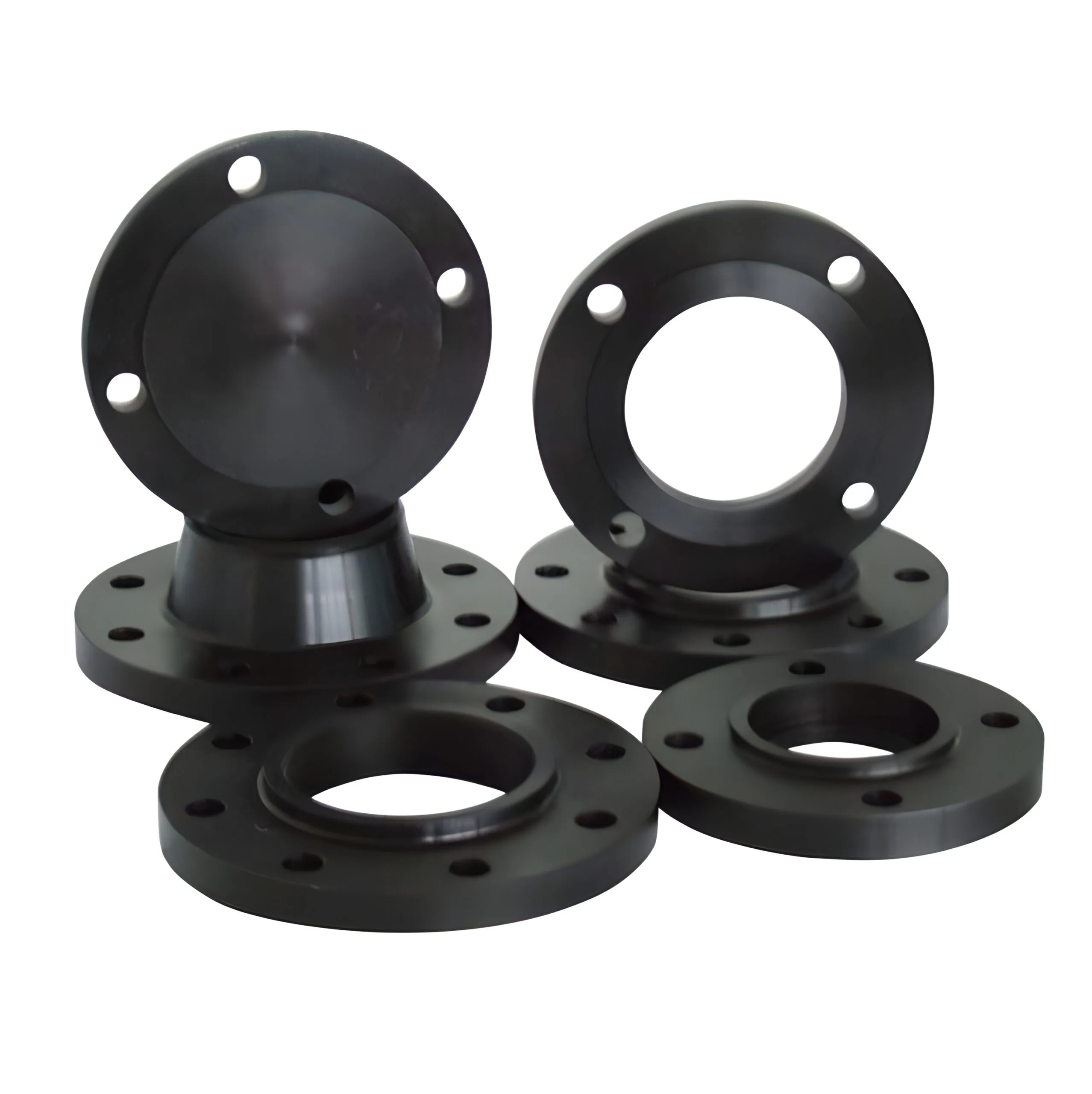
When ordering, state the standard, the PN or Class, the flange type and face form, the pipe outside diameter and wall thickness the flange must suit, and the material grade. Carbon steel flanges are supplied with a protective coating, as in the photograph; clean the gasket face before assembly.