Description
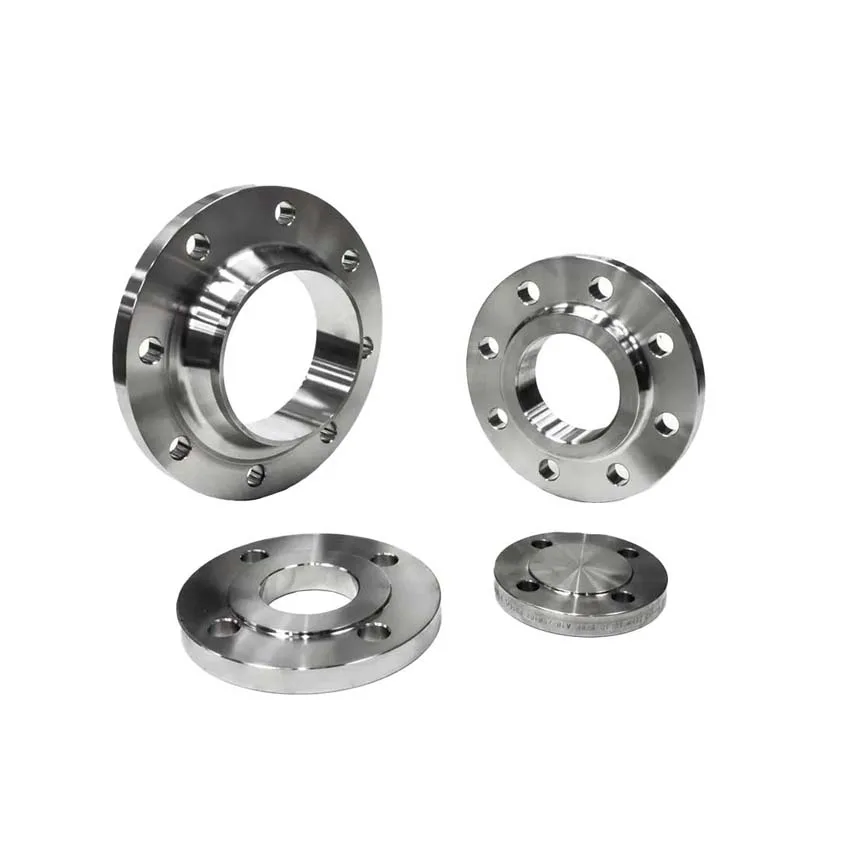
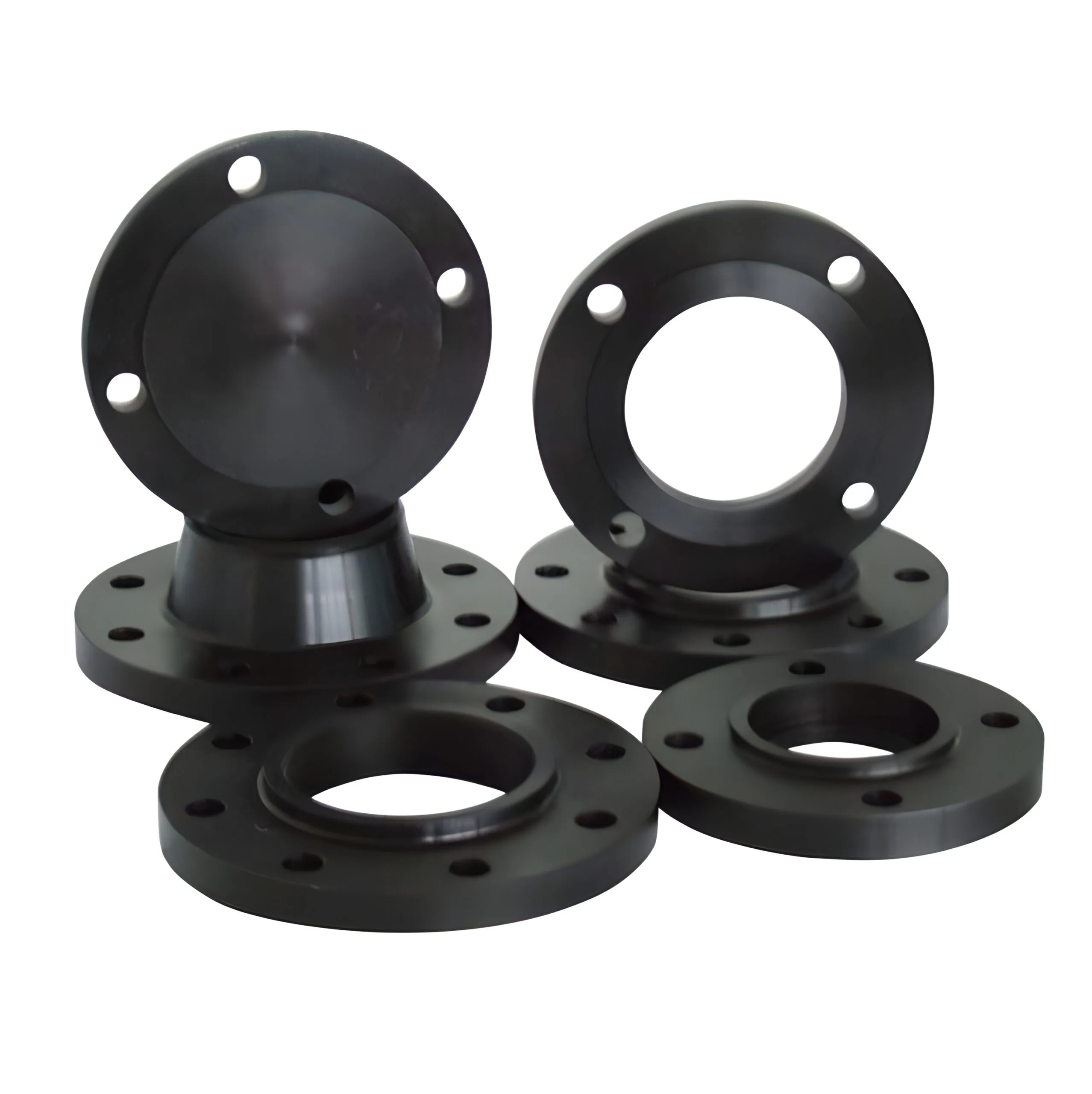
Stainless steel pipe flanges make a bolted, gasketed joint that can be broken for maintenance. They come in one of two independent systems: EN 1092-1, where the flange is PN-designated and the number is the pressure in bar at 20 degrees C, and ASME B16.5, where the flange is Class-designated and the number is dimensionless. ASME B16.5 covers NPS 1/2 to NPS 24 in Classes 150, 300, 400, 600, 900 and 1500, and NPS 1/2 to NPS 12 in Class 2500.
The two systems are not interchangeable. At DN50 / NPS 2 an EN 1092-1 PN16 flange has a 125 mm bolt circle drilled for four M16 bolts; the ASME B16.5 Class 150 flange of the same bore has a 120,7 mm bolt circle drilled for four 5/8 in UNC studs. Bolting one to the other puts every stud in bending. There is no ASME class equal to PN16 and no PN equal to Class 150.
Ratings differ by code as well as by dimension, and the difference runs the opposite way in each. Under ASME B16.5 a Class 150 flange in group 2.2 material - 316, A182 F316, A351 CF8M - is rated 19,0 bar at ambient, while the same flange in group 2.3 material - 316L, 317L, 304L - is rated only 15,9 bar, a 16 % penalty for the lower carbon that is routinely missed. Under EN 1092-1 the relationship inverts: 1.4404 (316L) is rated above 1.4301 (304) at every temperature. Never carry a rating from one code into the other.
A flange is not identified by bore and pressure alone. When ordering, state the standard, the PN or Class, the flange type - EN 1092-1 numbers the types 01 plate, 02/04 loose plate, 05 blind, 11 weld-neck, 12 hubbed slip-on, 13 hubbed threaded and so on - the face form, the pipe outside diameter and wall the flange must be bored or welded to, and the material grade. Type B1 raised face is the most frequently used; type A is flat.