Description
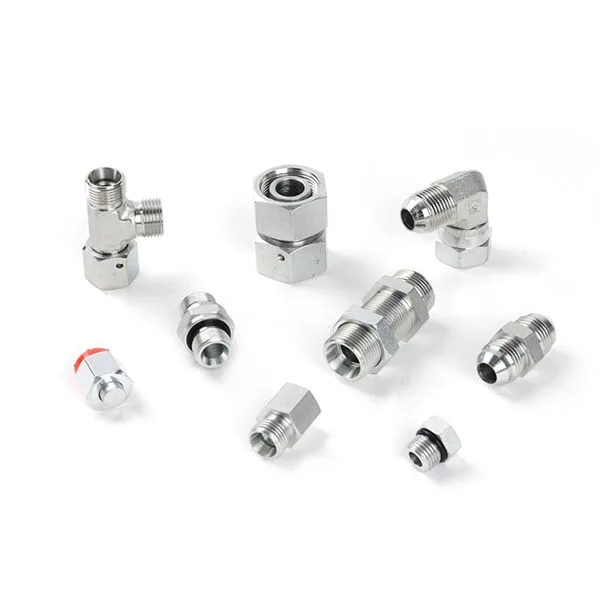
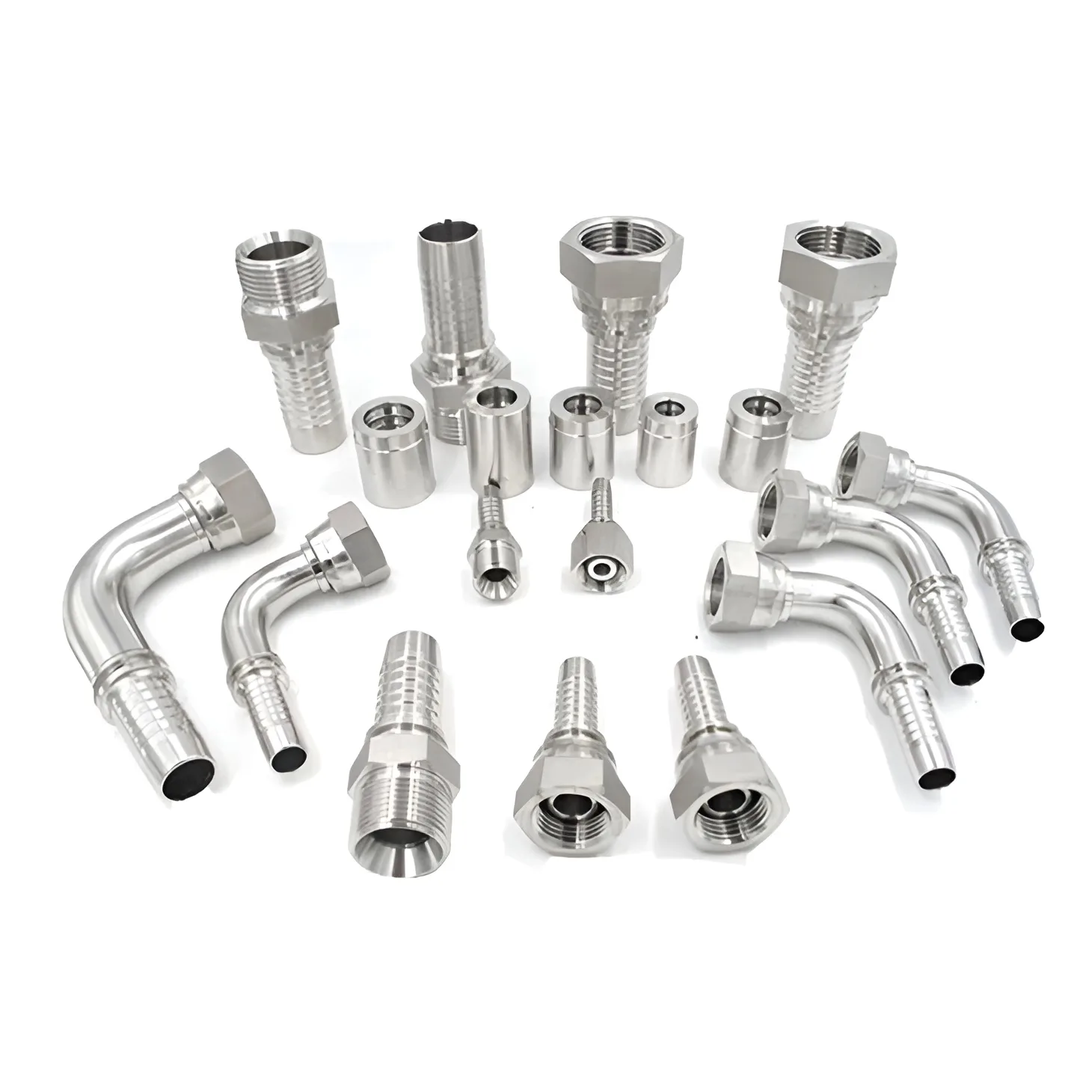
Adapters join two different connection ends: a port thread to a hose swivel, a JIC nut to a metric cone, a BSPP male to an ORFS female. They are the parts that make a circuit fit together, and they are also where most leaks are created, because a size and a letter - half inch BSP - does not identify a joint. Two things do: the thread form, which decides whether it screws together at all, and the sealing geometry, which decides whether it holds pressure once it does.
The standards behind the range are ISO 8434-1 for the 24 degree metric cone, ISO 8434-2 for the 37 degree flare (JIC), ISO 8434-3 for the O-ring face seal (ORFS) and ISO 8434-6 for the 60 degree BSP cone; the port ends follow ISO 1179-1 for BSPP, ISO 9974-1 and ISO 6149-1 for metric ports and ISO 11926-1 for SAE straight thread ports. ISO 8434-1 covers ferrous and non-ferrous tube from 4 mm to 42 mm outside diameter in three series - LL extra light, L light and S heavy - and each series carries its own pressure table.
The trap in metric fittings is that the thread alone does not identify the part. M16 x 1,5 is the 24 degree cone thread for 10 mm tube in the L series and for 8 mm tube in the S series. The threads are identical; the bores and the pressure ratings are not. Order by tube outside diameter, series letter, thread form and seal type together.