Description
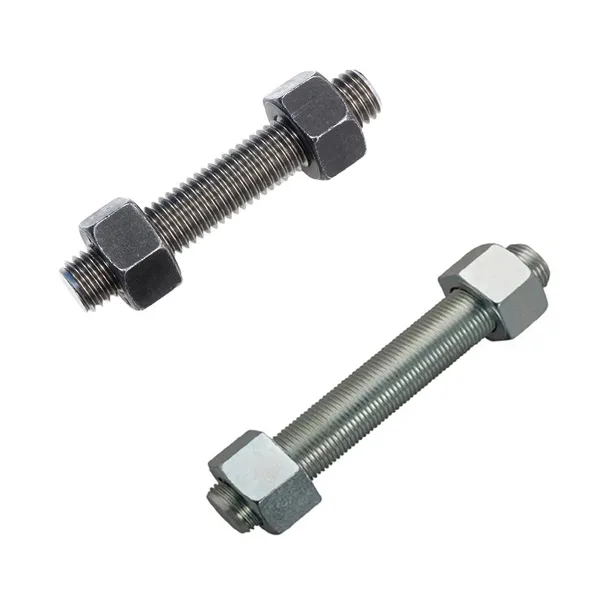
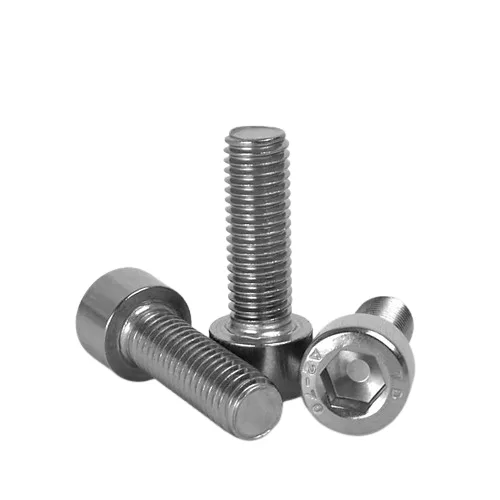
A stud bolt is a rod threaded along its full length with a nut run onto each end, used in preference to a headed bolt on flanged joints because it can be tightened from both ends and gives a symmetrical clamping force across the gasket. The photographed items are the usual flange pattern: continuous thread with two heavy hex nuts.
The standard pairing is ASTM A193 Grade B7 studs with ASTM A194 Grade 2H nuts. B7 is quenched and tempered chromium-molybdenum alloy steel with a minimum tensile of 860 MPa, a minimum yield of 725 MPa and a maximum hardness of 35 HRC; the 2H nut is a quenched and tempered carbon or alloy steel nut at 24 to 35 HRC, deliberately matched so the nut does not strip before the stud yields. Stud lengths for flange joints follow ASME B16.5 and heavy hex nut dimensions follow ASME B18.2.2.
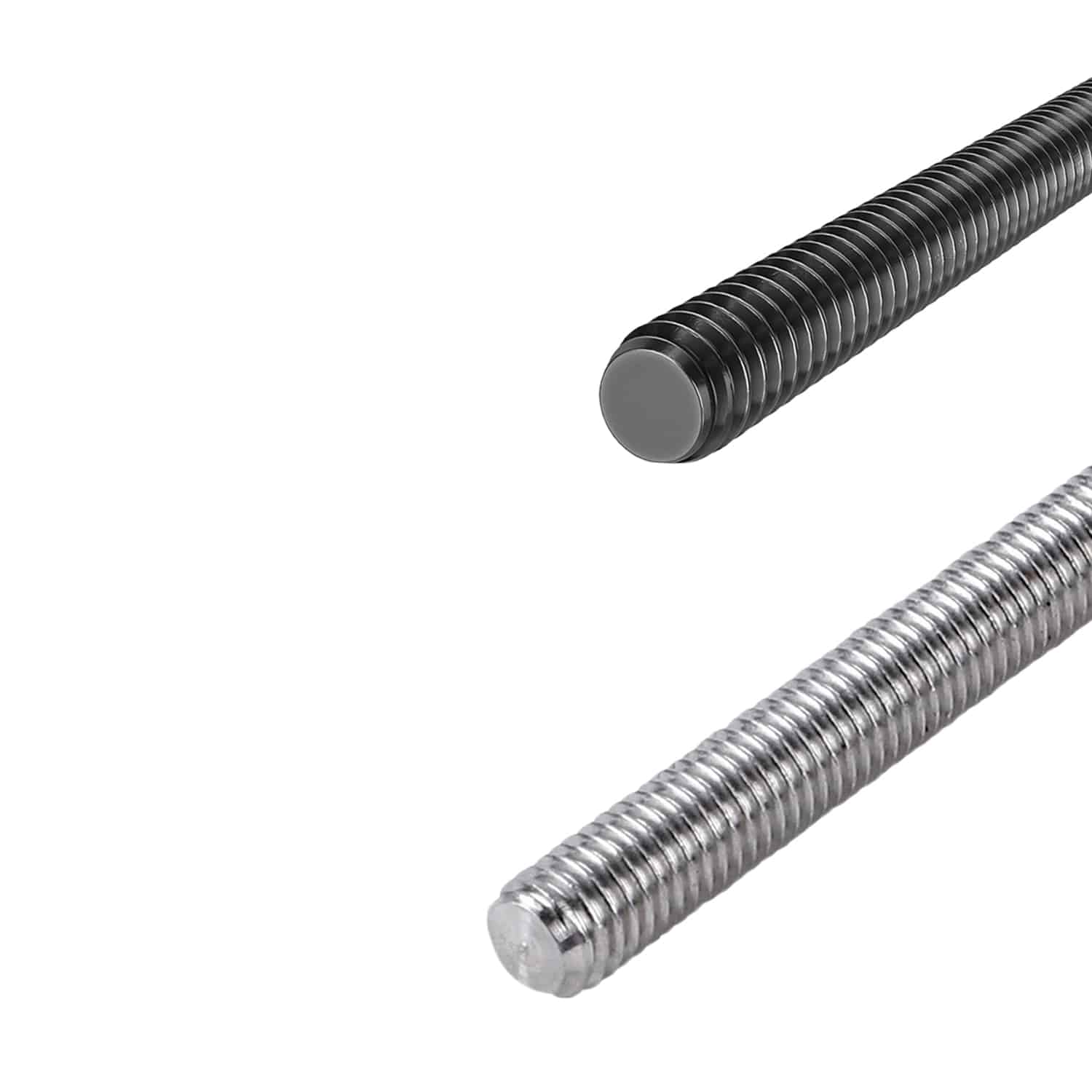
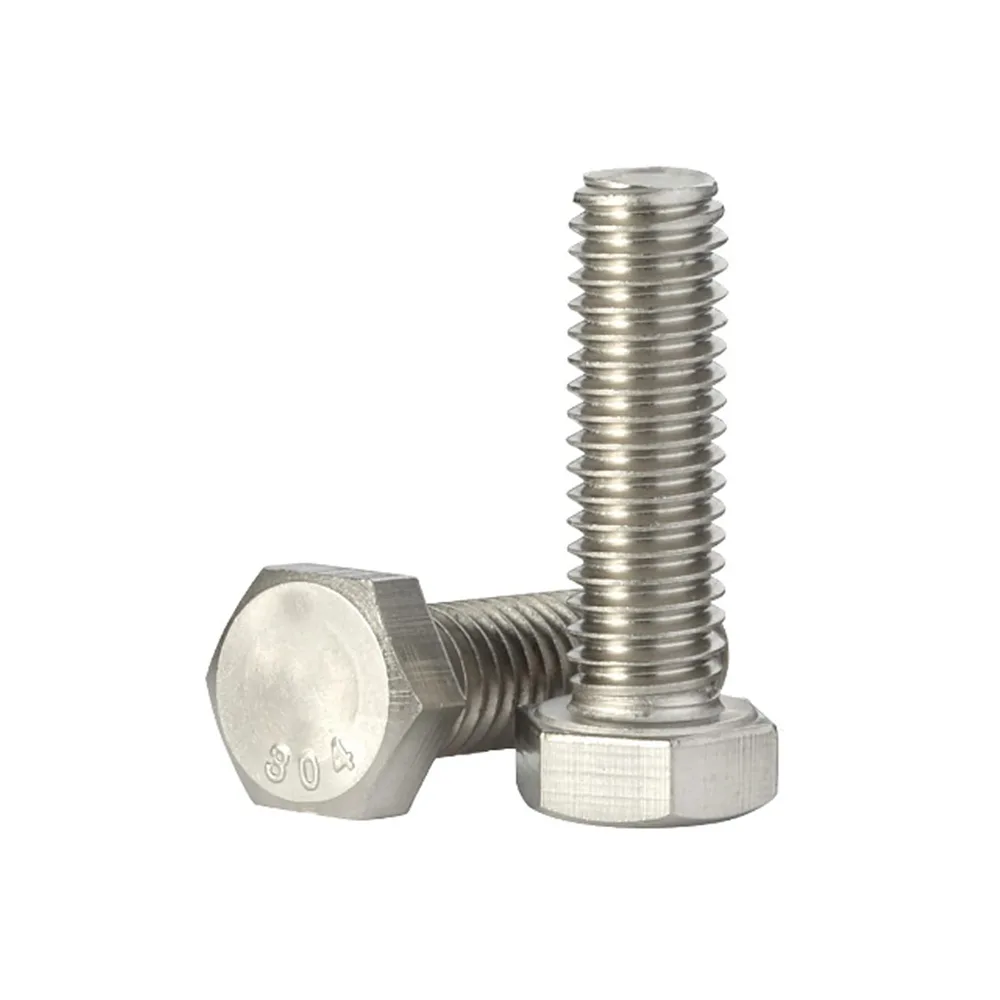
Thread pitch changes with diameter: UNC to 1 in, then the 8UN series (8 threads per inch), tabulated from 1.1/8 in through 4 in, which is what large flange studs use. Stainless studs are specified instead by ISO 3506-1 grade - A2 for the 304 family, A4 for the 316 family with 2 to 3 % molybdenum - and are a corrosion choice, not a strength upgrade. Where a low-temperature code case applies, B7 is not a substitute for ASTM A320 Grade L7, which adds mandatory impact testing.
When ordering, give the flange size and rating so stud length can be taken from ASME B16.5, or give diameter and length directly, together with the material grade for stud and nut and the finish required. Confirm whether hot-dip galvanised studs are wanted: galvanised studs need galvanised, over-tapped nuts, and ISO 898-1 refers hot-dip galvanised fasteners to ISO 10684 for the additional requirements.