Description
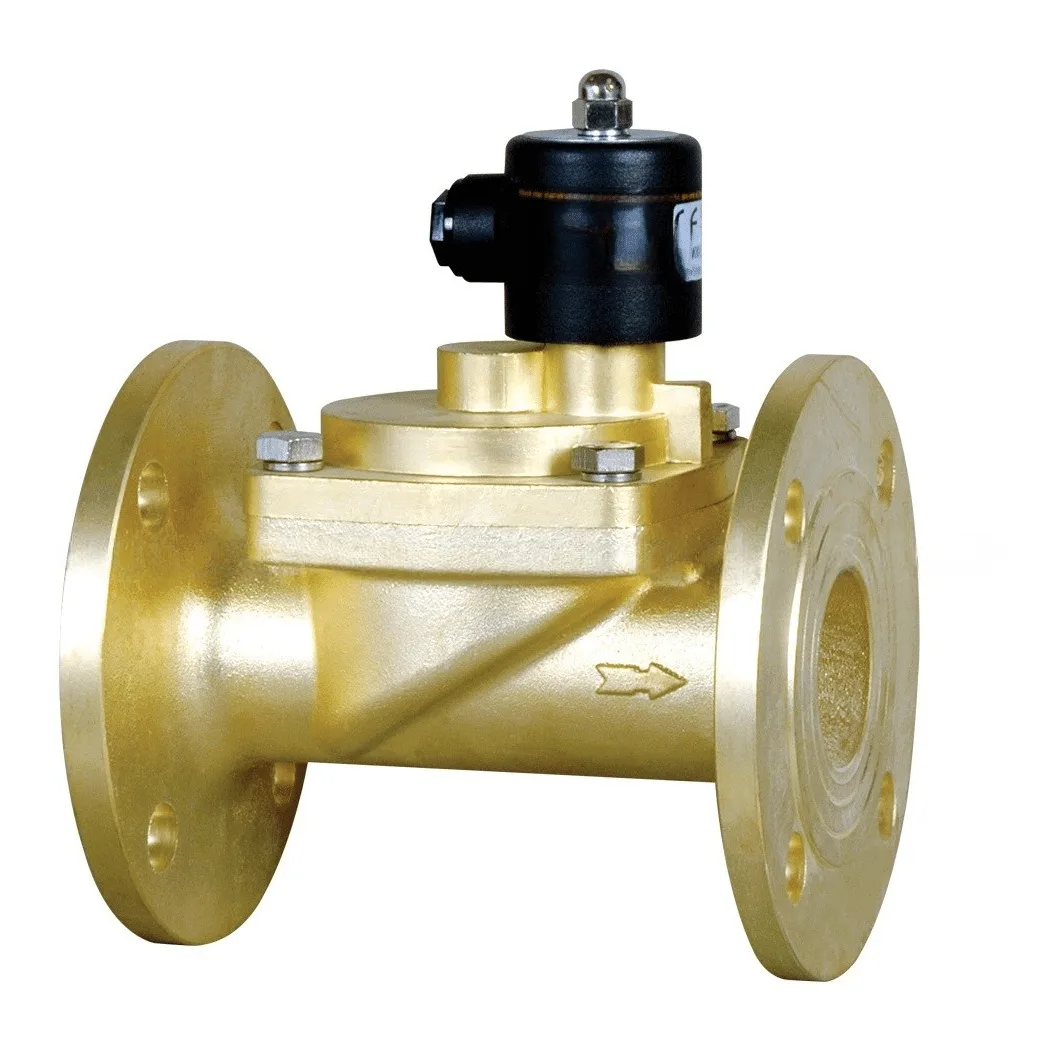
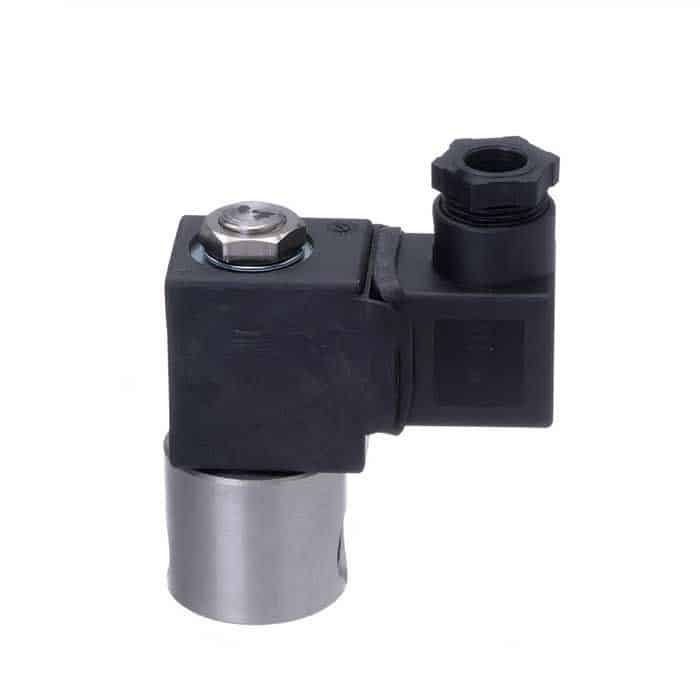
This is a two-way solenoid valve with a brass body cast with flanged ends rather than threaded sockets. Flanges are used above about DN50, where a threaded joint becomes hard to make up and impossible to break without cutting the line; a flanged valve can be dropped out of a bolted spool and refitted without disturbing the pipework either side.
The valve pictured has a diaphragm bonnet with a bolted cover and a coil taking a DIN-style connector, which is the usual arrangement for a diaphragm valve driven either semi-directly or by a pilot. Which of the two it is decides whether it will open on zero differential pressure, and that has to be confirmed with the maker rather than assumed.
The flange drilling is the specification most often got wrong on an item like this. EN 1092-1 (quoted as PN 10, PN 16, PN 25 or PN 40) and ASME B16.5 (quoted as Class 150 or Class 300) differ in bolt circle diameter, bolt count and hole size, so a valve drilled to one will not bolt to a counterflange drilled to the other even at the same nominal size and a similar pressure rating.
When ordering, state the nominal bore, the flange standard and rating the pipework is drilled to, the face type, seal material, coil voltage and frequency, and whether the valve is to be normally closed or normally open. If the maker matters - for spares, or to match valves already installed - ask Al Taiyeb to confirm it, because it is not recorded anywhere in this listing.