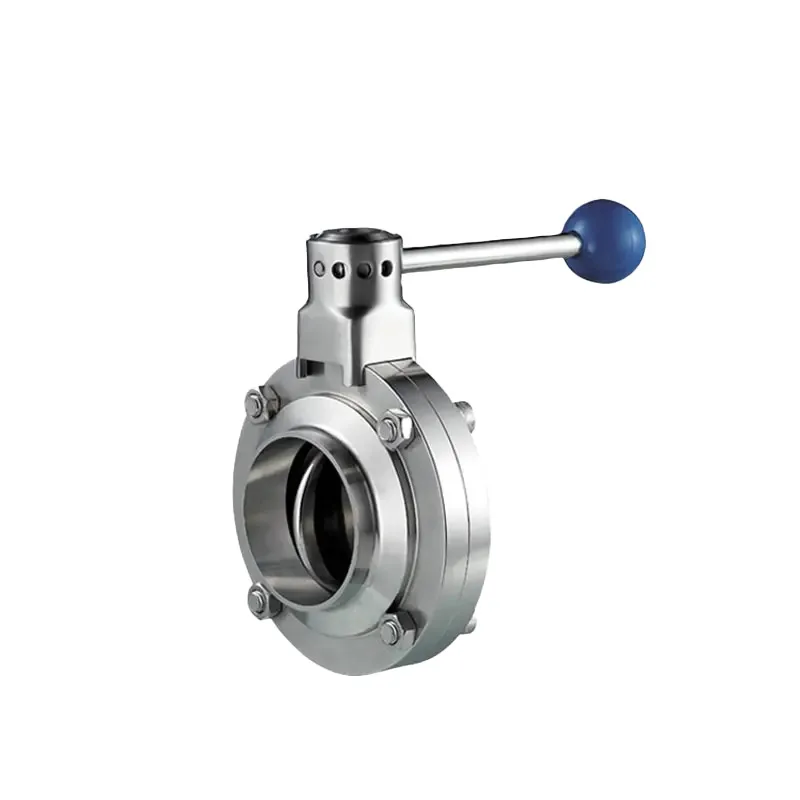
Description
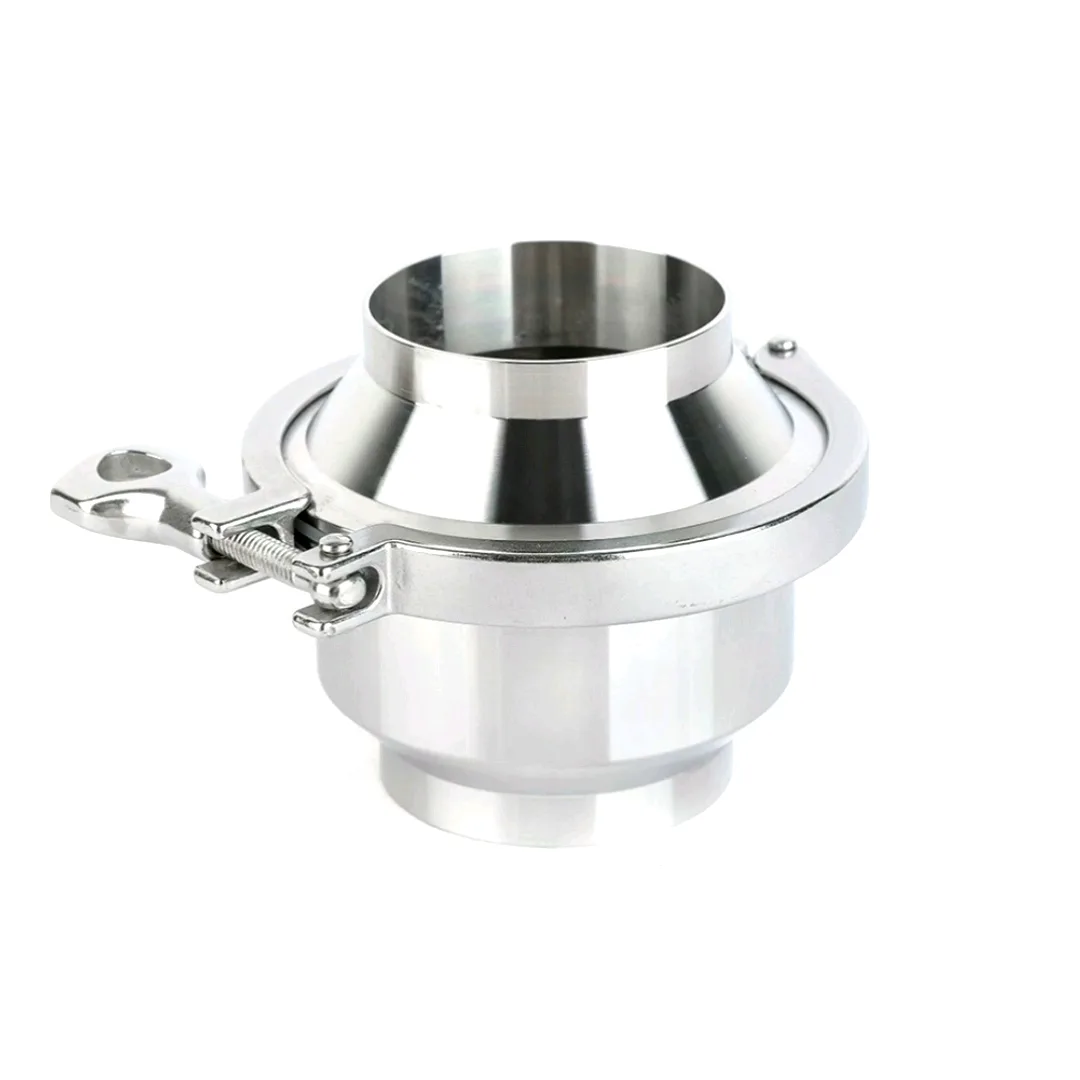
The valve holds a guided disc against a seat with a light spring. Forward flow lifts the disc off the seat as soon as the pressure difference exceeds the cracking pressure; reverse flow, or the loss of forward flow, lets the spring close it. There is no external moving part and no operator: the valve protects a pump, a filler or a CIP set from backflow and from the contamination that backflow carries.
The cracking pressure is set by the spring and falls as the size rises, because the disc area grows faster than the spring load. That matters when the valve is fitted on a gravity line or downstream of a low-head pump, and it is the figure to confirm against the duty rather than assume.
Wetted parts are austenitic stainless steel to ISO 2604-1, in practice AISI 316L (1.4404), with the spring in a spring grade such as AISI 302 and non-wetted parts in AISI 304. The product-contact finish is Ra 0.8 µm or better. The seal is chosen for the product: EPDM for dairy, water and CIP but not for oils and fats; NBR where fats and oils are carried; FKM or PTFE for aggressive duties or higher temperatures.
State the nominal size, the connection system and end form, the seal material, and whether the disc is to be perforated to give a minimum circulation and avoid a stagnant pocket. Mount the valve so the disc is guided in the intended orientation; a check valve installed the wrong way round in a hygienic line is both a process fault and a cleaning fault.