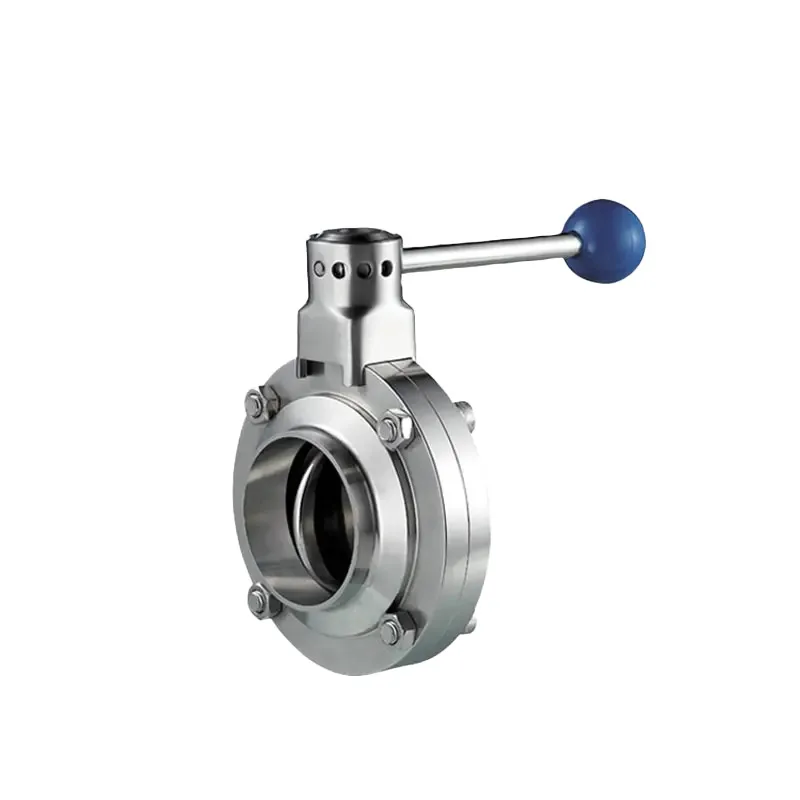
Description
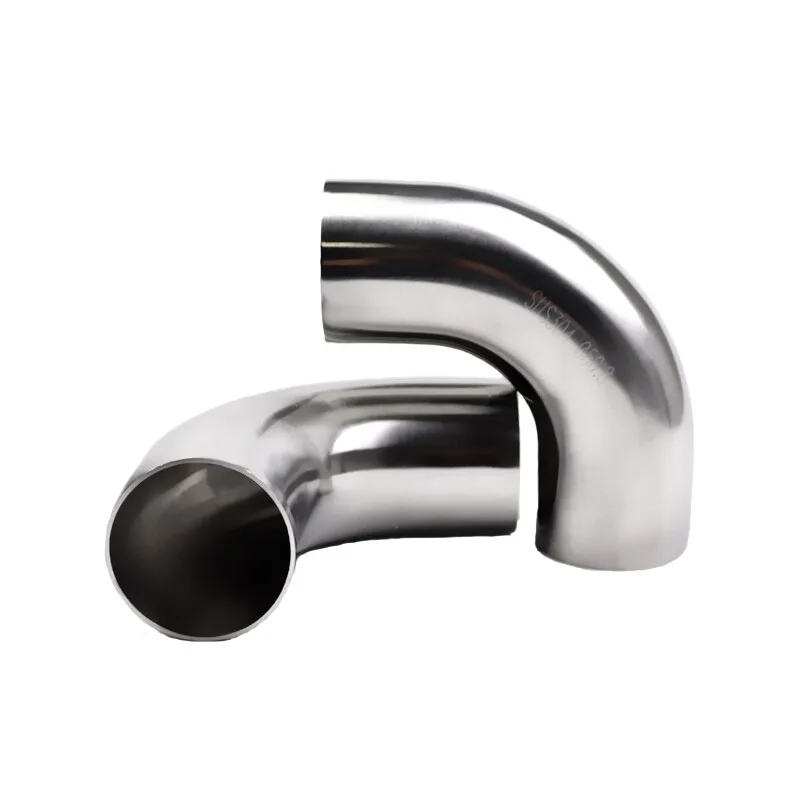
A hygienic bend is drawn from tube rather than cast or moulded, so the bore, the wall and the internal finish carry through the fitting without a step. That is what makes the line cleanable in place: a step or a weld bead standing proud in the bore is a soil trap and a place for a biofilm to establish.
Both ends are plain, for butt welding. In DIN 11852 the bends are designated by angle and radius — BS-90, BS-45 and BS-180 for the standard radius and BL-90 and BL-45 for the long radius. The long radius is specified where pressure drop matters, where the product is shear-sensitive, or where a pig or a spray device has to pass.
Material is austenitic stainless steel, in practice 316L (1.4404) for wetted service in this market because it carries molybdenum and resists chlorides from brine and chlorinated CIP. The internal surface should be specified as an Ra value rather than a grit number: two suppliers polishing to the same grit can land at different roughness.
State the tube standard and size, the angle and the radius, the grade, the internal Ra and the surface condition. Weld preparation and purge matter as much as the fitting — an unpurged root leaves an oxidised, rough weld inside the bore that no polish reaches after assembly. Ask for the EN 10204 3.1 certificate at the order stage.