Description
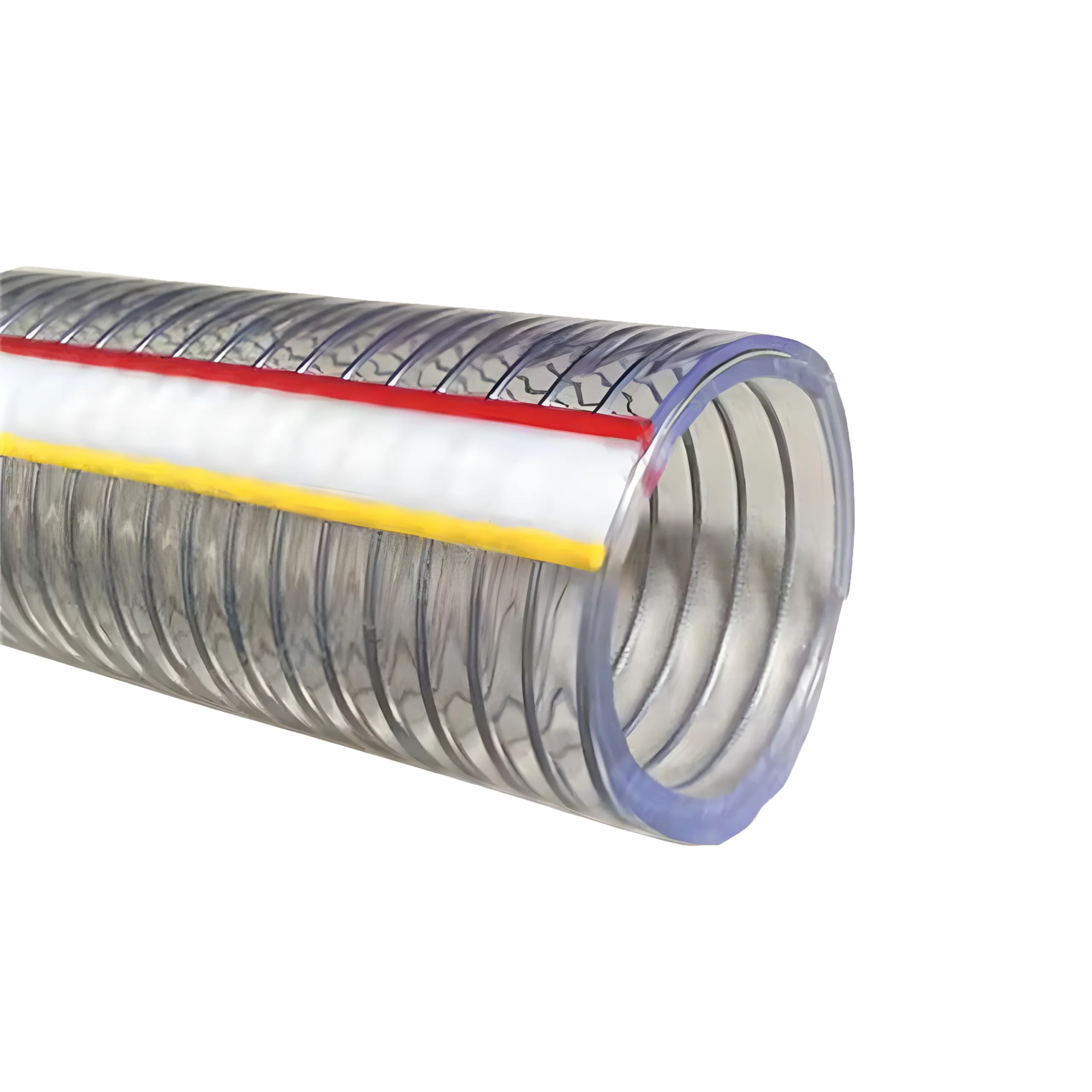
The hose is a plasticised PVC wall with a steel wire helix wound into it. The helix gives the collapse resistance that makes the hose usable on suction, and the transparent wall lets the operator see the product moving and see whether the hose has been left full or has been properly rinsed — which is a real advantage on a filling or decanting line.
The important restriction is one the marketing copy for this class of hose usually omits: a plasticised PVC food hose is for water, beer, wine, juice, alcohol up to a stated percentage, and other non-fatty foodstuffs. It is not for fats, oils or dairy products. Fats leach the plasticiser out of the wall, which both contaminates the product and embrittles the hose. A rubber hose with a compound chosen for fat is the correct product for that duty.
On compliance, plastics in food contact are covered by Regulation (EU) No 10/2011 within the framework of Regulation (EC) No 1935/2004, and Directive 2007/19/EC prohibits phthalates as plasticisers in PVC food hose. 'Phthalate-free' is therefore a real and checkable claim rather than a slogan, and an unqualified PVC hose is not automatically compliant. Ask for the declaration of conformity and the simulants the hose was tested against.
State the bore, the length, the working temperature, whether phthalate-free is required, and the medium — explicitly ruling fats, oils and dairy in or out. State the end fittings as well; the transparent wall makes it easy to see a badly made termination, which is worth using as an inspection point.