Description
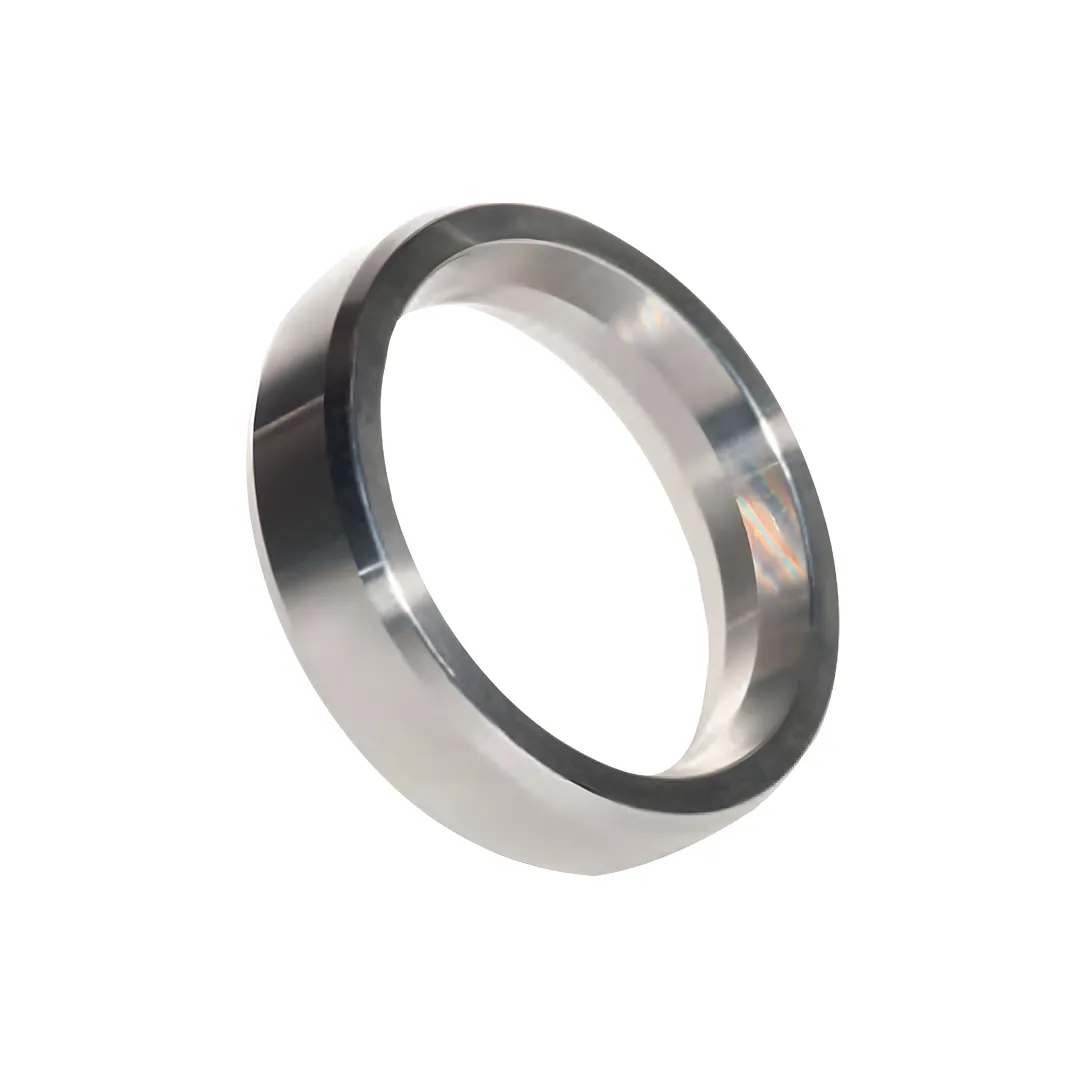
A spiral wound gasket is wound from a preformed metal strip laid in alternating turns with a soft filler. Under bolt load the winding acts as a spring while the filler flows to fill the flange surface irregularities, so the gasket keeps working through thermal cycling and bolt relaxation. That resilience is why it is the standard joint for refinery, petrochemical and steam service where a flat sheet gasket would relax and leak.
ASME B16.20-2007 fixes the construction. The metal strip is between 0,15 mm and 0,23 mm thick, the filler must be flush with, but not below, the winding on both faces, and the assembly is furnished in a centring ring 2,97 mm to 3,33 mm thick that locates the gasket in the flange and acts as a compression stop. Nominal winding thickness is 4,45 mm, and the gasket is designed so that a uniform bolt stress of 207 MPa compresses it to 3,30 mm plus or minus 0,13 mm; for NPS 1/2, 3/4 and 1 in Classes 150, 300 and 600 the design bolt stress is 172 MPa.
Inner rings matter more than they look. The standard requires an inner ring on every PTFE-filled gasket, and on flexible-graphite-filled gaskets unless the purchaser specifies otherwise, because a spiral wound gasket can buckle inward without one. The inner ring material should match the winding.
Identification is by colour and it is defined by the standard, not by the maker. A continuous colour around the outer edge of the centring ring identifies the winding metal - green for 316L, yellow for 304, silver for carbon steel, blue for 347, turquoise for 321 and so on - while intermittent stripes on that edge identify the filler: white for PTFE, grey for flexible graphite, pink for mica-graphite and light green for ceramic. When ordering, state the flange standard, nominal size and pressure class, and the winding, filler and ring materials.