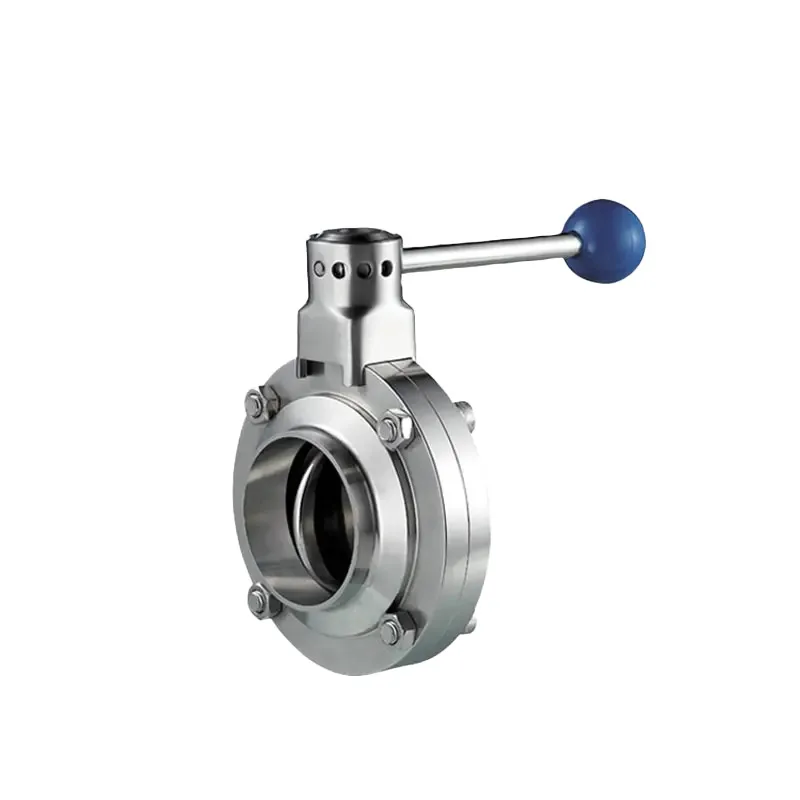
Description
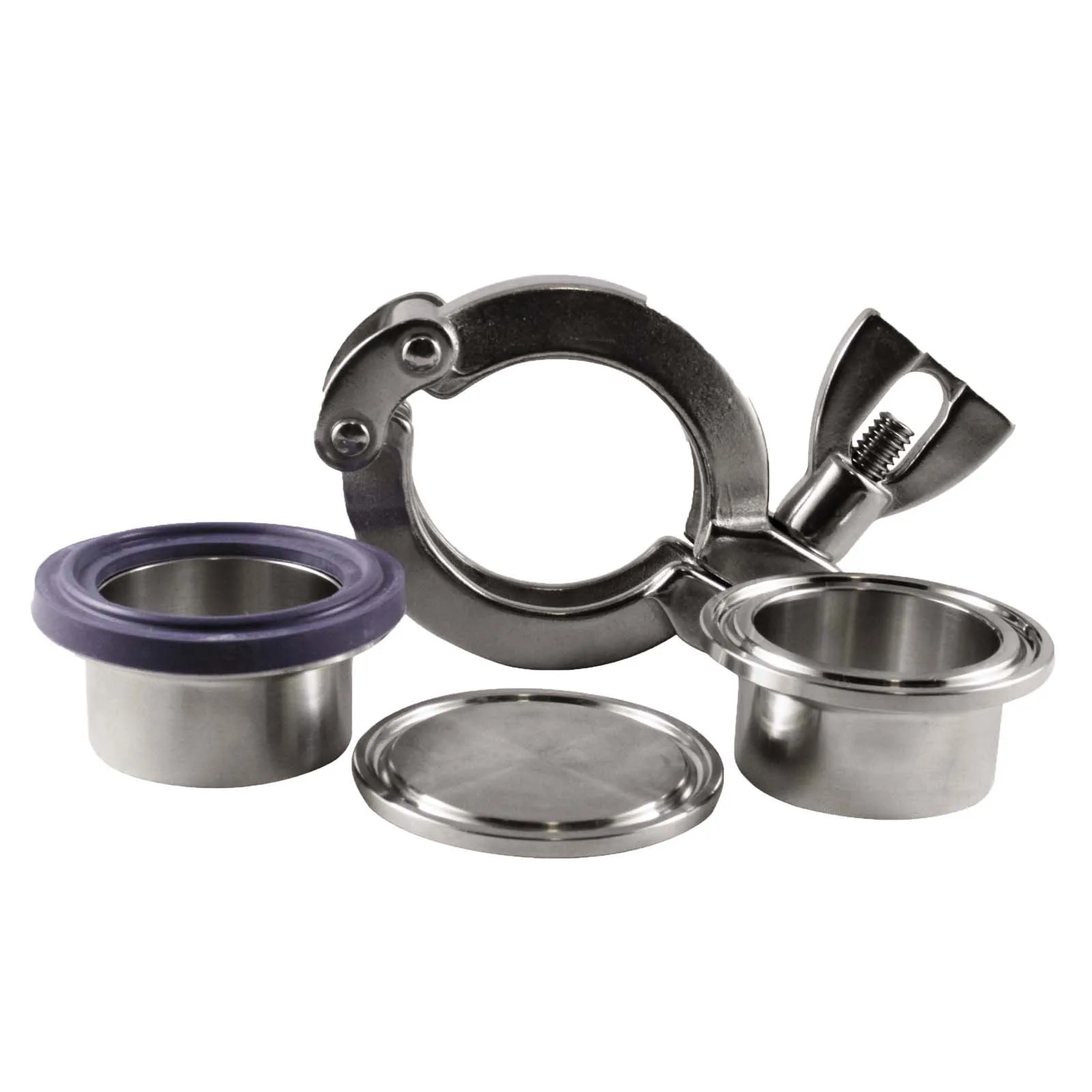
The clamp connection is the joint that made hygienic pipework quick to strip. Two flanged ferrules are welded to the tube, a gasket is laid between them, and a hinged band clamp squeezes the tapered flanges together — the flange at 20° and the gasket groove at 23° in ISO 2852, with a flange thickness of 2.85 mm. The joint is short, it opens with one wing nut, and it leaves nothing in the bore.
The one thing a buyer must understand is that the clamp and the gasket are sized on the flange diameter, not on the bore. Ferrules for 25 mm, 33.7 mm and 38 mm tube all carry the same 50.5 mm flange, so a 1 inch and a 1½ inch joint take the same clamp and the same gasket. The whole gasket vocabulary is eleven flange diameters: 34, 50.5, 64, 77.5, 91, 106, 119, 130, 155, 183 and 233.5 mm.
The series is not optional information. DIN 32676 Series A DN50 is 53 mm tube on a 64 mm flange, while Series B DN50 is 60.3 mm tube on a 77.5 mm flange: different clamps, different gaskets, same nominal size. Series C follows the inch tube of ASME BPE. A size given without its series is not an orderable description. Note too that ISO 2852 fixes the ferrule and gasket but states in its own scope that the clamp ring itself is not standardised — it specifies only clearances; DIN 32676 does list the clamp ring as part of the connection.
Permissible pressure follows the tube outside diameter — 25 bar up to 42.4 mm, 16 bar to 76.1 mm, 10 bar to 219.1 mm — between −10 °C and +140 °C with suitable clamps and seals, and it is the clamp and the gasket that decide it. State the series, the flange size, the clamp type (single-pin hinged, double-pin, heavy-duty or high-pressure), the gasket material and which parts of the kit you need, including whether the blind end cap is required.