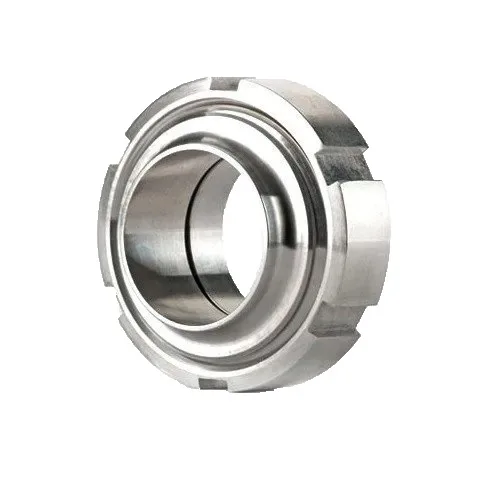
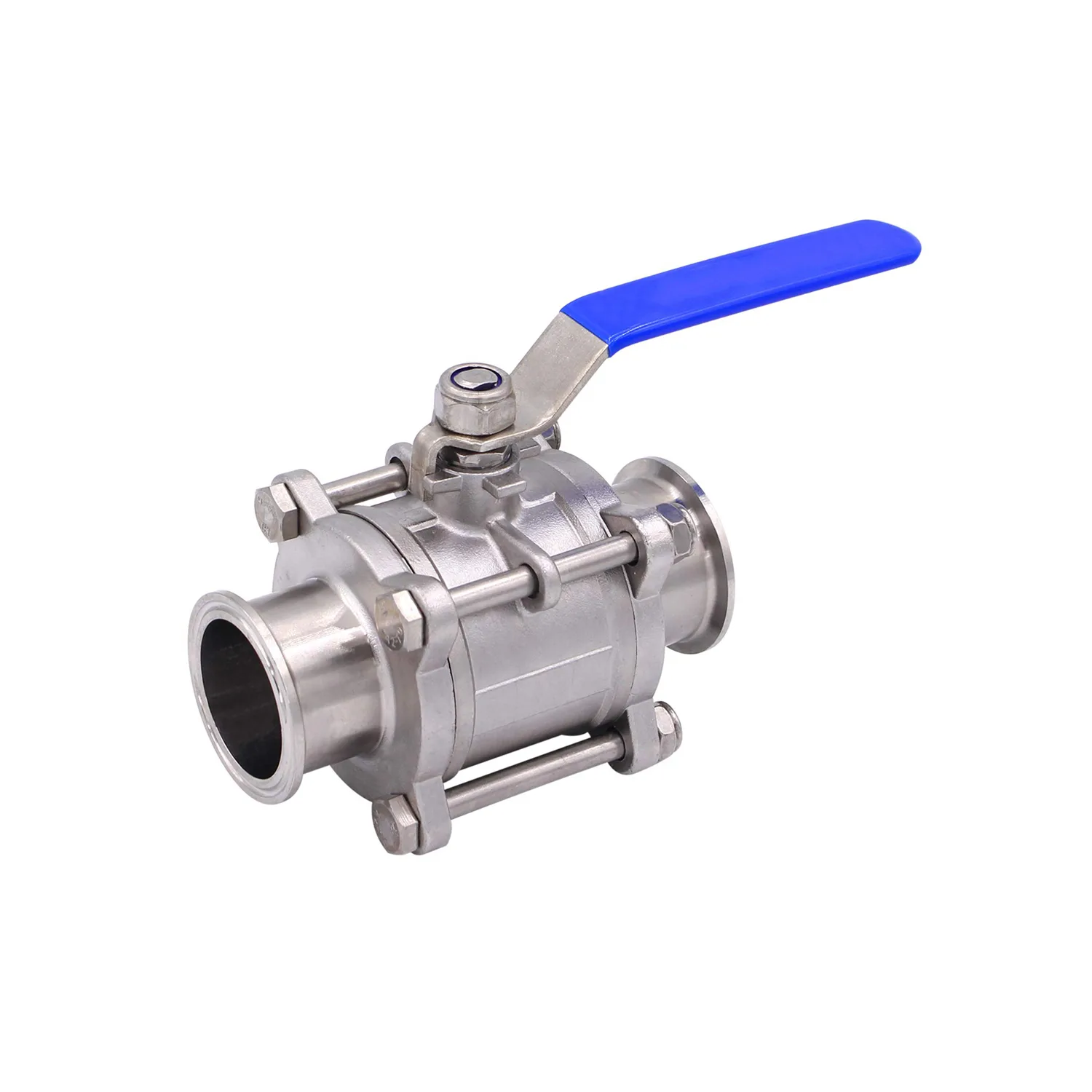
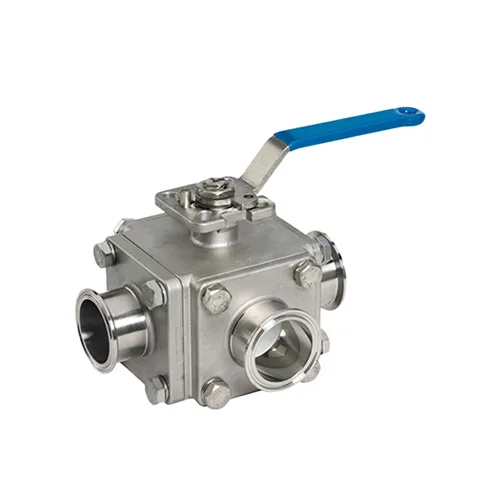
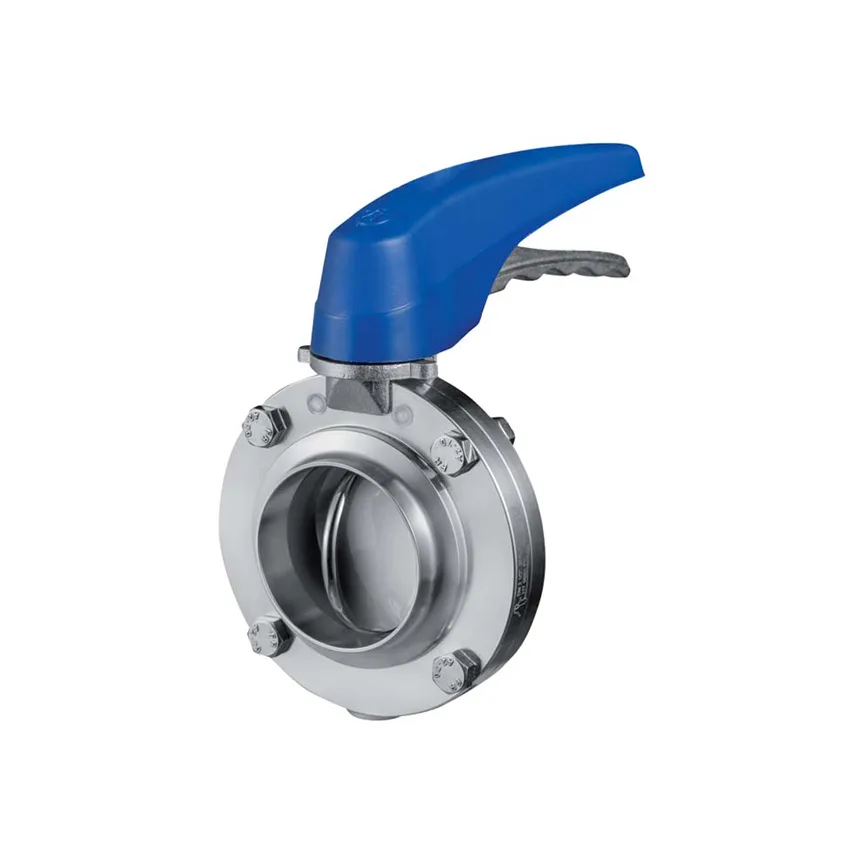
A hygienic union is a joint that can be broken by hand. It is made of four parts — a male threaded part, a liner, a slotted round nut driven with a C-spanner, and a gasket — and all four have to be ordered. It is specified where a line is stripped down for cleaning or where a valve, a pump or an instrument has to come out without cutting pipework.
The catalogue holds both systems, and they are two different joints. The SMS union, to SMS 1145 with its parts SMS 1146, 1147, 1148 and 1149, seals on a flat square-section gasket and sits on inch-labelled tube of 25.0, 38.0, 51.0, 63.5, 76.1 and 101.6 mm outside diameter. The DIN 11851 union seals on a D-ring gasket in a conical seat, uses a round thread to DIN 405-1 that can be run up by hand, and sits on EN 10357-A tube where DN25 is 29 mm outside diameter. Nothing crosses between them: not the tube, not the thread, not the gasket. The quickest way to tell them apart in the hand is the gasket — flat and square-section for SMS, a D-ring in a cone for DIN.
The two systems also carry different pressures. SMS 1145 is a nominal class 6 union. The DIN 11851 screw connection runs 40 bar from DN10 to DN40, 25 bar from DN65 to DN100 and 16 bar at DN125-DN150, usable to a maximum of 140 °C; published sources disagree at DN50, where the figure is given as either 25 or 40 bar depending on the maker, and that has not been resolved here.
State the system, the size — inch for SMS, DN for DIN — the end form (weld, or expanding for DIN), which of the four parts are required, the grade and the gasket material. For a 4 inch SMS union, state the thread size: two exist, 132 mm and 140 mm outside diameter, and they do not interchange, so a 4 inch SMS enquiry without the thread size cannot be quoted. Note also that DIN 11851 expanding parts are cut for the older DIN 11850 Reihe 1 tube, which differs from EN 10357-A below DN65.