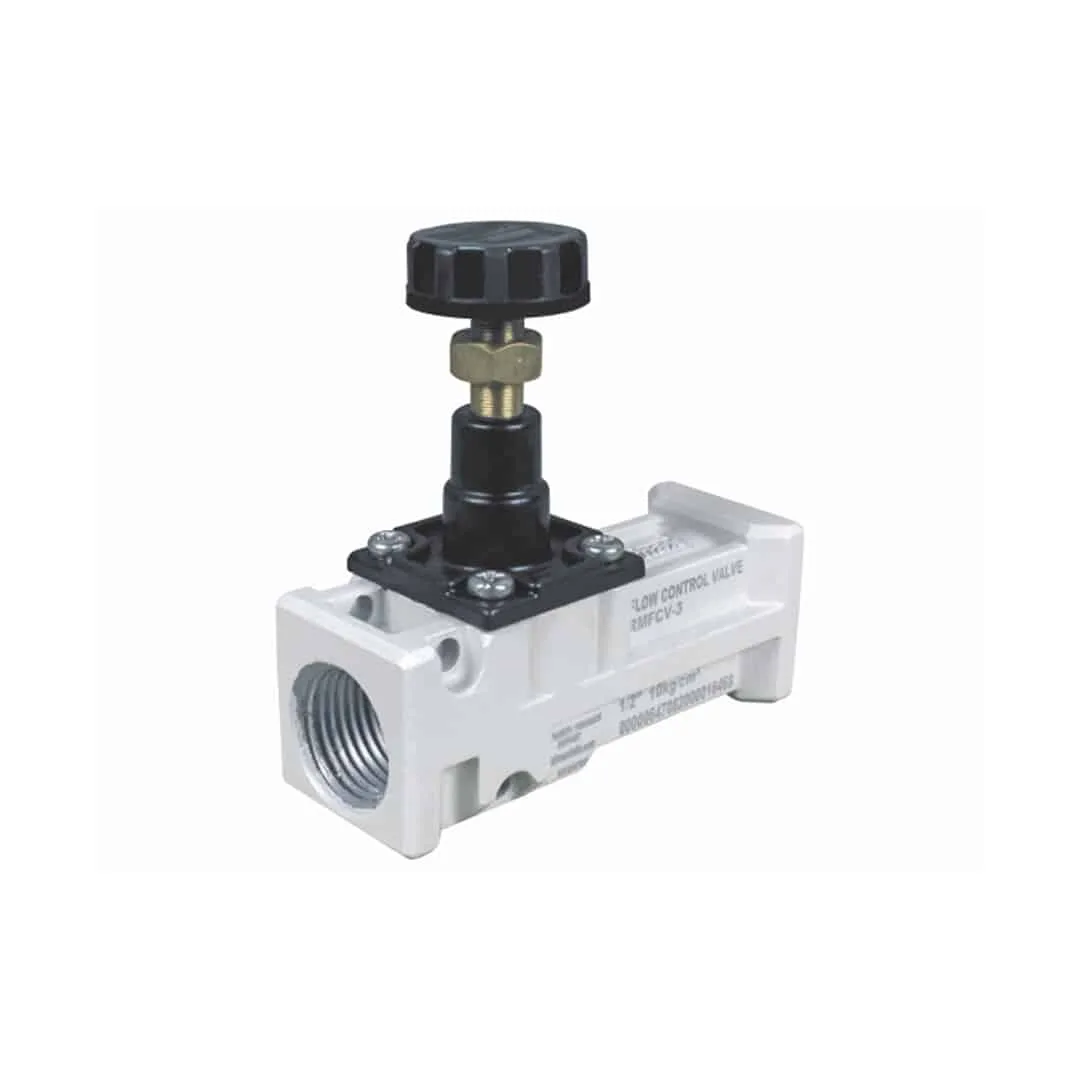
Description
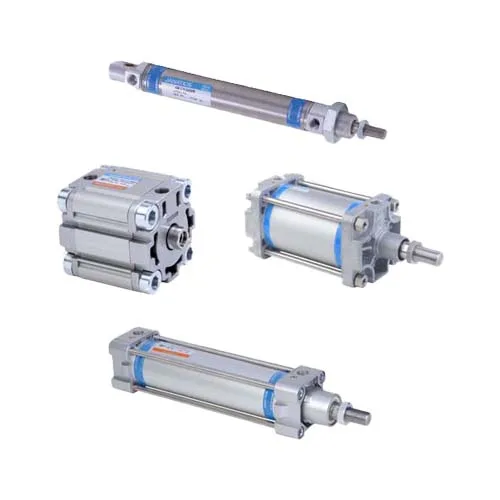
A pneumatic cylinder converts air pressure into a straight push or pull. In a single-acting cylinder air drives the piston one way and a spring returns it; in a double-acting cylinder air is admitted to either side of the piston and drives it both ways, which is the usual arrangement where the load must be controlled in both directions. Output force is the working pressure multiplied by the effective piston area, so bore sets the force and stroke sets the distance.
Three ISO standards fix the dimensions in this range, and the body style tells you which one applies. ISO 6432 covers single-rod cylinders in bores from 8 mm to 25 mm - the round-body mini cylinders. ISO 21287 covers compact cylinders in bores from 20 mm to 100 mm, where overall length is cut down for tight installations. ISO 15552 covers cylinders with detachable mountings in bores from 32 mm to 320 mm - the extruded profile and tie-rod cylinders - and fixes barrel diameter, mounting hole patterns, tie rod positions and port positions so that cylinders from different makers interchange. All three are written to the 1 000 kPa (10 bar) pressure series.
The standards also govern the accessories. ISO 15552 includes the accessory dimensions and the groove for magnetic position sensors; compact cylinders of 20 and 25 mm bore take ISO 21287 end cover mountings while those from 32 mm to 100 mm take ISO 15552 end cover mountings. Rod-end spherical eyes follow ISO 8139 and rod-end clevises follow ISO 8140, both dimensioned for cylinders built to ISO 6432 and ISO 15552.
When ordering, specify bore and stroke first, then single or double acting, the rod thread, the mounting style, whether cushioning is required and whether a magnetic piston is needed for position sensing. Cushioning is worth deciding early: ISO 21287 compact cylinders are not built with adjustable cushioning, so a duty that needs an adjustable end-of-stroke cushion points to an ISO 15552 profile cylinder instead.