Description
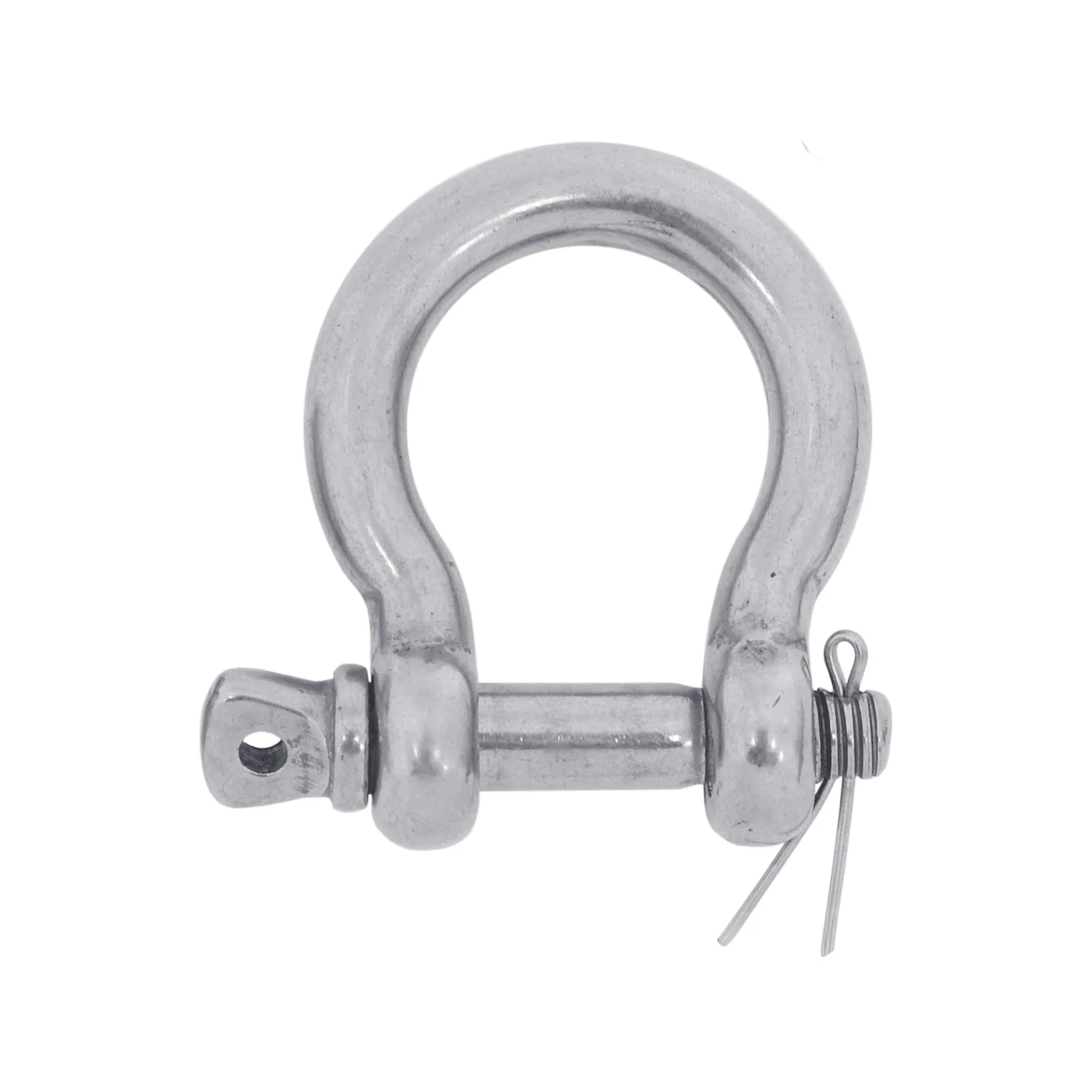
A shackle is the removable link between a lifting appliance and its load: a forged body closed by a pin, so that a sling eye, a chain or a wire rope thimble can be connected and released without cutting anything. Two body patterns are in use. The dee shackle is narrow and takes the load in line along its axis. The bow shackle, the pattern in the product photograph, has a wider rounded body that accepts several legs at an angle, at the cost of a lower rating for the same pin diameter.
Pins differ as much as bodies. A screw pin threads into the eye and is quick to fit but can unscrew if the load rotates against it. A safety or bolt-type pin is held by a nut and a split pin and is the correct choice where the shackle stays in service or the load can turn. The item photographed has a round pin retained by a split cotter pin.
EN 13889:2003+A1:2008 is the European safety standard for forged steel dee and bow shackles of grade 6 for general lifting, covering working load limits from 0,5 t to 25 t. It applies only to shackles with threaded pins, and its annexes give guidance on safe use, on pin types and on a designation system. A round-pin stainless shackle of the kind photographed falls outside that scope, so its rating must be taken from its own marking and certificate rather than assumed from the standard.
When ordering, give the working load limit required, the pattern (dee or bow), the pin type, and the material - galvanised forged steel for general lifting, stainless for marine and washdown positions. Ask for the manufacturer's certificate, and check that the WLL is legible on the body before the shackle is put to work; a shackle with no readable marking is not fit for lifting.