Description
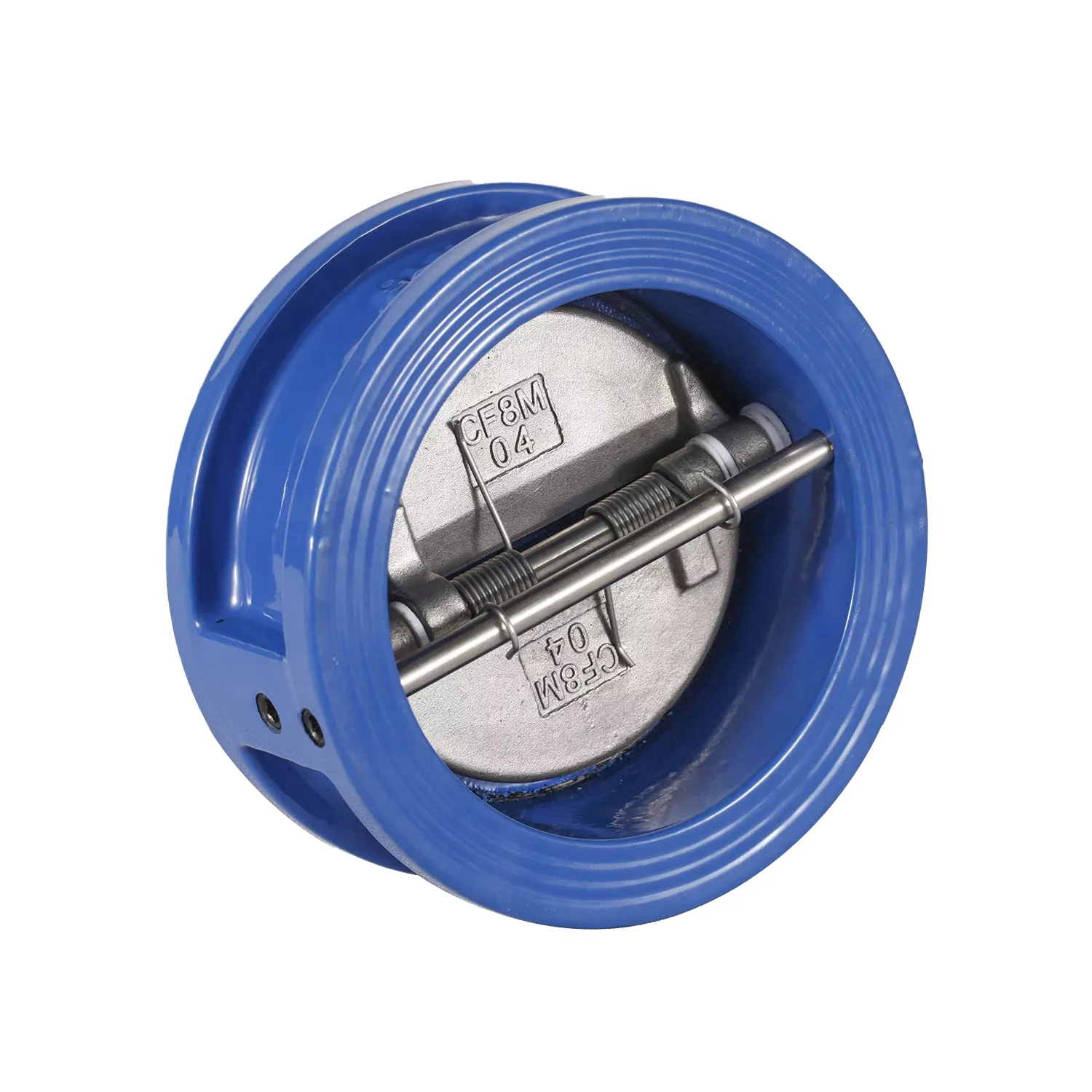
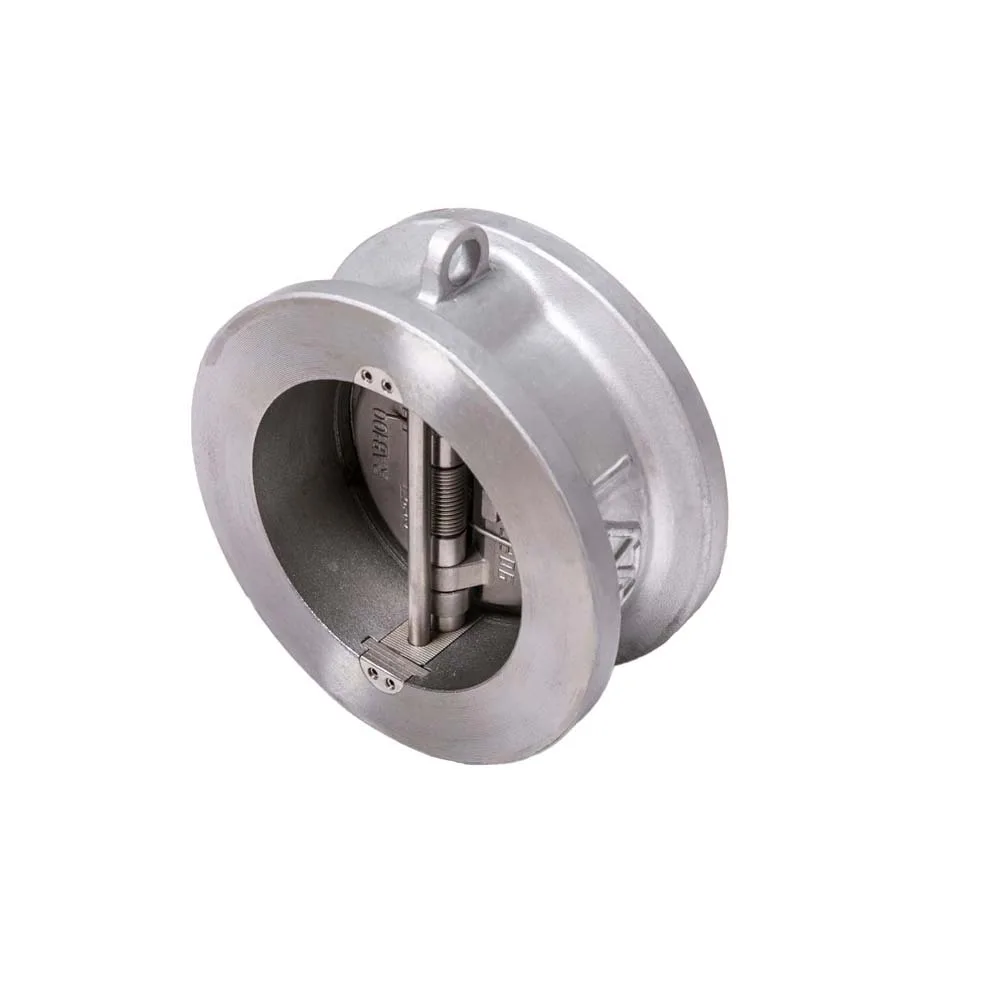
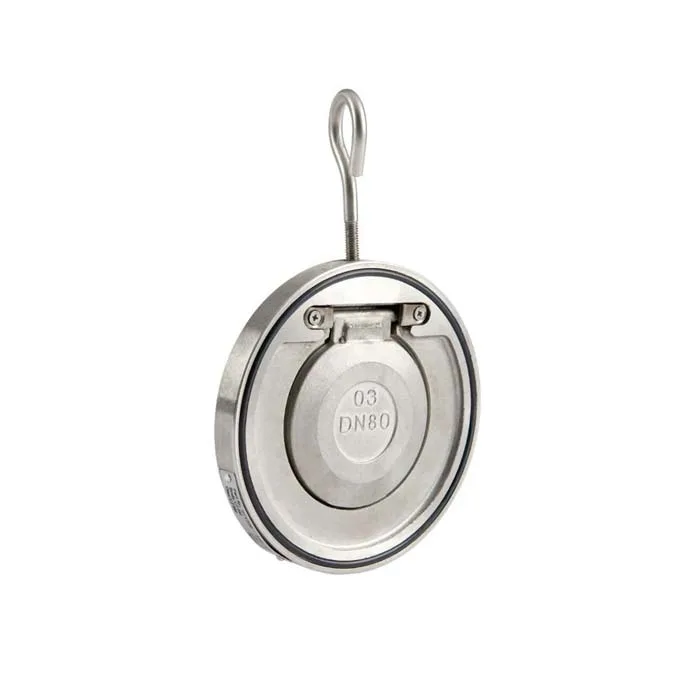
Two half-discs are hinged on a central pin and held closed by torsion springs. Forward flow folds them open into the bore; as the flow decays the springs shut them, so the valve closes on falling flow rather than on reverse flow. The face-to-face length is a fraction of a flanged swing check of the same bore, which is why the wafer pattern is used where pipe runs are tight or valve weight matters.
On the unit photographed the plates, hinge pin, stop pin and springs are stainless: both plates are cast CF8M, the ASTM A351 grade equivalent to AISI 316. The body is a painted casting and carries no material mark, so the body metal — cast iron, ductile iron or carbon steel — must be stated on the order rather than assumed from the photograph. Where the body is cast iron, the governing European standard is EN 16767, metallic check valves, which replaced the withdrawn EN 12334 in 2016; for cast iron flanged and wafer bodies it covers PN 2,5 to PN 25 and Class 125 and Class 250.
Order by nominal size, body material, seat material and — because the valve is clamped between two flanges — the flange standard and rating. ASME B16.5 Class 150/300 and EN 1092-1 PN 10/16/25/40 are drilled differently and will not substitute for one another.