Description
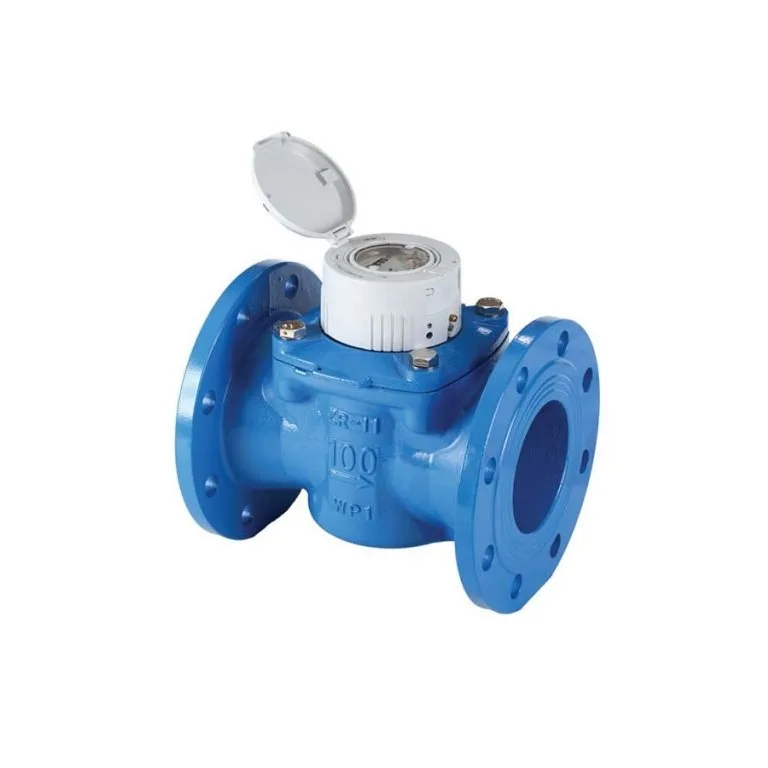
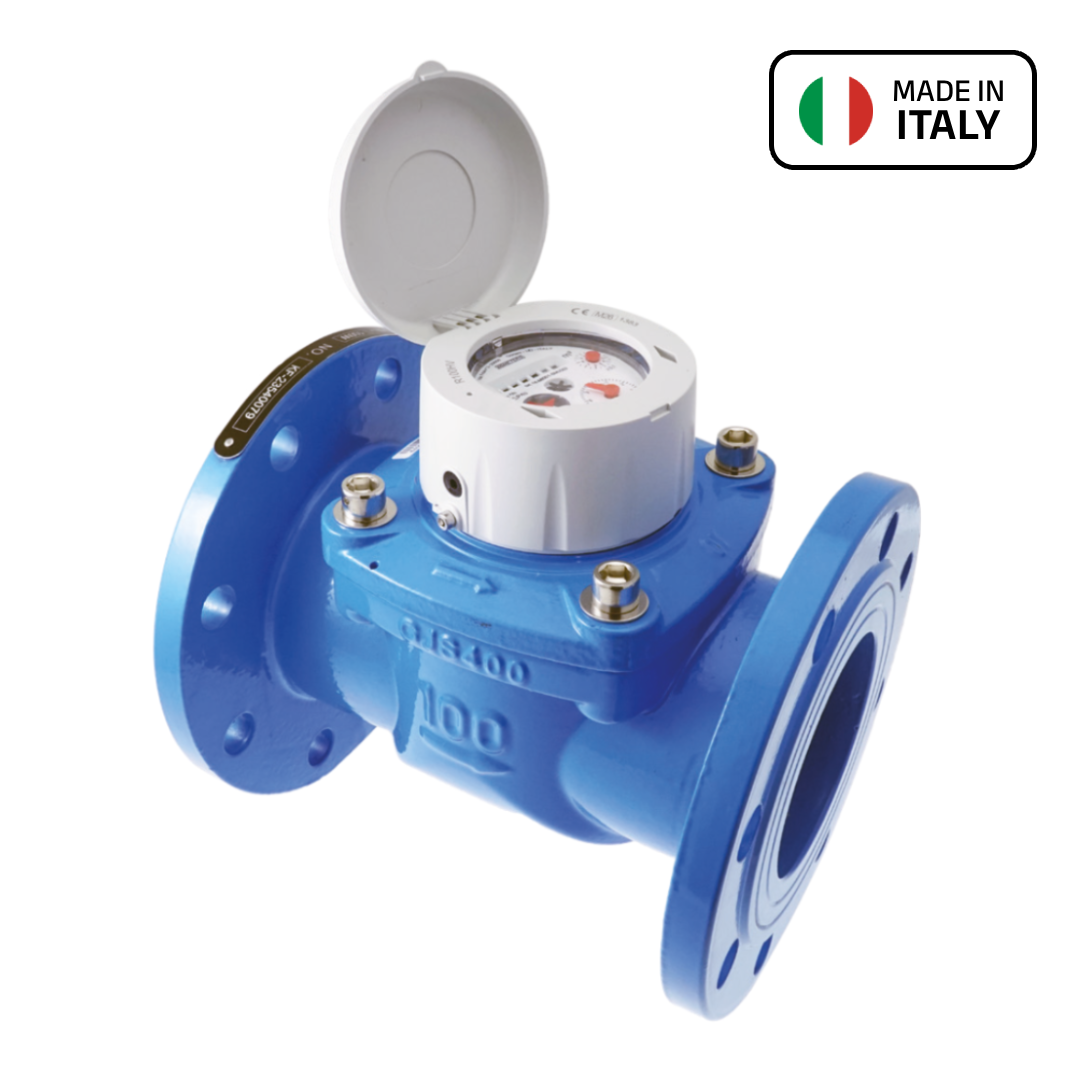
A flanged water meter is the same measuring instrument as a threaded one, carried in a body with bolted flanged ends so it can be lifted out of the line without disturbing the pipework. Above about DN50 that is the only practical arrangement, and it is why bulk supply, district and irrigation metering is almost always flanged.
The designation rules are the same as for any meter to ISO 4064-1:2014 / OIML R 49-1:2013: the meter is defined by its permanent flow rate Q3 in cubic metres per hour and the measuring ratio R = Q3/Q1, not by its nominal bore. Q2/Q1 is fixed at 1.6 and Q4/Q3 at 1.25. A class 2 meter is allowed ±5 % between Q1 and Q2 and ±2 % between Q2 and Q4 on water up to 30 °C; class 1 halves both figures. Maximum admissible pressure is at least 1 MPa (10 bar), and the standard pressure loss class is Delta p 63, meaning no more than 0.63 bar lost between Q1 and Q3.
The flange drilling is the specification that decides whether the meter can be installed at all. EN 1092-1, quoted as PN 10, PN 16, PN 25 or PN 40, and ASME B16.5, quoted as Class 150 or Class 300, differ in bolt circle diameter, bolt count and hole size; a DN100 meter drilled to EN 1092-1 PN16 will not bolt to a 4 inch ASME Class 150 counterflange. Confirm the standard, the rating and the face type against the existing pipework before ordering, and confirm the face-to-face length, which is not fixed by the metering standard.
When ordering, state the nominal bore, flange standard, rating and face type, Q3 and R, temperature class, pressure loss class, mounting orientation, and whether a pulse output or remote reading head is required. For a billed or custody-transfer duty ask which type approval the meter holds.