Description
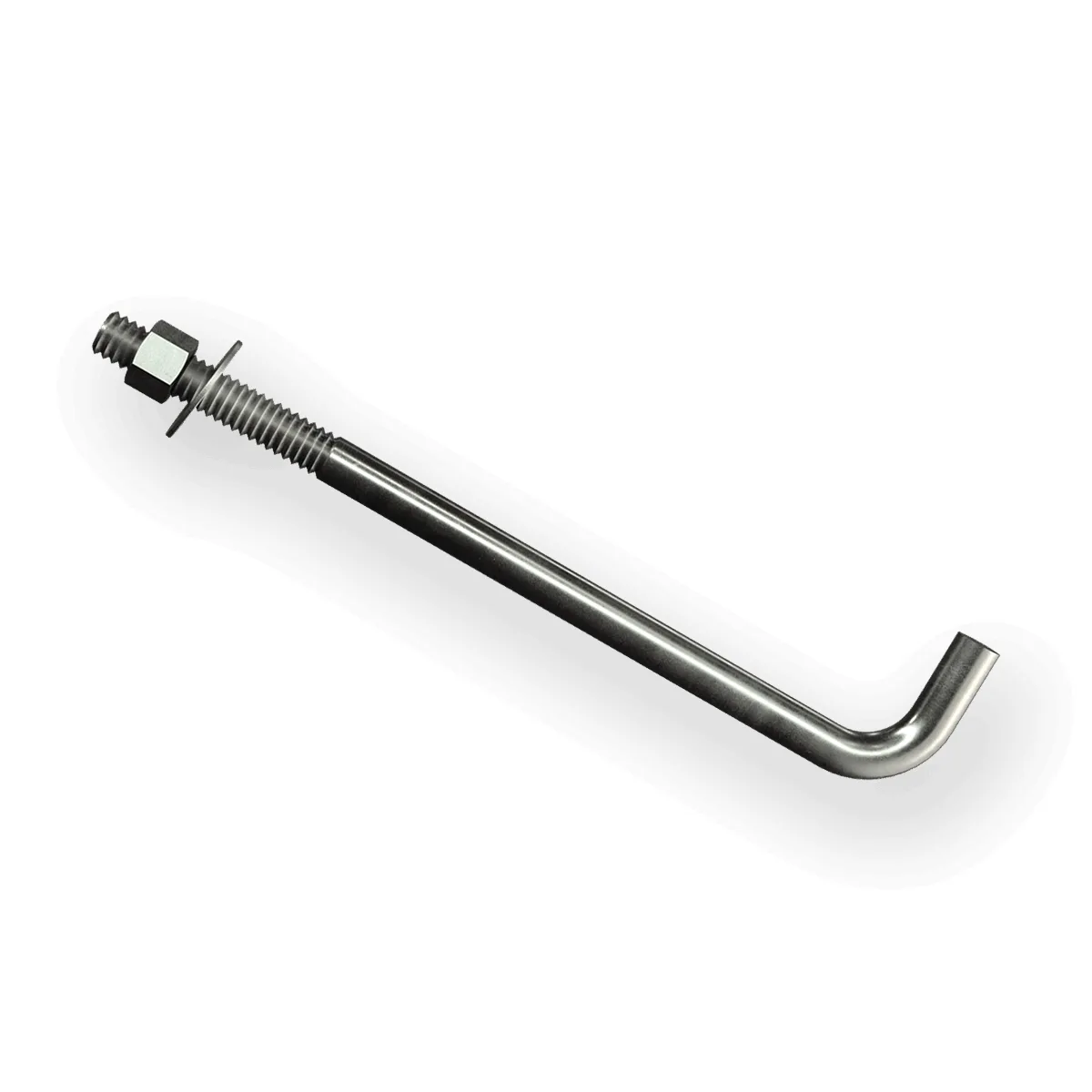
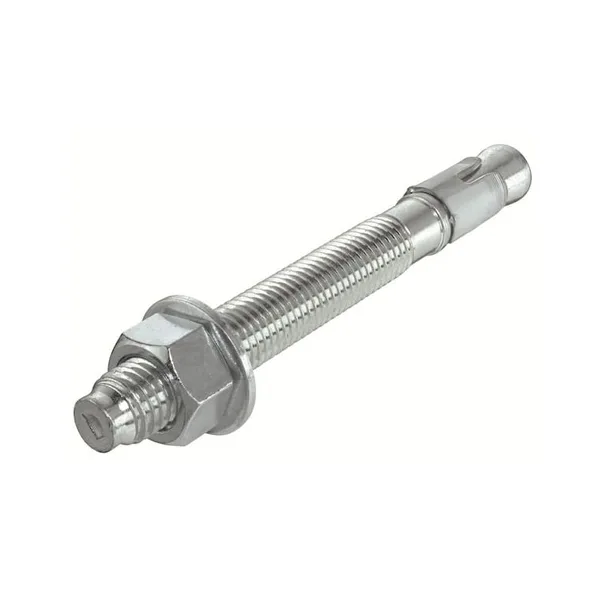
An L bolt is a cast-in anchor: a straight bar bent through 90° at the buried end and threaded at the other, set in the formwork before the pour so that the thread projects above the finished concrete. The hook resists pull-out by bearing on the concrete; it is not a post-installed anchor and cannot be fitted into hardened concrete.
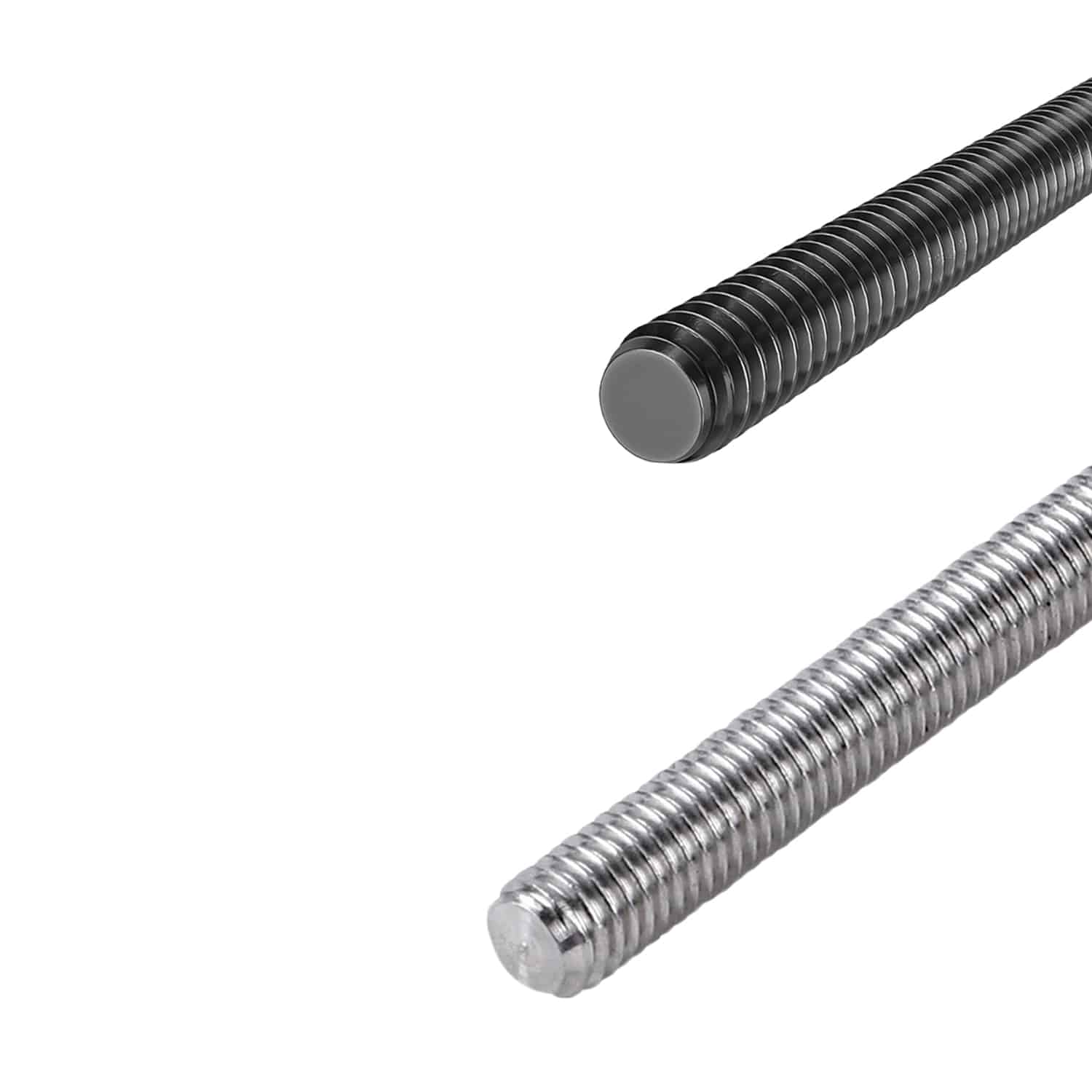
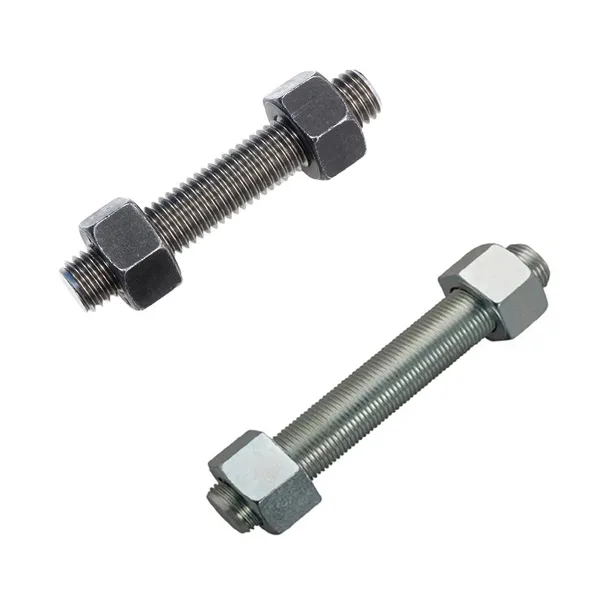
ASTM F1554 is the specification that covers anchor bolts of this kind - straight, bent, headed and headless anchor bolts and all-thread anchor rods - in three strength grades named for their minimum yield in ksi. Grade 36 is low carbon steel at 36 ksi (248 MPa) minimum yield and 58 to 80 ksi tensile; grade 55 is high-strength low-alloy at 55 ksi (380 MPa) yield and 75 to 95 ksi tensile; grade 105 is heat-treated alloy steel at 105 ksi (724 MPa) yield and 125 to 150 ksi tensile. Grades 36 and 55 are made from 1/2 in to 4 in diameter, grade 105 from 1/2 in to 3 in.
Typical duties are holding down structural steel column base plates, equipment skids, pump and motor bases, light and sign poles, and bearing plates. Nuts are ordered to ASTM A563 and washers to ASTM F436; where the projecting thread will be exposed to weather, hot-dip galvanising to ASTM F2329 is the usual protection and calls for over-tapped nuts.
When ordering, give the bar diameter, the overall length, the hook length, the thread length at the projecting end, and the grade. Also state the setting-out: anchor bolts are normally installed in a template so that the bolt pattern matches the base plate, and any adjustment allowance should be agreed before the pour.