Description
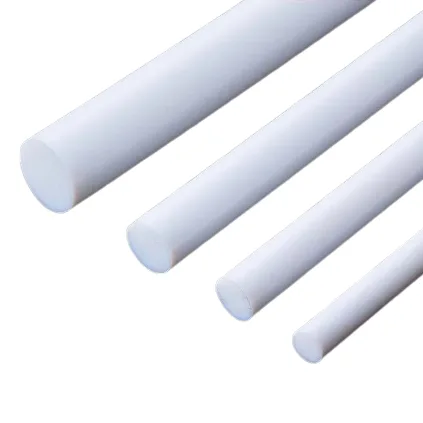
Rod stock is bought to be turned. Nylon rod is the workshop material for bushes, rollers, sheaves, spacers, sprockets and wear pads: it is strong and stiff, it machines cleanly and it runs against steel without seizing. PTFE rod is turned into valve seats, chemical service washers, slide bearings, insulating bushes and back-up rings, wherever chemical attack, temperature or friction rules nylon out.
Published figures for virgin stock shapes: PTFE has a continuous service temperature to +260 °C and a density of 2.15 g/cm³; PA 6 has a long-term service temperature of +100 °C, a short-term maximum of +160 °C and a density of 1.14 g/cm³. PTFE is the more chemically resistant and the more slippery of the two; nylon is the stronger and the more dimensionally stable under load.
Two working points matter on the lathe. Nylon absorbs moisture and grows as it does, so parts machined dry to close tolerance will move; and PTFE has a high coefficient of thermal expansion and creeps under sustained load, so allow clearance and avoid using it as a loaded structural member. Order by material, diameter and length.