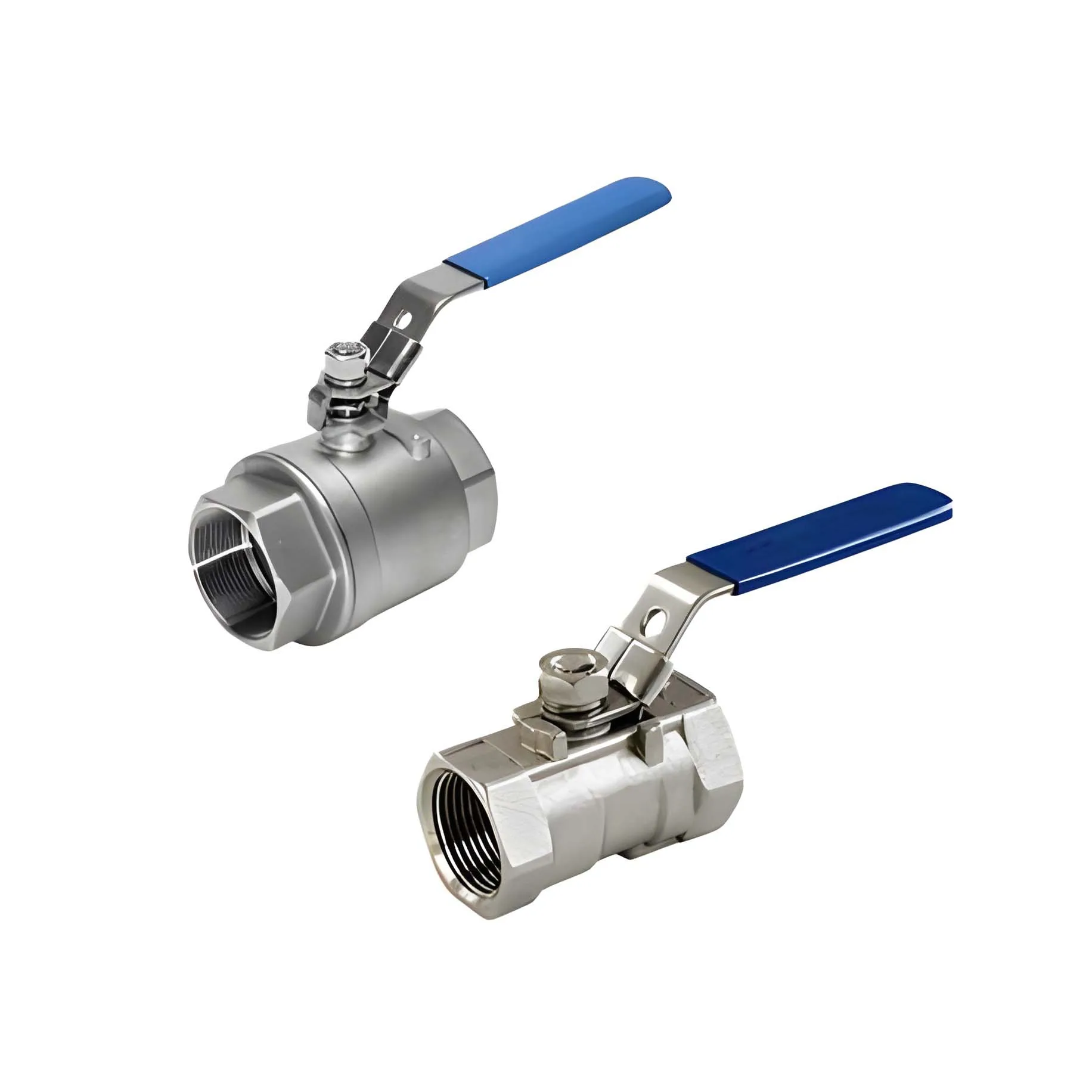
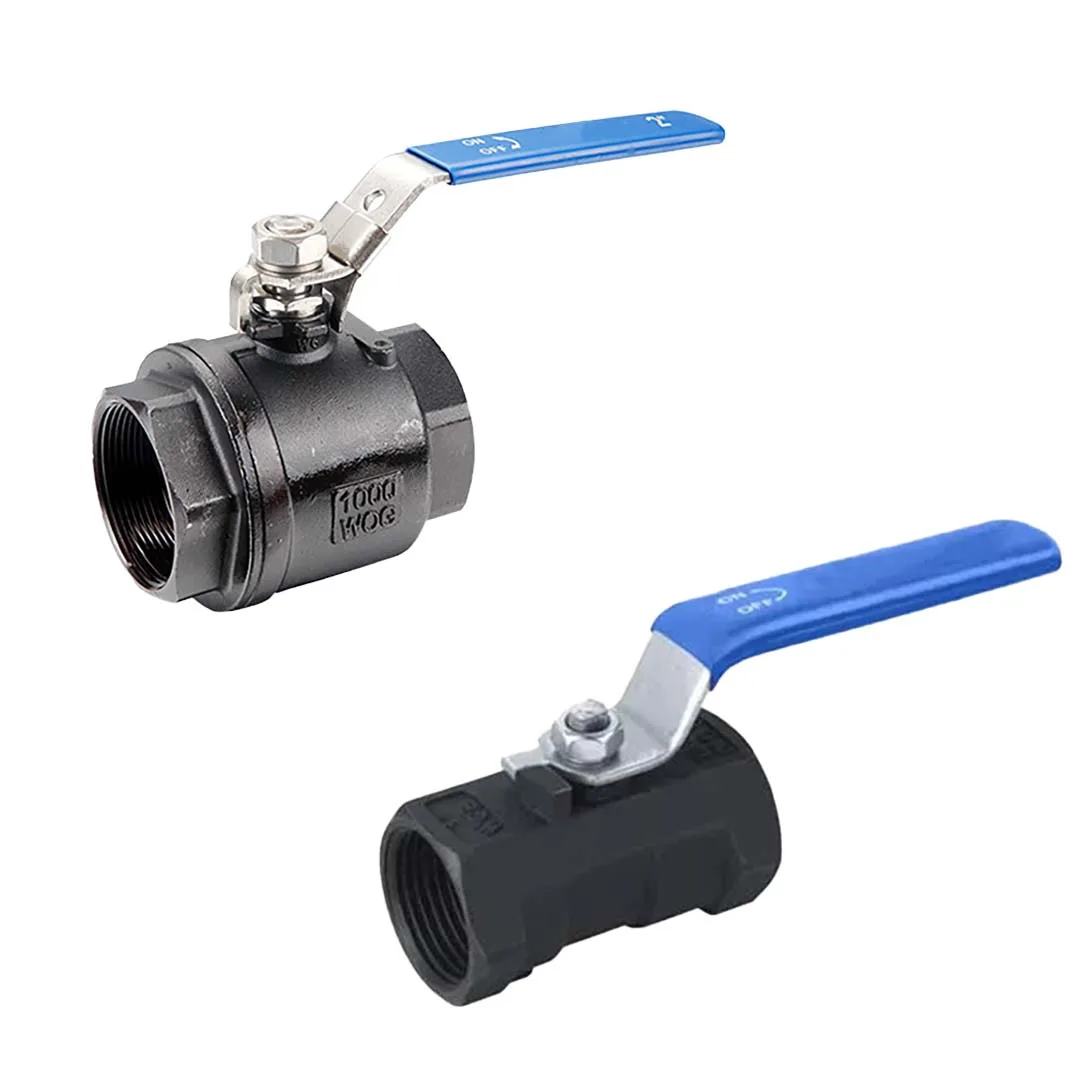
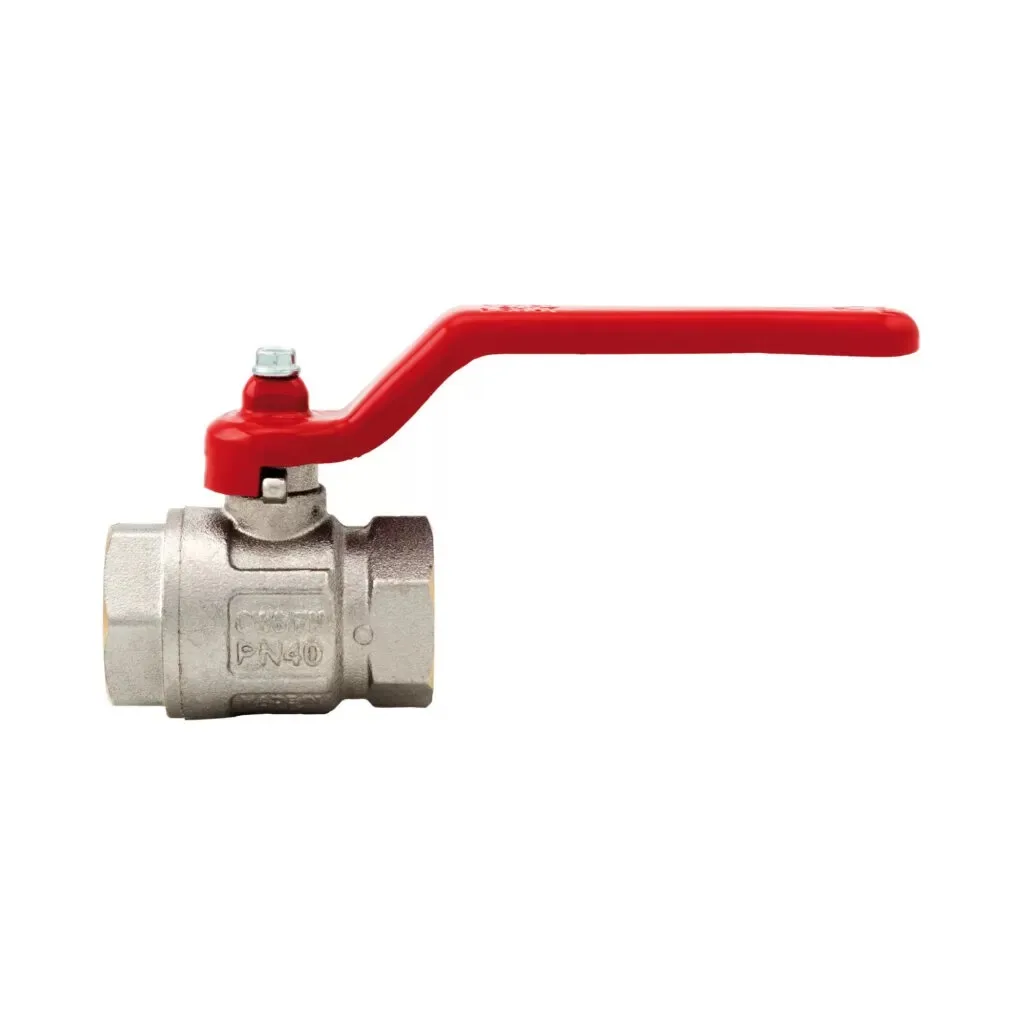
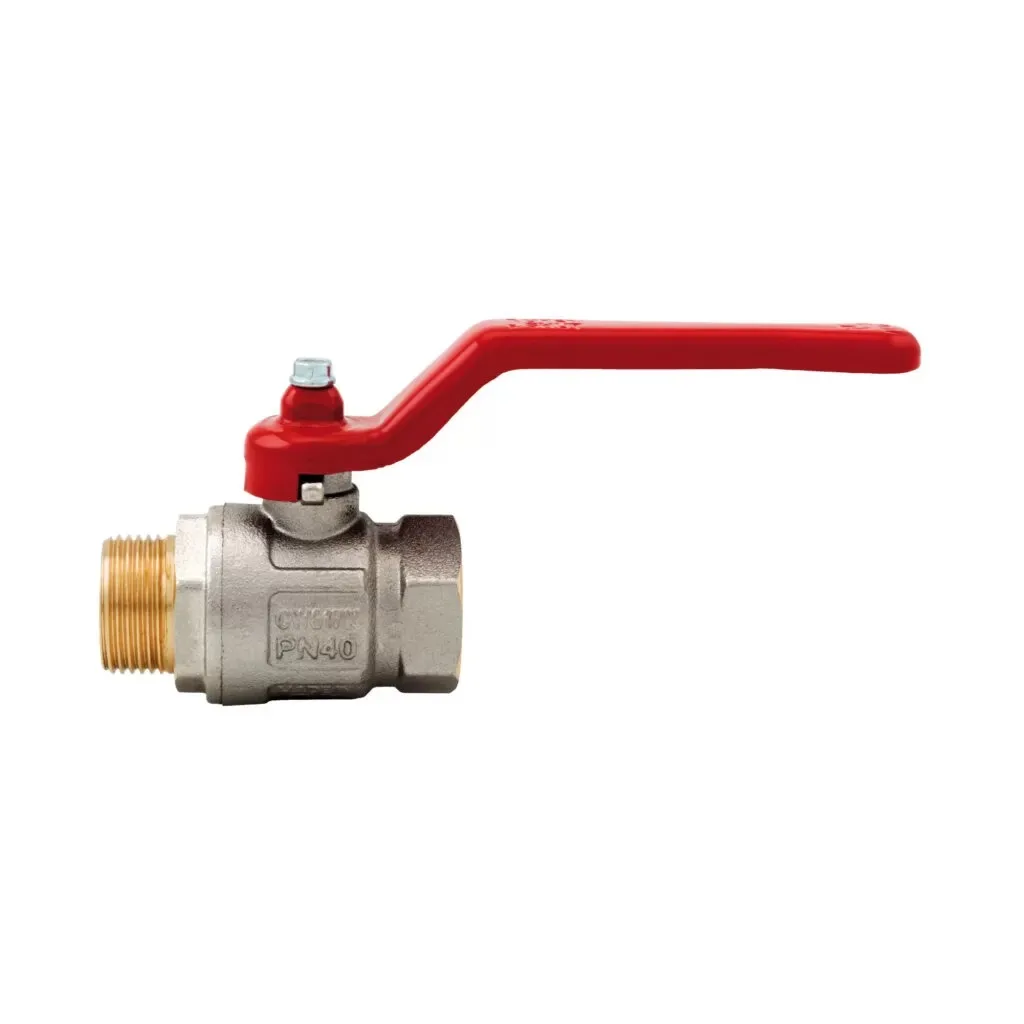
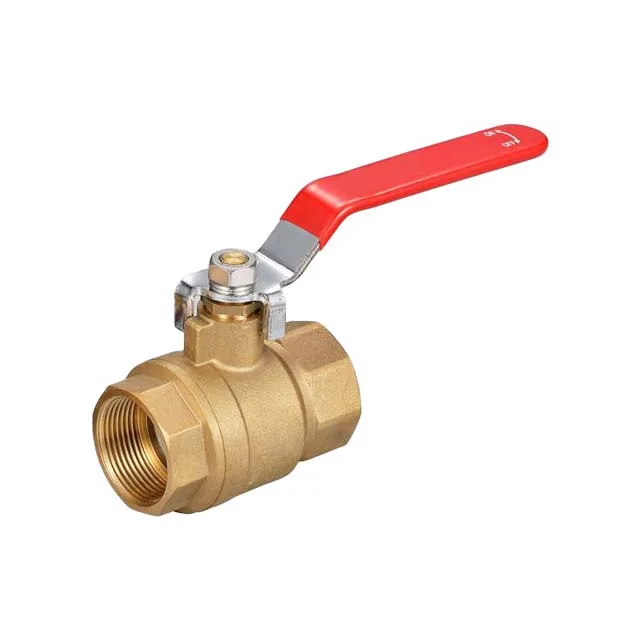
Description
A ball valve isolates by turning a bored ball through 90°: with the bore in line with the pipe the valve is open, and across the pipe it is closed. MSS SP-110 states that ball valves of this class are intended for on-off operation and should be used for modulating or throttling service only where the manufacturer recommends it.
Two bore patterns are held. A full bore valve has a ball bore matching the nominal pipe bore, so there is no step in the flow path and the line can be pigged or rodded; a reduced bore valve — sold in this trade as "half bore" — uses a smaller ball and body behind the same end connection, which lowers cost and weight at the price of extra pressure drop. ISO 17292:2015 designates the three bore classes as full bore, reduced bore and double reduced bore.
Threaded and socket-welding end ball valves are covered by ISO 17292:2015 in sizes DN 8 to DN 50 (NPS 1/4 to 2) and by MSS SP-110 in NPS 1/4 to 4. ISO 17292:2015 permits threads to either ISO 7-1 or ASME B1.20.1 (NPT); the two forms are not interchangeable, and an NPT male started into an ISO 7-1 tapered female will jam before it seals because the flank angles and pitches differ.
State on order the nominal size, the thread form, full or reduced bore, the stainless grade required, the seat material and the pressure designation. Under ISO 17292:2015 the valve rating is the lesser of the shell rating and the seat rating, so on a soft-seated valve it is normally the seat, not the body, that sets the temperature and pressure limit.