Description
A three-way ball valve replaces two or three separate two-way valves with a single body. The ball carries a machined passage that connects different pairs of the three ports as the lever is turned, so one valve handles a duty that would otherwise need a tee and two isolating valves.
Two port patterns are made and they are not interchangeable. An L-port ball has a passage bent through 90°, so it connects a common port to one outlet or the other, or shuts off entirely — this is the diverting valve. A T-port ball has three openings in a T, the centre one about 90° from the other two, so it can connect any pair or all three ports together and can mix or split flow, but it cannot fully shut off. Choose L where isolation is required, T where mixing or a bypass is required.
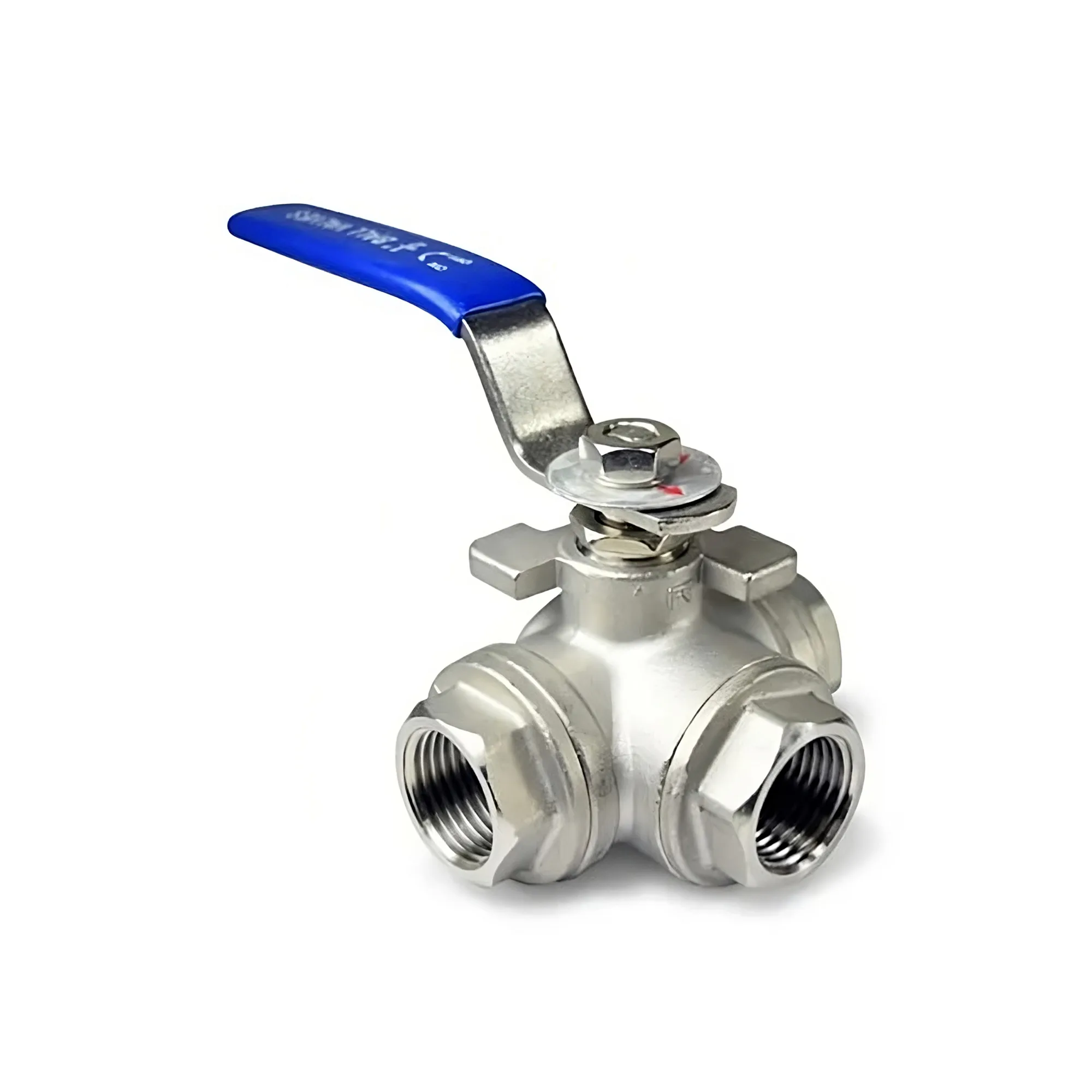
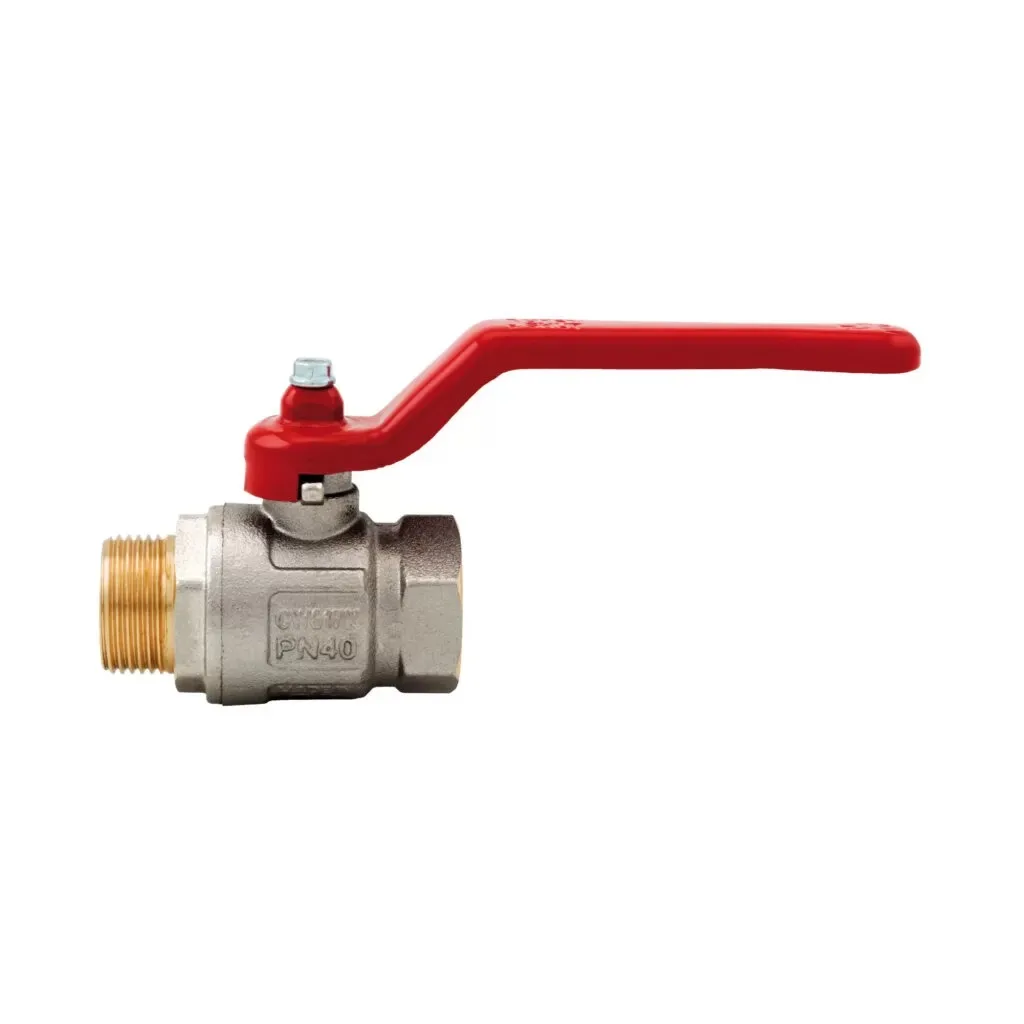
The valve shown has three female threaded ports on a cast stainless body, with a quarter-turn lever carrying a position indicator plate. The thread forms used on threaded-end steel ball valves are ISO 7-1 and ASME B1.20.1 (NPT); the two are not interchangeable, and which one is fitted must be stated on order.
On order state the port pattern (L or T), the nominal size, the thread form, the stainless grade and the seat material. It is also worth stating the intended flow path and the position the lever should occupy in each condition, because port numbering and handle orientation vary between makers, and the standards that cover two-way ball valves — ISO 17292:2015 and MSS SP-110 — do not fix them for multi-port valves.