Description
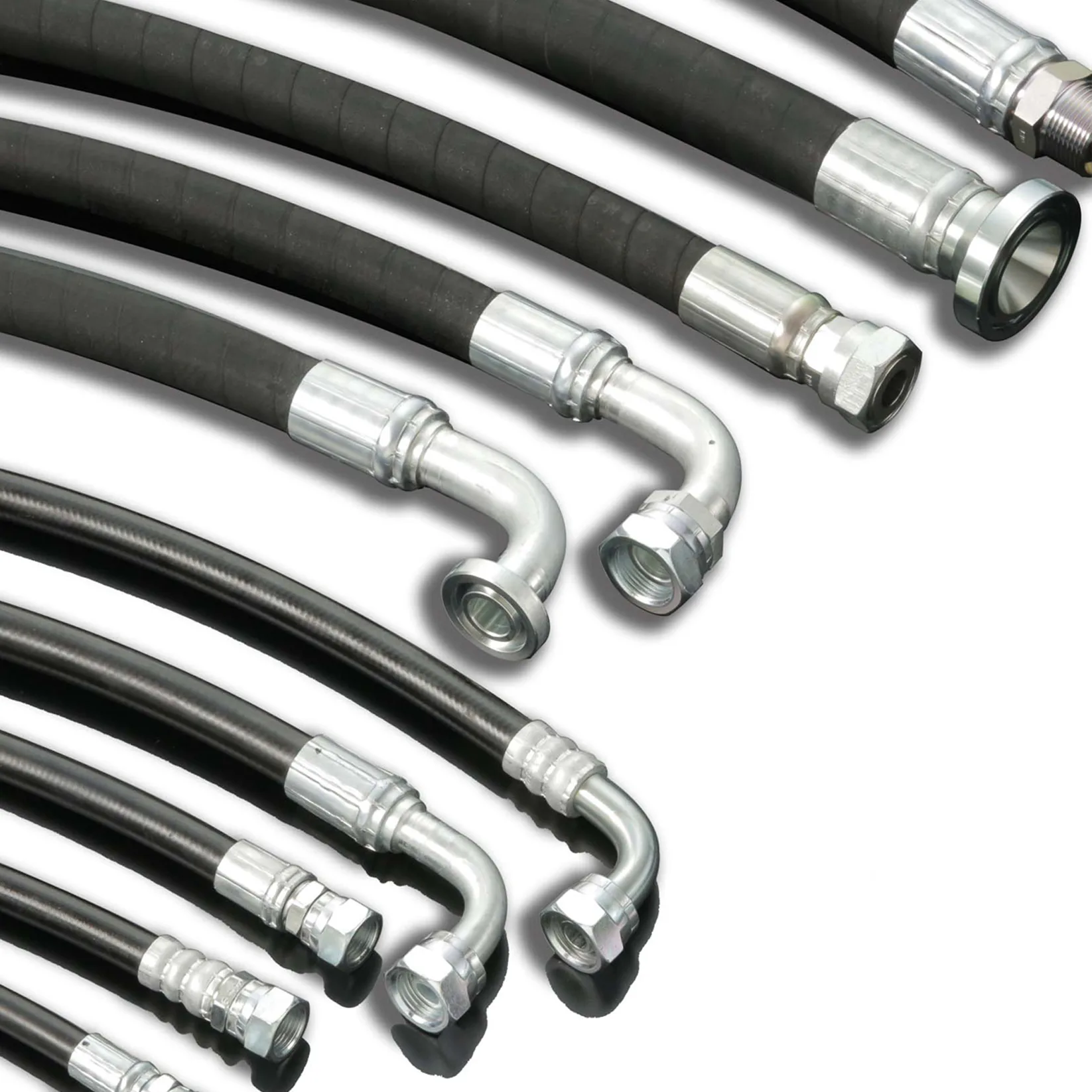
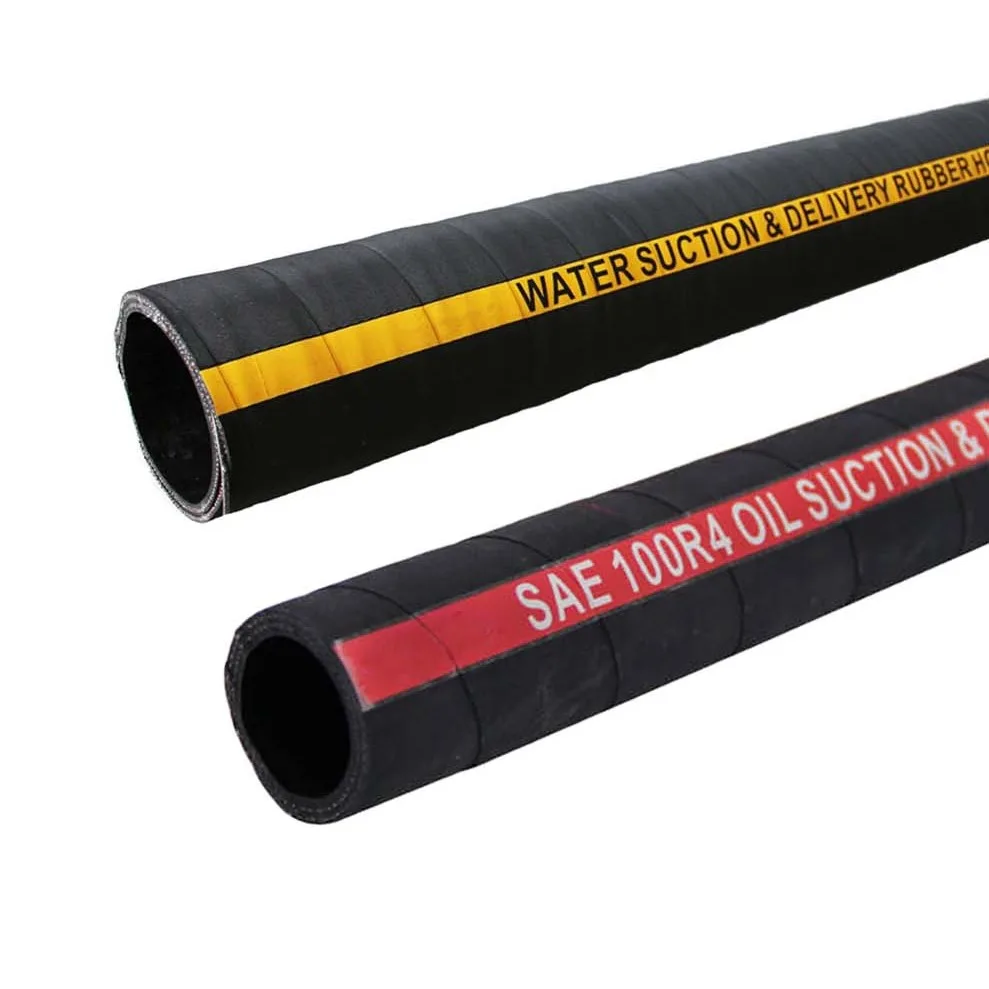
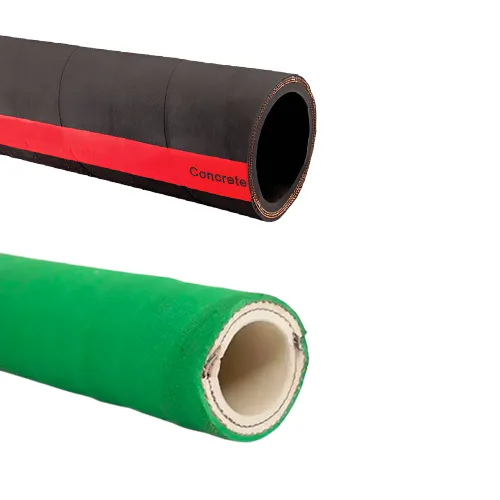
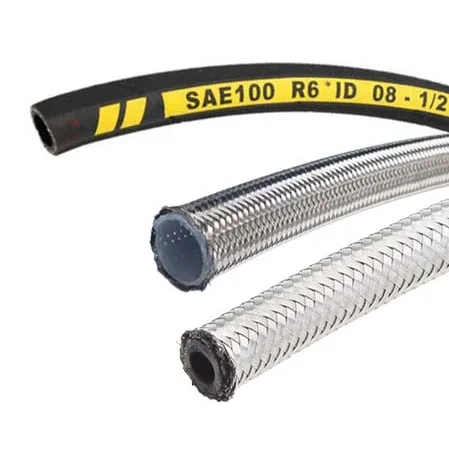
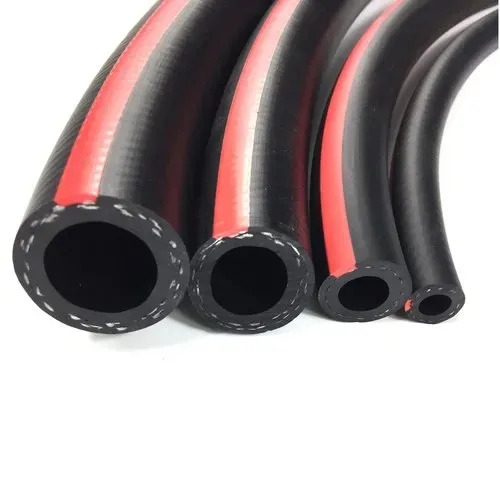
Hydraulic hose carries fluid power between pump, valve and actuator. The tube is an oil-resistant synthetic rubber, the reinforcement is high-tensile steel wire applied as braid or as spiral plies, and the cover is an abrasion- and weather-resistant rubber. The braided grades are covered by ISO 1436 / EN 853 (types 1SN and 2SN, corresponding to SAE 100 R1AT and R2AT); the spiral grades are covered by ISO 3862 / EN 856 (types 4SP, 4SH, R12 and R13).
Working pressure is fixed by the standard for each nominal bore, not by the grade alone. ISO 1436:2020 Table 4 rates type 2SN at 420 bar at DN5 and at 80 bar at DN51 - a factor of five across one grade. Proof pressure is twice the maximum working pressure and minimum burst pressure is four times it, at every bore and in every braided and spiral grade. Where a quoted burst pressure is not four times the quoted working pressure, one of the two figures is wrong.
Beyond pressure the grades differ in impulse life: ISO 1436:2020 requires a minimum of 150,000 impulse cycles for 1SN and 200,000 for 2SN. The temperature range on the oil-based fluids HH, HL, HM, HR and HV of ISO 6743-4 is -40 to +100 °C for 1SN, 2SN, 4SP and 4SH and -40 to +120 °C for R12 and R13; water-based fluids and plain water are held to lower ceilings and the standard matching the fluid should be checked before the hose is specified.
When ordering, state the grade, the nominal bore, the assembly length and both end connections - thread form and sealing face, for example JIC 37° flare, BSPP with a bonded seal, or SAE four-bolt split flange Code 61 or Code 62. Hose, fittings and crimp specification must come from one system; mixing them voids the manufacturer's pressure rating.