Description
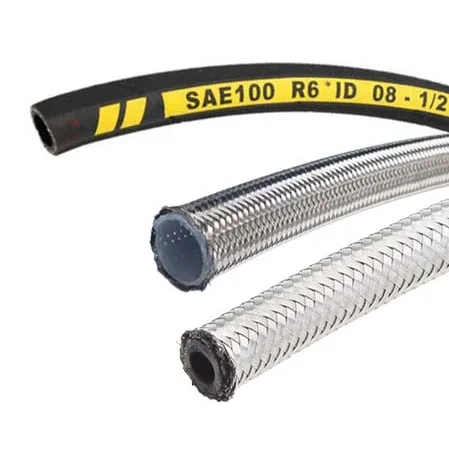
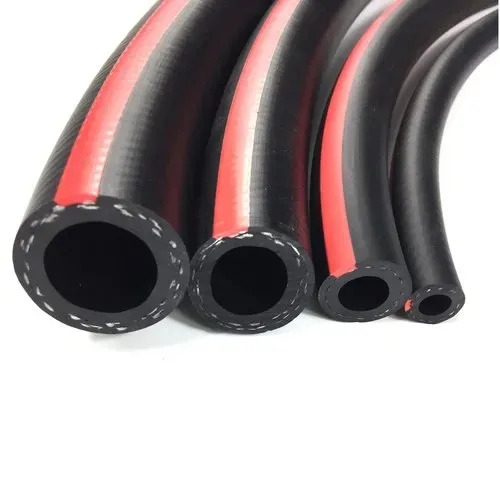
This listing covers three different hose constructions used on fuel and process lines. SAE 100 R6 is a rubber hose with a single textile braid, an oil-resistant synthetic rubber tube and a matching oil-resistant cover. PTFE hose has an extruded polytetrafluoroethylene liner with a stainless steel wire overbraid and no rubber cover. Steel-braided fuel hose is a rubber-cored hose carrying a stainless overbraid where the outer surface has to resist heat, abrasion or handling damage.
SAE J517 rates type 100 R6 from 1/4 in to 3/4 in bore: 400 psi (27.6 bar) up to 1/2 in, 350 psi (24.1 bar) at 5/8 in and 300 psi (20.7 bar) at 3/4 in, with a minimum burst pressure of four times the working pressure and an operating temperature range of -40 to +200 °F (-40 to +93 °C). It is a low-pressure grade: it is for return lines, fuel transfer, lubrication and instrument lines, not for a pump discharge.
PTFE hose with a single 303-series stainless steel braid is standardised as SAE 100 R14, in type A plain form or type B with an electrically conductive inner surface. J517 rates it at 1,500 psi (103 bar) at 1/4 in and 3/8 in and 800 psi (55 bar) from 1/2 in to 1 in, over -65 to +400 °F (-54 to +204 °C). PTFE is chemically inert and takes far higher temperatures than any rubber tube, which is why it is specified where a rubber tube would harden, swell or leach into the fluid.
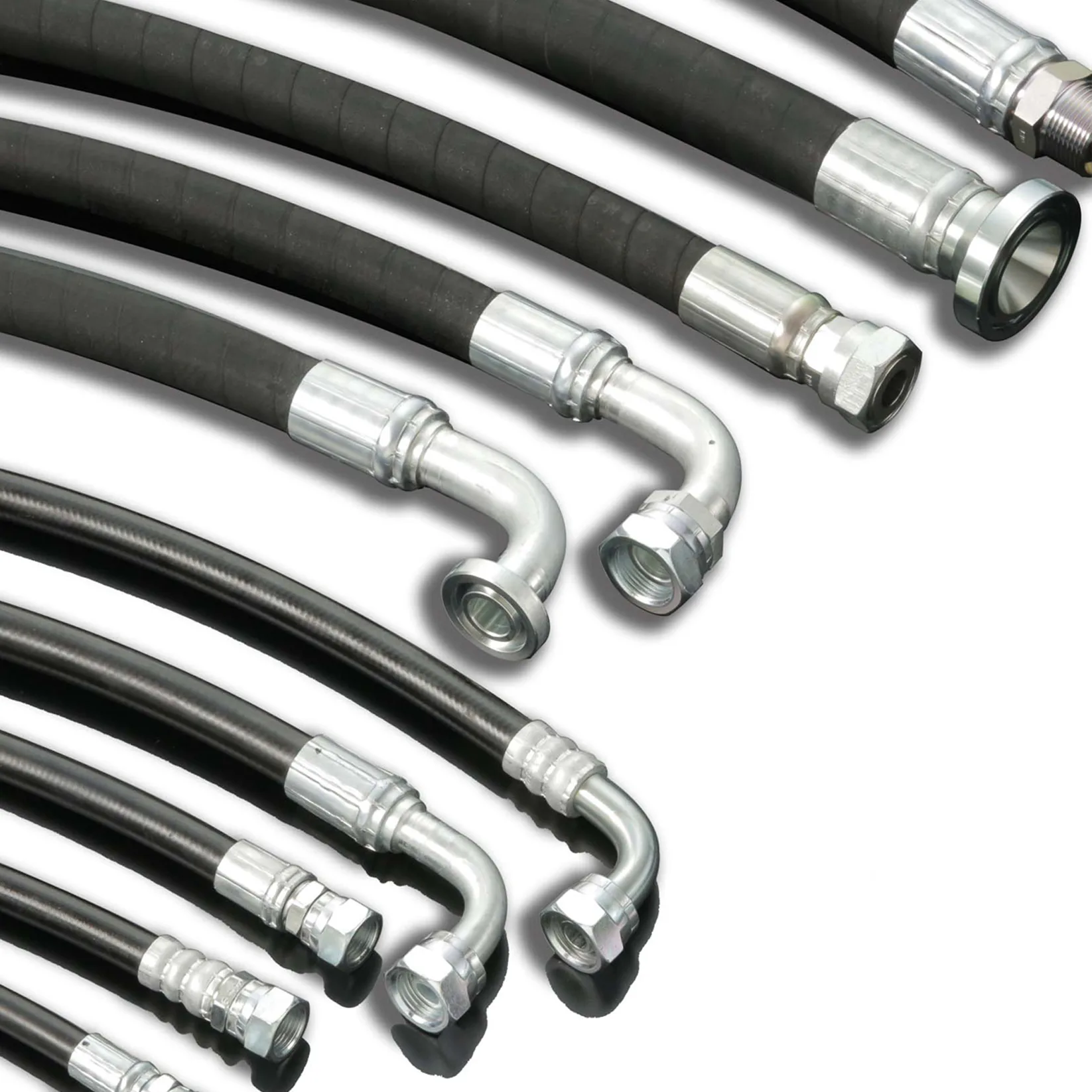
State the fluid, the bore, the working pressure and temperature, the assembly length and both end fittings when ordering, and say whether a conductive liner is required: a non-conductive PTFE liner carrying fuel can accumulate a static charge that has to be bled to earth.